Get all your news in one place.
100's of premium titles.
One app.
Start reading
The Independent UK
The Independent UK
National
Sam Mednick,Isabel Debre and Astrid Suarez

Takeaways from AP story on child soldiers trained by Colombian mercenaries in Sudan

ML--Sudan-Colombia-Child Soldiers - (ASSOCIATED PRESS)

A new report by The Associated Press shows that child soldiers fighting for the paramilitary Rapid Support Forces against Sudan's army have been trained by Colombian mercenaries.

The report is based on rare, firsthand accounts from former child soldiers held at a rehabilitation center run by the military-backed government in the capital, Khartoum. Tens of thousands of children as young as 8 have been conscripted into the ongoing conflict by all sides and many are still on the front lines.
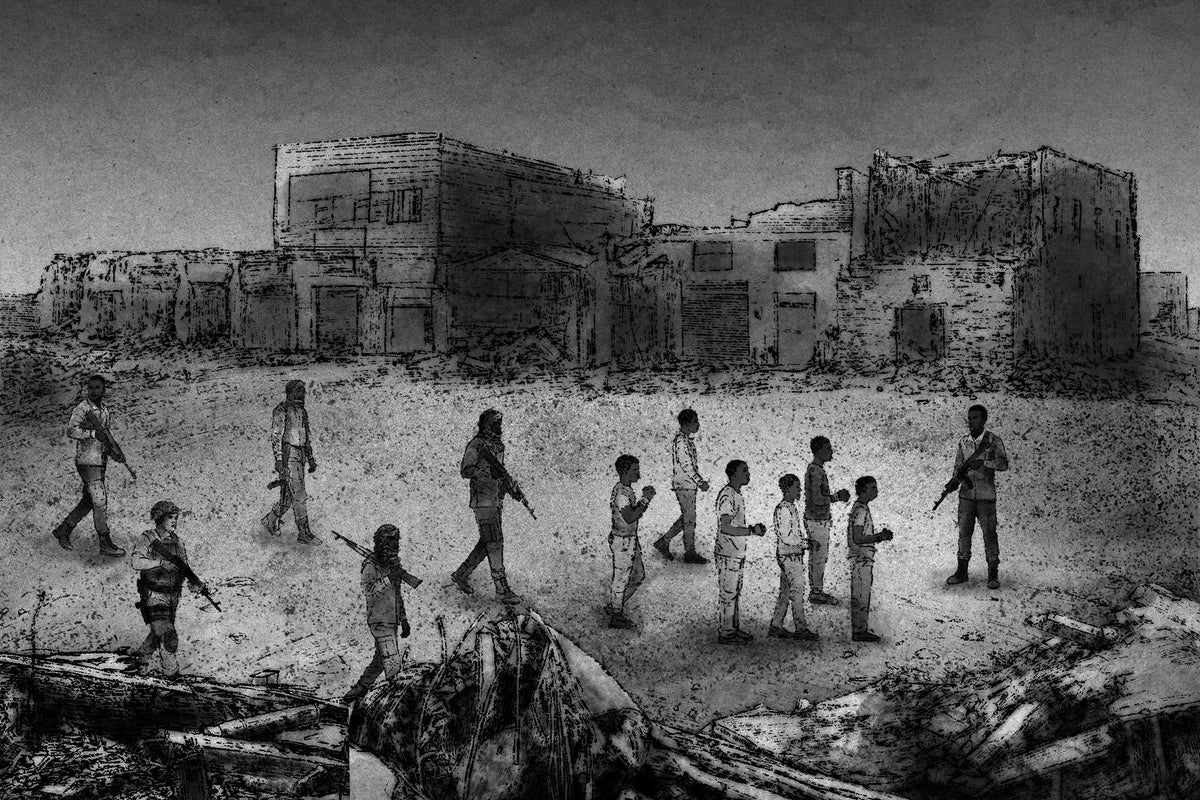
One boy described how he was shackled to an anti-aircraft gun and told to fire at army warplanes buzzing overhead or his captors would kill him. He was 15 at the time. Another said he was forced to fire artillery at targets identified by drones — including civilians — and beaten for any disobedience.

Tens of thousands of veterans of Colombia's internal conflicts have hired themselves out in foreign wars despite a recent law outlawing it. The children's accounts indicate the mercenaries are widely deployed in Sudan.

The Rapid Support Forces, known as the RSF, have been accused of atrocities. Rights groups say a state-linked firm in the United Arab Emirates has recruited Colombians to fight with the RSF. Human rights groups and Sudan’s military accuse the UAE of arming the RSF, and a U.N. panel said it had tracked weapons shipments to the group originating in the UAE.

The UAE, a Gulf federation that includes Dubai, did not respond to multiple requests for comment. It has denied arming the RSF and recruiting or training foreign fighters. It says the shipment in question was of humanitarian aid to refugees.

Here are the main takeaways:

Searing accounts of boys sent to the front lines

At the rehabilitation center, one boy was missing a hand. Another had scars on his back from where he said he was tortured, and a third had a bone jutting out of his side.

The boy who was tied to the anti-aircraft gun said RSF fighters detained him and sent him to the front lines without him having ever held a gun. He was held with dozens of other children, their hands bound at all times, he said.

He said foreigners, described as Colombians by RSF fighters at his base, trained the children and instructed the paramilitaries to strap them to the weapons. He showed scars on his head that he said were left by shrapnel.

A boy who had been held at another camp said he was locked up and only brought out for artillery strikes. When he refused to fire, his captors would beat him, sometimes with an electric baton. In one case, he said, a Colombian beat him unconscious. An 18-year-old friend was shot dead when he tried to escape, he said.

A member of the military media office accompanied the AP during the visit to the rehabilitation center but did not choose who was interviewed. The AP retains full editorial control of its content.

Report points to a larger role for Colombian guns-for-hire

Human Rights Watch and Conflict Insights Group, a private research firm, have documented the presence of Colombian mercenaries alongside the RSF in Sudan’s western region of Darfur, including during the October capture of El Fasher, where RSF fighters have been accused of mass killings.

“The evidence suggests the UAE could be substantially contributing to the RSF’s widespread crimes against humanity,” said Jean-Baptiste Gallopin, a senior adviser at Human Rights Watch.

In separate reports this year, Human Rights Watch and Conflict Insights Group said the Colombians were hired by an Emirati contractor and trained in Emirati military bases. The UAE denied those allegations to the BBC at the time, saying any entity involved in such activities would be held criminally accountable.

A Colombian mercenary who fought in Darfur in 2025 told the AP that hundreds of Colombians were on the front lines with the RSF at the time and involved in training recruits. He said he saw children as young as 13 fighting with the RSF. He spoke on condition of anonymity because of legal concerns.

Less is known of the Colombians’ role in Khartoum. Ali Qader, the head of the rehabilitation center, said several children told him Colombians trained them at camps around the capital.

A former RSF fighter who defected to the government side and spoke on condition of anonymity for fear of reprisal, told the AP that he saw Colombians training children in Khartoum in July 2024. A Sudanese military officer said Colombians were training children in and around Khartoum when the RSF held the city. The officer was not authorized to speak to journalists and so spoke on condition of anonymity.

The U.N. says all sides in the conflict have used child soldiers, including militias allied with the government.

The children often have nowhere to go

Even though the boys were forced to fight, many cannot return home to their families because of their association with the RSF.

Zeinab Mahjoub, a psychologist at the government facility where they are held, said she tries to persuade relatives not to abandon the boys, who are wrestling with their own trauma.

The U.N. children’s agency in Sudan says it is working to speed up the process of releasing the boys. Since the AP visited the center in April, the children have been released.

___

DeBre reported from Buenos Aires, Argentina and Suarez from Bogota Colombia.

Sign up to read this article
Read news from 100's of titles, curated specifically for you.
Already a member? Sign in here
Related Stories
Top stories on inkl right now
One subscription that gives you access to news from hundreds of sites
Already a member? Sign in here
Our Picks
Fourteen days free
Download the app
One app. One membership.
100+ trusted global sources.