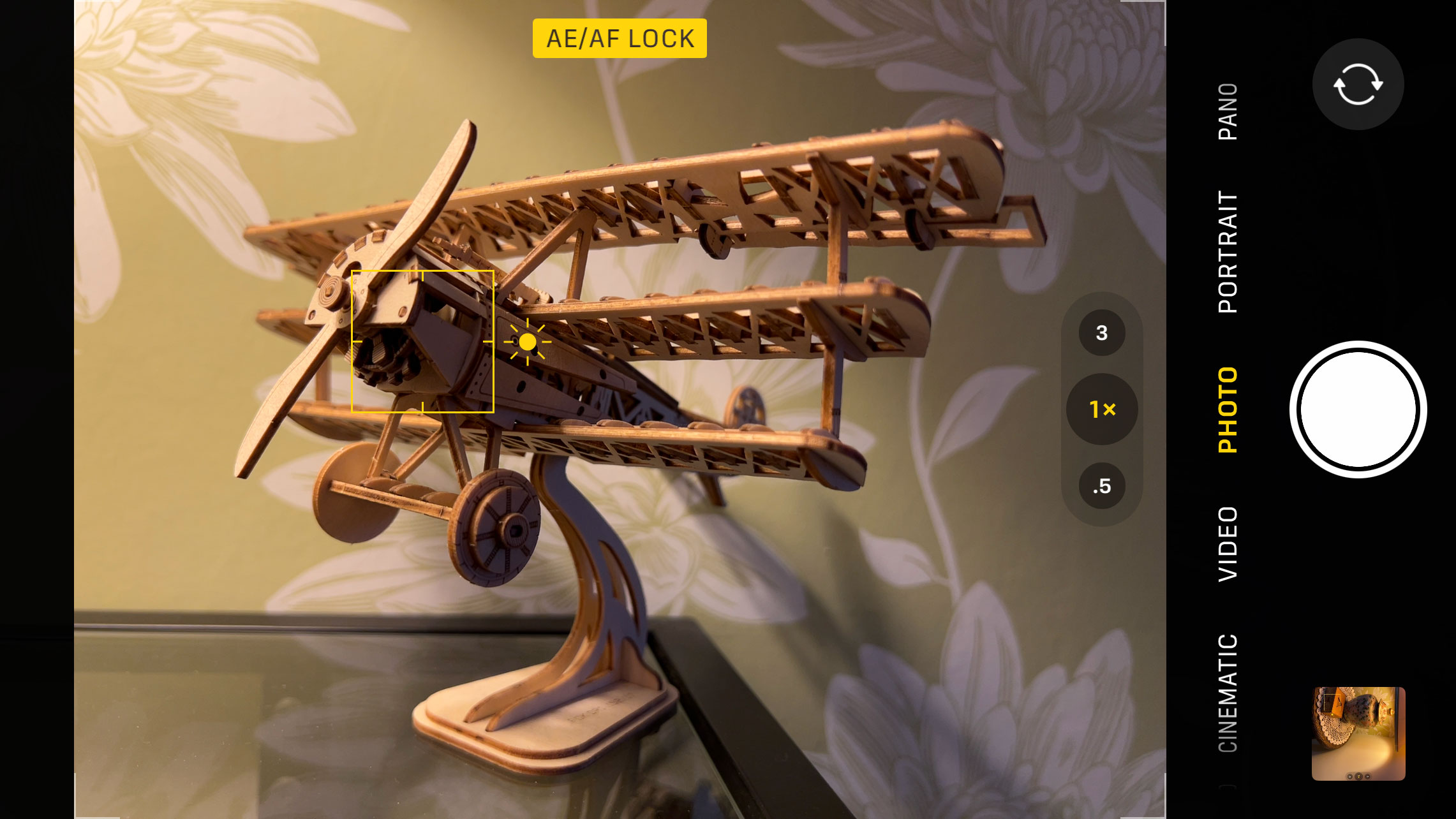
Your iPhone can measure the light in the scene and work out what it thinks is the best exposure, but it won’t always get it right. This is true for every camera, from smartphones to professional cameras, and there are two reasons for this:
-
Your camera can’t distinguish between the amount of light and objects that are naturally dark or light.
It adjusts the exposure for both, trying to make them a neutral brightness. Often it works fine, but if your subject is naturally a dark tone, it’s going to come out too light and if it’s naturally light, it’s likely to be underexposed.
-
Your camera doesn’t know what you want the lighting to look like so it has to guess.
Often it guesses right, but sometimes it doesn’t. If you’ve got a spotlit singer on a dark stage, for example, your iPhone might think it needs to increase the exposure to brighten up the stage, and your performer will just be a blob of light.