
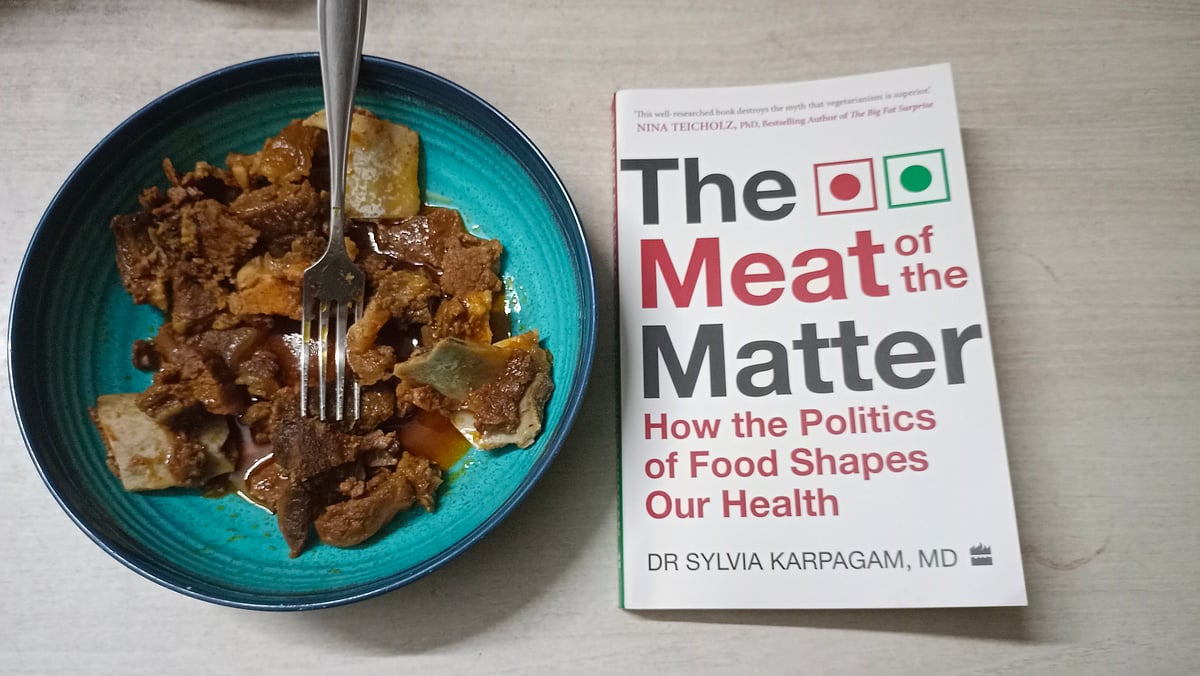
In modern India, the kitchen has become a battlefield for state-sanctioned majoritarianism. While the right to safe, nutritious food is a fundamental prerequisite for human survival, public policy under the current dispensation has weaponised dietary habits to enforce social hierarchies. From the institutional exclusion of eggs in school midday meals to targeted communal bans on meat vendors, what ends up on an Indian's plate is increasingly engineered by prejudice rather than public health science. This toxic overlap of nutrition science, state overreach, and caste bias forms the volatile core of Dr Sylvia Karpagam’s The Meat of the Matter: How the Politics of Food Shapes Our Health.
In this extensively researched and cogently argued book, Dr Karpagam makes a compelling case that the health of Indians would be best served by ditching superstition and prejudice in favour of a science-driven, evidence-based approach. Essential to this enterprise is the political will to acknowledge a fact contrary to popular misconception: the vast majority of Indians are meat-eaters. Vegetarianism – which in India typically includes the consumption of milk and dairy products – is a niche dietary practice of a minority. Yet, as the book makes plain, this minority sits at the apex of social and political power structures, using its privileged position to allow personal prejudices to dictate bad public policy.