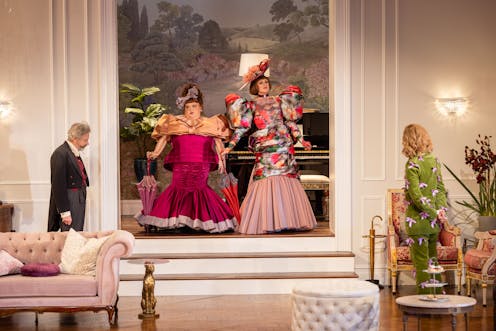
It is easy to forget that when Oscar Wilde’s The Importance of Being Earnest was first written and performed in February 1895, Ibsen’s A Doll’s House was already 16 years old. Both plays, in different ways, expose the foundations of society (marriage; class; money; property) to searching critique.
Ibsen’s proto-modernism looks forward to a new century of realist scrutiny, as Nora slams the door on convention at the end of his play. But Wilde’s play looks backwards to older comedies of manners and aims for a similar effect by blowing their old, moral assumptions wide apart.