The University of Sussex has overturned a £585,000 fine from England’s higher education watchdog after the high court rejected claims that the university breached free speech regulations in a case involving a former professor.
The ruling is a damaging blow to the credibility of the Office for Students as the court rejected the regulator’s lengthy investigation involving KathleenStock’s 2021 resignation,which came after protests over her views on transgender rights and gender identity.
Mrs Justice Lieven found that the regulator’s decision was biased towards punishing Sussex as an example to other universities.
Lieven wrote that the OfS’s final decision to fine the university a record £585,000 “was vitiated by bias because the OfS approached the decision with a closed mind and had therefore unlawfully predetermined the decision”.
The judgment also found that the OfS misapplied concepts of freedom of speech and academic freedom, exceeded its regulatory powers and refused to consider any changes made by Sussex or similar cases at other universities.
“The evidence supports a finding that the OfS had closed its mind to anything that would lead to not finding breaches and being unable to therefore sanction the university,” the ruling concluded.
Sasha Roseneil, the university’s vice-chancellor, greeted the outcome as vindication for her university, and said she was seeking an urgent meeting with Bridget Phillipson, the education secretary, to discuss the ruling’s implications for England’s universities.
Roseneil said: “We need a regulator that works with the sector, not against it – in the interests of the students of today and of the future. I stand ready to work with the government to find better ways to regulate and support universities in serving the public good.
“Meanwhile, I am delighted that Sussex’s foundational commitments to academic freedom and freedom of speech have been recognised by the high court, and that the OfS’s egregious decision against the university, and the fine it sought to impose, have been overturned.
“The University of Sussex has a proud history of being the place where the most contentious issues of the day are aired – where independent-minded, critical thinkers develop their ideas, and where lively and engaged students work out how they understand the world.”
Josh Fleming, the OfS’s interim chief executive, said: “We are disappointed, of course, by this ruling. We will carefully consider the consequences of the judgment before deciding on next steps. We will reflect on the judge’s findings and use them to help inform our future approach.”
The judgment was highly critical of Susan Lapworth, the OfS’s previous chief executive, saying she wanted to investigate Sussex to send a “strong signal” on freedom of speech to other universities, and that Lapworth’s “mindset from the outset appears to have been that she wished to use the university as a tool to incentivise the rest of the sector”.
Adam Tickell, who was vice-chancellor of Sussex at the time the investigation began in 2021, said: “This was always a political intervention and one I first heard about from an official at the Department for Education and not, as the law required, from the OfS.
“If nothing else, it demonstrates the urgent need for a right to independent appeal against what can be arbitrary and capricious rulings from the OfS. Although recent changes at the OfS are rebuilding trust, the judgment demonstrates the need for reform.”
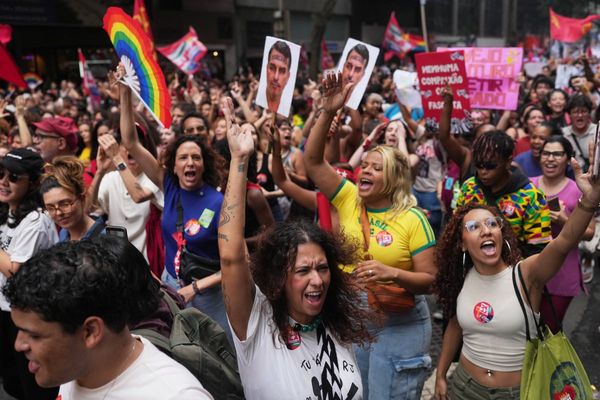
Stock resigned from Sussex in October 2021, shortly after she had been told by police to stay away from campus after a series of protests, and feared her 18-year career at the university had been “effectively ended” after Sussex’s branch of the University and College Union called for an investigation into institutional transphobia.
Stock had said she believed gender identity did not outweigh biological sex “when it comes to law and policy”, and people could not change their biological sex.
The result also calls into question the role of Arif Ahmed, the former University of Cambridge philosopher who took over the investigation into Sussex as the OfS’s first director for freedom of speech and academic freedom.
The judgment referred to correspondence between Ahmed and Stock before Ahmed’s OfS appointment in 2023, with the pair exchanging compliments and criticising a non-binary US academic. It also showed that despite concerns about Ahmed’s potential conflict of interest, the OfS eventually enabled him to take a role in the investigation.
Lieven cleared Ahmed of influencing the final decision, saying: “The die had already been well cast by then.” But the judgment noted: “If Dr Ahmed had been the decision-maker I would in all probability have found that he had predetermined the decision by reason of having a closed mind.”
UCU general secretary Jo Grady said: ‘This ruling is a rebuke to the politicians who have wielded the OfS as a political cudgel in campus culture wars. The regulator has lost the trust of the sector, and there now needs to be a complete rethink from government over how it will work to protect higher education.”