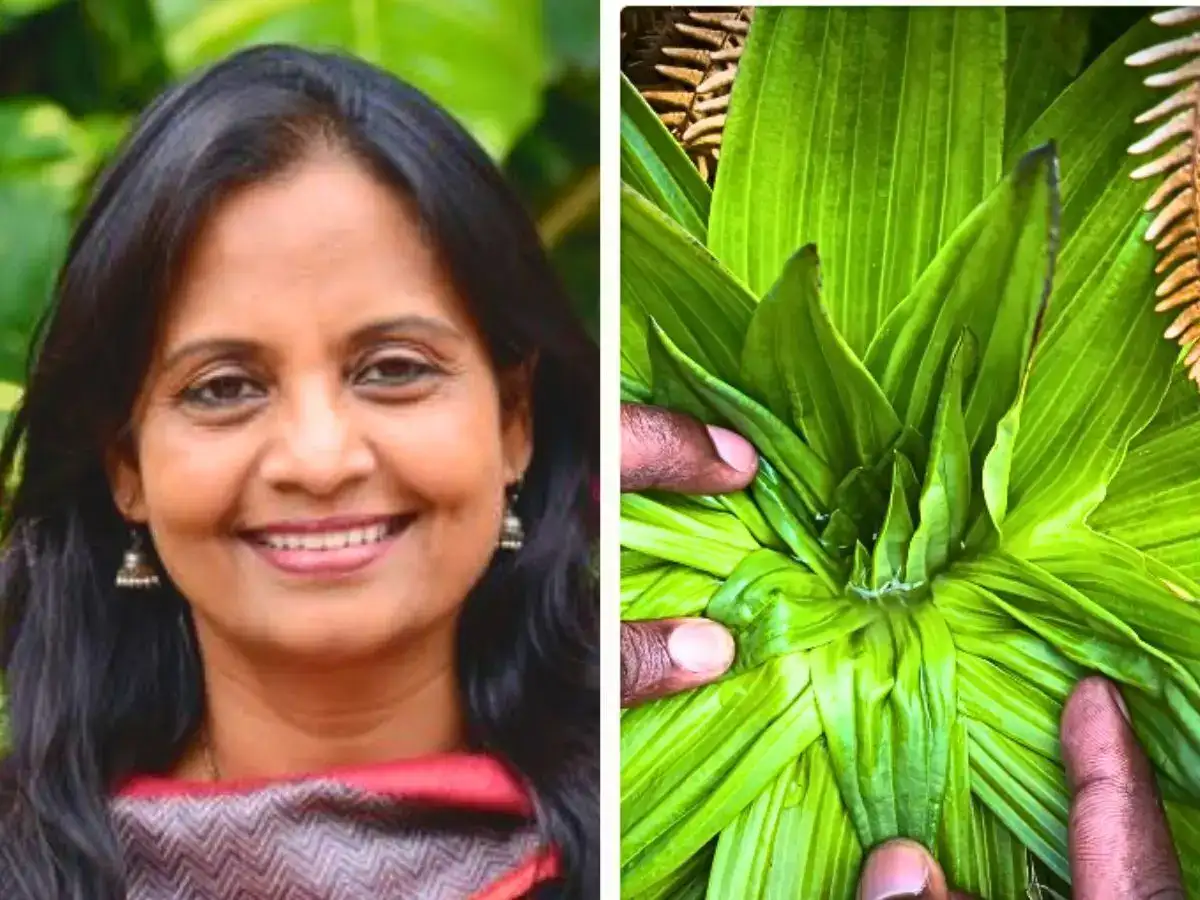
Sometimes, the most fascinating survival stories in nature are hidden in plain sight. A recent social media post by IAS officer and environmental advocate Supriya Sahu has introduced many people to a little-known plant species found in the higher-altitude grasslands of the Nilgiris in Tamil Nadu. The plant, called Hedyotis verticillaris, has a unique feature that left social media users amazed—it naturally stores water within its leaves, creating a small reservoir that can help wildlife quench their thirst.
Sharing images of the plant, Sahu wrote that she has always been fascinated by its beauty and uniqueness. According to her post, the leaves grow in a rosette formation and hold water at the centre of the whorl. Gaurs and other animals are known to eat the soft centre to access the stored water.

Calling it an "incredible gem of biodiversity," she highlighted the ecological importance of the species and the remarkable adaptations found in Tamil Nadu's grasslands.
What is Hedyotis verticillaris?
Hedyotis verticillaris is a plant species belonging to the Rubiaceae family and is endemic to the higher-altitude grasslands of the Nilgiris in southern India.
Unlike many other members of its genus, its stems remain underground while the leaves grow close to the ground in a rosette arrangement. These rosettes often collect and retain water at their centre, creating a natural water source in the landscape.
The plant produces flowers on a stalk rising above the leaf cluster. Scientific studies have also examined its classification, with the species previously being placed under a different genus before molecular research grouped it back within Hedyotis.
Why does this plant store water?
The water-holding structure is a result of the way its leaves are arranged.
The tightly packed rosette acts like a natural cup, allowing rainwater and moisture to collect at the centre. In the high-altitude grasslands where weather conditions can be challenging, this adaptation creates a small but valuable source of water.
According to Supriya Sahu's post, wildlife such as gaurs use this stored water by feeding on the plant's soft central portion, helping them stay hydrated.