
Get all your news in one place.
100's of premium titles.
One app.
Start reading
The Conversation
The Conversation
Sam D. Hayes, Assistant professor of politics and policy, Simmons University

Supreme Court’s Voting Rights Act ruling makes it harder to protect minority voting power and alters the landscape of future elections

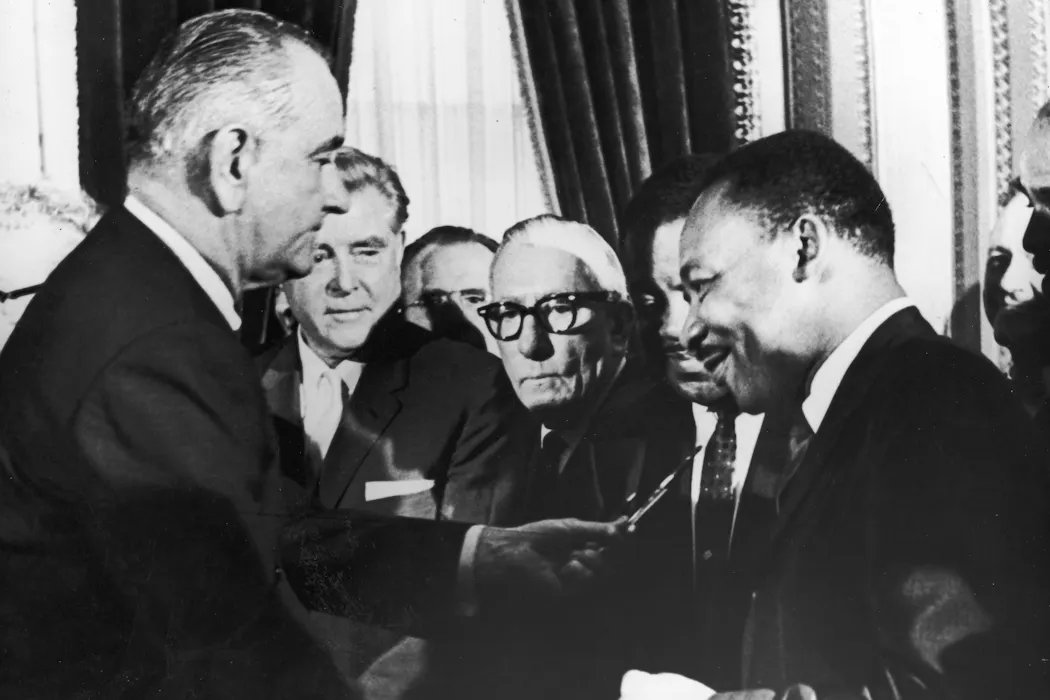
President Lyndon Johnson hands a pen to civil rights leader Rev. Martin Luther King Jr. during the signing of the Voting Rights Act in Washington, D.C., on Aug. 6, 1965. Hulton Archive, Washington Bureau/Getty Images

In a major ruling that would permit weakening the voting power of minorities in the United States, the Supreme Court on April 29, 2026, struck down a Black-majority district in Louisiana’s congressional map as “an unconstitutional gerrymander” and altered the court’s interpretation of the Voting Rights Act.

In a 6-3 decision, the court’s conservative majority argued that Louisiana had violated the law by drawing a second Black-majority district. Justice Samuel Alito wrote that the court was upholding a key part of the Voting Rights Act known as Section 2, which prohibits “voting practices or procedures that discriminate on the basis of race, color, or membership in one of the language minority groups identified” in the act.

Sign up to read this article
Read news from 100's of titles, curated specifically for you.
Already a member? Sign in here
Related Stories
Top stories on inkl right now
One subscription that gives you access to news from hundreds of sites
Already a member? Sign in here
Our Picks
Fourteen days free
Download the app
One app. One membership.
100+ trusted global sources.


