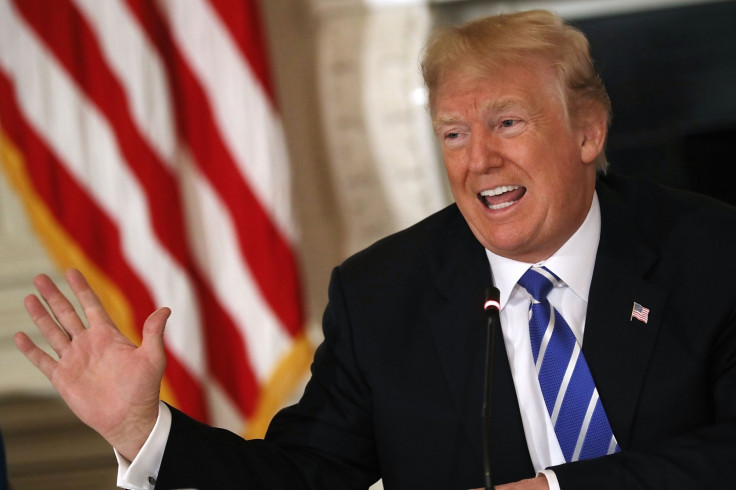
Millions of migrants living legally in the United States could now face deportation after the Supreme Court handed President Donald Trump two major victories that dramatically advance his immigration agenda.
In a pair of rulings on Thursday, the court cleared the way for federal authorities to revoke legal protections for millions already in the country and allowed the White House to revive a hardline policy that largely blocks migrants from seeking asylum at the border.

These rulings are part of a broader pattern where the court's conservative majority has repeatedly approved Trump's aggressive push to restrict border crossings. By dismantling key migrant safeguards, the justices have essentially cemented the very policies that sit at the core of Donald Trump's second-term platform.
Humanitarian Protections Overturned
Dividing strictly along ideological lines, a 6–3 Supreme Court decision has cleared the way for Trump to terminate emergency humanitarian protections for hundreds of thousands of Haitian and Syrian migrants. The ruling effectively ends the safe-haven status that allowed these individuals to remain legally in the United States, despite ongoing crises and severe dangers in their home countries.
WATCH: ABC's Mary Bruce whining about the Supreme Court "delivering two major wins for President Trump" on TPS and asylum, both of which were grotesquely abused by the Biden administration en route to allowing millions of illegal aliens into the country.
— Jorge Bonilla (@BonillaJL) June 26, 2026
DAVID MUIR: Tonight, the… pic.twitter.com/pxN8Afs5CX
The fallout from this ruling will extend far past these two nationalities, casting uncertainty over roughly 1.3 million individuals from 17 different nations who currently reside in the country under Temporary Protected Status. This latest expansion of executive authority follows a major legal precedent set last year, when the justices gave the White House permission to cancel the same humanitarian safeguards for Venezuelan nationals.
Border Asylum Restrictions Return
The second immigration decision of the day followed the same partisan split, with the bench ruling that individuals arriving at the southern border cannot claim asylum until they physically step across the frontier. Consequently, border patrol personnel now have the explicit legal authority to turn away incoming migrants before they can even initiate the application process.
Legal Fight Over Asylum Access
A legal challenge launched by a coalition of migrants argued that humanitarian protection should still be accessible even if individuals are intercepted before crossing the boundary line—a policy that originally began informally during the Obama era. Lawyers for the migrants argued that the law should protect people who are actively arriving, regardless of which side of the line they are standing on.
Today, the Supreme Court decided to become a partner in Donald Trump's mass deportation campaign. It is shameful and cruel.
— Joaquin Castro (@JoaquinCastrotx) June 25, 2026
Hundreds of thousands of asylum seekers will now be subject to deportation. They fled danger and violence and came to the United States in search of… pic.twitter.com/DLzx7gXyQN
The government's lawyers argued the exact opposite, insisting that migrants must physically be inside the US before they can legally ask for protection.
Under American law, individuals can claim asylum if they have a well-founded fear of persecution due to factors like their race, religion, or political beliefs. Crucially, the legislation specifies that 'You may only file this application if you are physically present in the United States, and you are not a U.S. citizen.'
How 'Metering' Could Return
The practice of holding back asylum seekers before their claims can be processed at the border is officially called 'metering', a strategy that grew significantly during Donald Trump's first presidency. According to the legal challenge, this practice caused widespread confusion and triggered a severe humanitarian crisis.
Blocked from crossing, individuals established temporary tent settlements on the Mexican side of the frontier while waiting for a chance to request safety, with some eventually risking dangerous journeys across the Rio Grande or through the Sonoran Desert to enter the US illegally.
🚨 BREAKING — IT’S OFFICIAL: The Supreme Court has ruled President Trump CAN end Temporary Protected Status for Haitians in our country, and deport them
— Nick Sortor (@nicksortor) June 25, 2026
This is MASSIVE!
SEND THEM ALL HOME!
The people of towns like Springfield, Ohio will FINALLY get their towns back!
🎥…
A federal judge in California ruled in favour of 13 asylum seekers in 2021, deciding a class-action lawsuit by declaring the restriction unlawful. District Judge Cynthia A. Bashant, an Obama appointee, determined that border personnel are required to process individuals who are actively trying to enter the country, rather than restricting services to those who have already crossed. Though this decision was later affirmed by the US Court of Appeals for the 9th Circuit, President Joe Biden ultimately cancelled the policy altogether while the litigation was ongoing.
Department of Justice filings reveal that while the measure is currently inactive, the White House views it as a 'critical tool' for managing sudden spikes in arrivals. During Supreme Court hearings in March, Assistant Solicitor General Vivek Suri confirmed that officials plan to reinstate the practice 'when border conditions justify.'