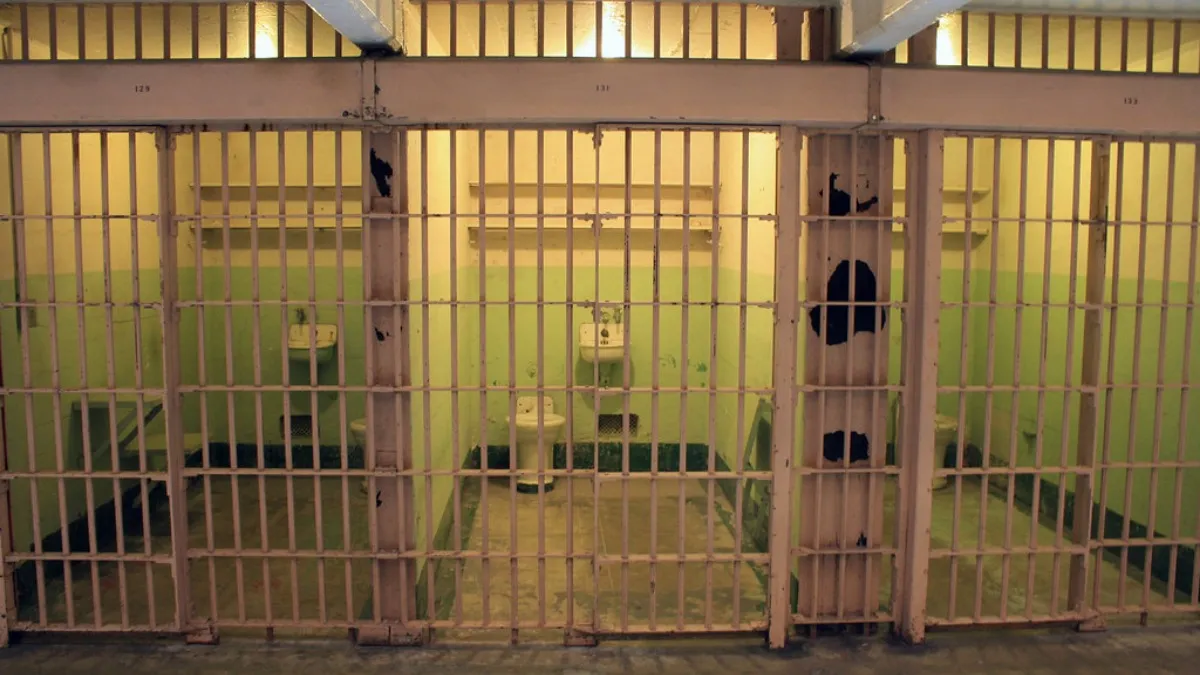
The Supreme Court just rejected an appeal from Rodney Reed, a longtime death row inmate who has been desperately fighting for DNA testing on crucial crime scene evidence he believes would finally clear his name. This decision marks a serious blow to Reed’s nearly three-decade-long quest for exoneration, effectively ensuring a key piece of evidence will never see the light of day.
Reed has maintained his innocence since his conviction and death sentence in 1998 for the 1996 murder of Stacey Stites. This latest ruling is the second time in under three years that the justices have upheld a decision against Reed from the federal appeals court in New Orleans, though the three liberal justices did dissent this time around.
According to Yahoo News, Stites, who was just 19 at the time, was tragically strangled to death with a belt while on her way to work at a supermarket in Bastrop, a small community about 30 miles southeast of Austin. Prosecutors have always refused to allow DNA testing of that webbed belt, claiming Reed also sexually assaulted Stites. Reed, however, strongly contends that he and Stites were having a consensual affair.
It’s highly suspicious that they won’t explore all avenues in an investigation
He has long pointed the finger at Stites’ fiancé, former police officer Jimmy Fennell, as the real killer, citing his fury over their interracial affair, as Stites was white. Fennell, who served time for sexual assault and was released from prison in 2018, has consistently denied any involvement in Stites’ death.
“The killer held that belt tight against her throat for minutes, and must have left his sweat and skin cells—and thus his DNA—where he gripped the belt, both on the surface and deep within the webbing,” Reed’s lawyers wrote in court documents. Despite this compelling argument, state and lower federal courts have backed prosecutors’ refusal to allow the testing, even after Reed’s defense team offered to pay for it.
The Supreme Court has declined for a second time to hear an appeal from Rodney Reed, a Texas death row inmate who says DNA testing could prove his innocence in a 1998 murder conviction.
— Jordan Fischer (@JordanOnRecord) March 23, 2026
The court previously allowed his civil rights claim to proceed.https://t.co/rWYM9xI8MF
The state’s top criminal appeals court previously ruled that Texas law on DNA testing doesn’t apply to items that might have been contaminated. Reed’s legal team fired back, pointing out that the state routinely uses contaminated evidence in other prosecutions.
This isn’t the first time Reed’s case has reached the highest court. In 2023, the justices ruled 6-3 to send his case back to a lower court to address his constitutional challenge to the state’s law on DNA testing. The issue then centered on whether Reed waited too long to file his lawsuit, claiming untested crime-scene evidence would exonerate him. The courts ruled that he missed the deadline.
The Supreme Court granted no new cases and denied, among other cases, Rodney Reed's latest death penalty case claim out of Texas. Justice Sotomayor, joined by Justices Kagan and Jackson, dissented. https://t.co/mPoXp8py8x
— Chris “Law Dork” Geidner (@chrisgeidner) March 23, 2026
Over the years, Reed’s fight to halt his execution has garnered significant public attention and support from high-profile celebrities like Beyoncé, Kim Kardashian, and Oprah Winfrey. Additionally, there are precedents where the Supreme Court has issued instructions for a new trial and even for delayed DNA testing based on new evidence.
So why they have slammed the door on what might be Reed’s last hope remains a mystery.