
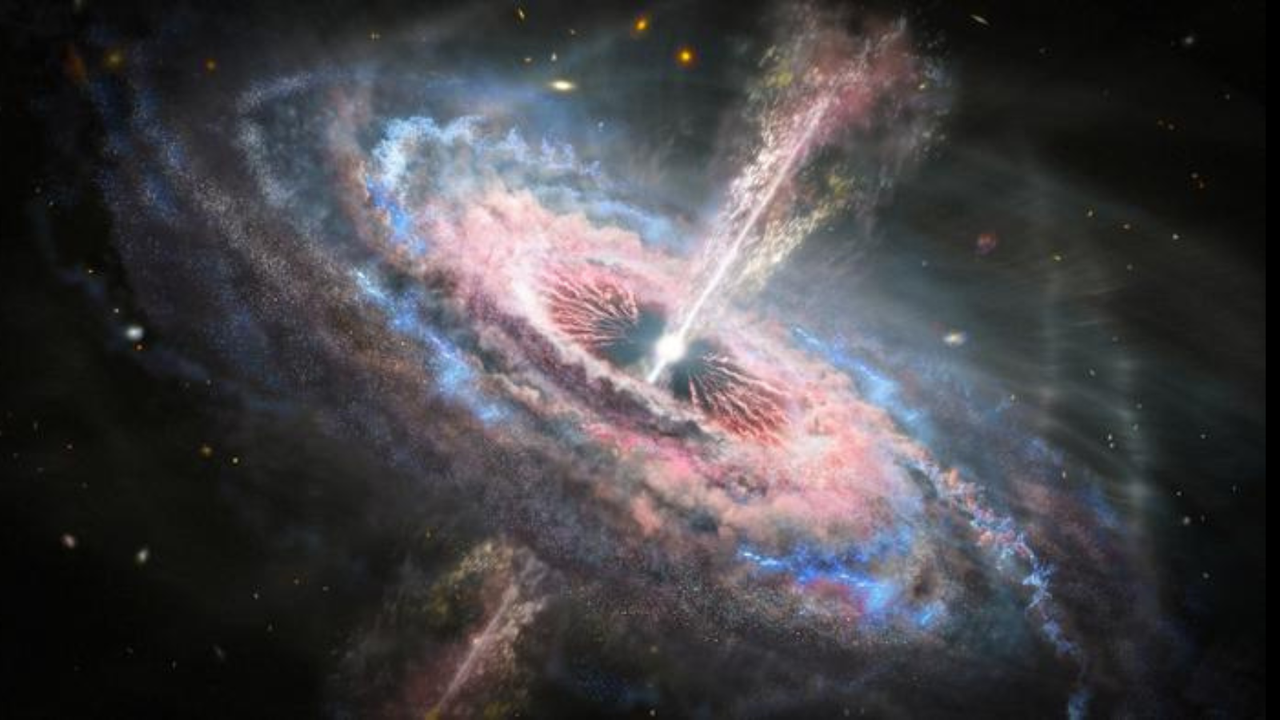
Scientists have long suspected that active supermassive black holes can kill their own host galaxies, but new research suggests these cosmic titans are more like serial killers that can extend their murderous rampage across many light-years and destroy neighboring galaxies, too.
For scientists, "death" for a galaxy means the curtailing of star formation. Supermassive black holes are known to cause this when they are actively feeding, as they heat their larder of gas and dust, provoking that matter content to emit powerful radiation. This radiation either pushes away gas, the building blocks of stars — thereby starving the galaxies and black holes themselves — or simply heats that gas and prevents it from cooling enough to collapse and birth a stellar body. Both outcomes can slow or even stop star formation.