
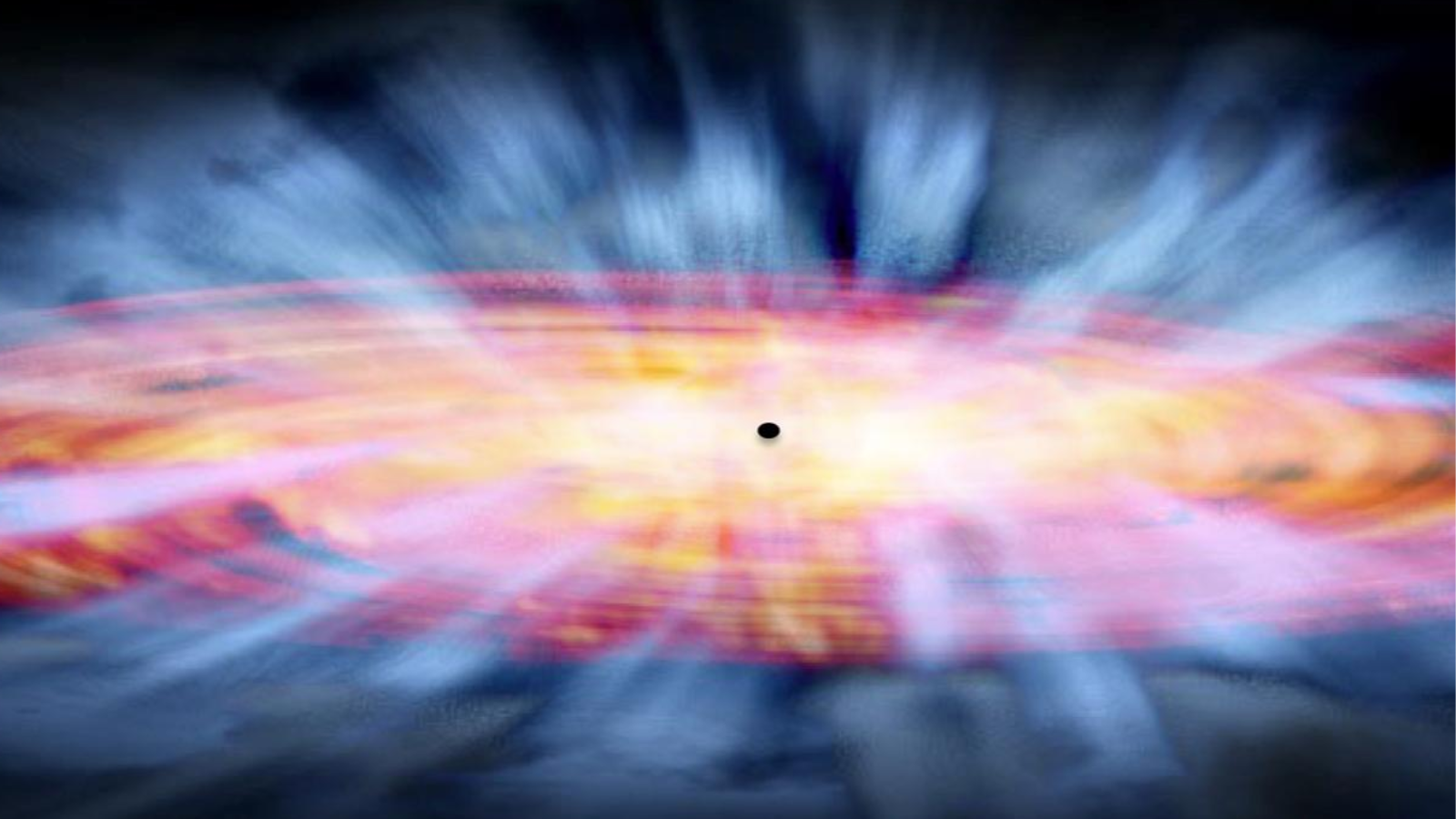
A bright quasar, powered by a supermassive black hole, is blasting out radiation that pushes away clouds of gas in its surroundings to generate winds reaching speeds of around 36 million miles per hour (58 million kilometers per hour). Oh, and the quasar is also nearly as old as the universe itself.
The discovery, made by a team of scientists led by University of Wisconsin–Madison astronomers, shows the role that feeding supermassive black holes at the hearts of so-called "active galactic nuclei," or "AGNs," can play in sculpting the wider galaxies around them.