There’s a secret to having a thriving yard, and it doesn’t have to involve calling in the professionals to landscape your outside space or an expensive trip to your local plant nursery.
Instead, the key to supercharging your yard is already hiding in your home. With a bit of thought, you can repurpose household items you would normally throw in the trash. To help you add some extra spark to your yard, I’ve rounded up five ideas that will upgrade your outdoor space without spending a lot.
1. Get out some paint
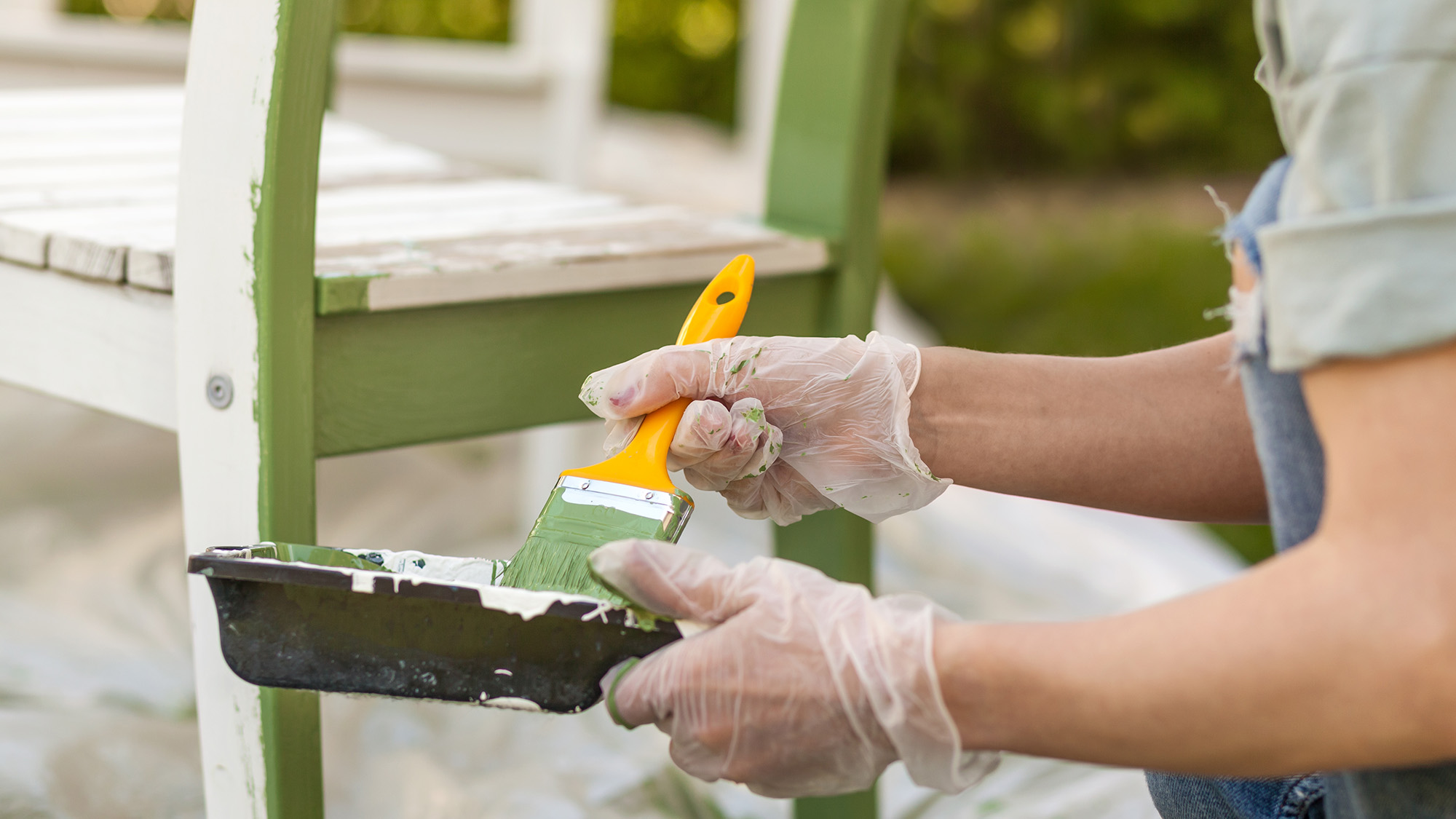
We’ve all got some leftover paint stacked in our sheds that never gets thrown out. Instead of leaving it to go rancid, make the most of what you’ve already got.
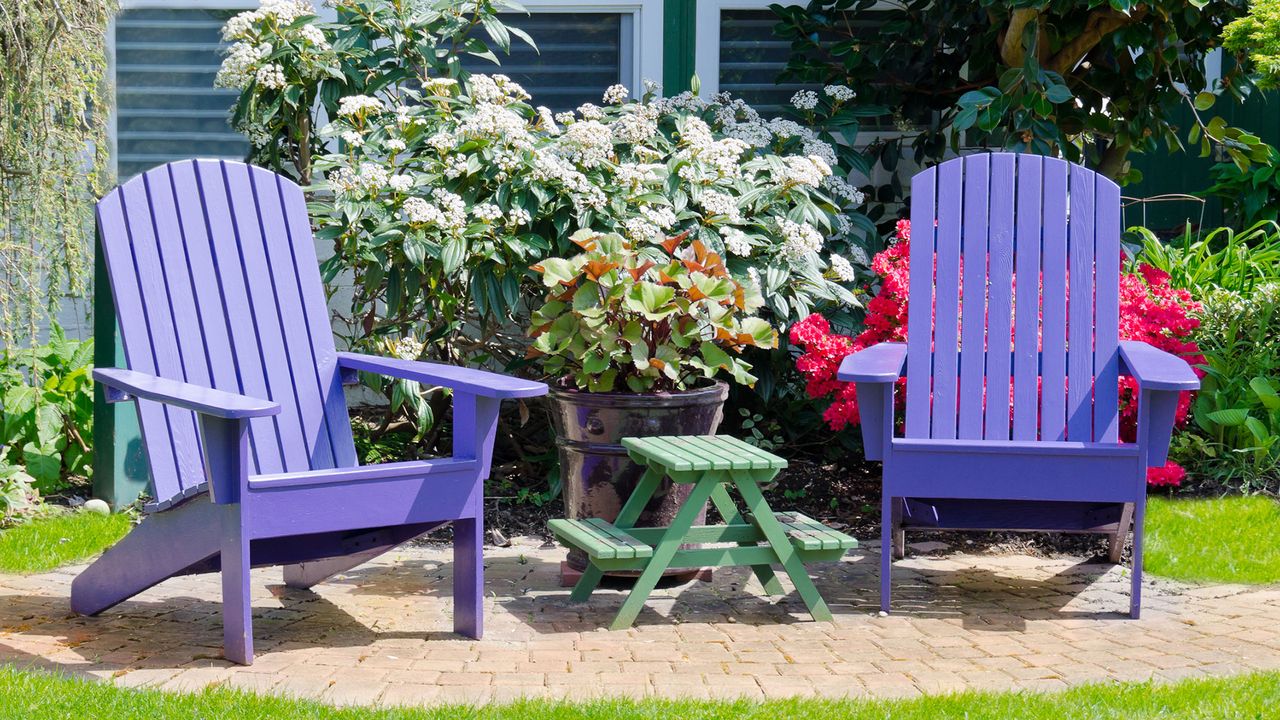
That sorry-looking garden bench or table will thank you for giving it a coat of bright paint to make it stand out.
What’s more, if you have any wooden furniture inside that is past its best, such as a low table or a small shelf unit, you can give it a coat of paint and move it outside.
That newly painted shelf unit can transform into a plant stand, adding vertical height to your yard, while a table can be used as intended or as another display for a water feature or a collection of containers.
2. Repurpose your textiles
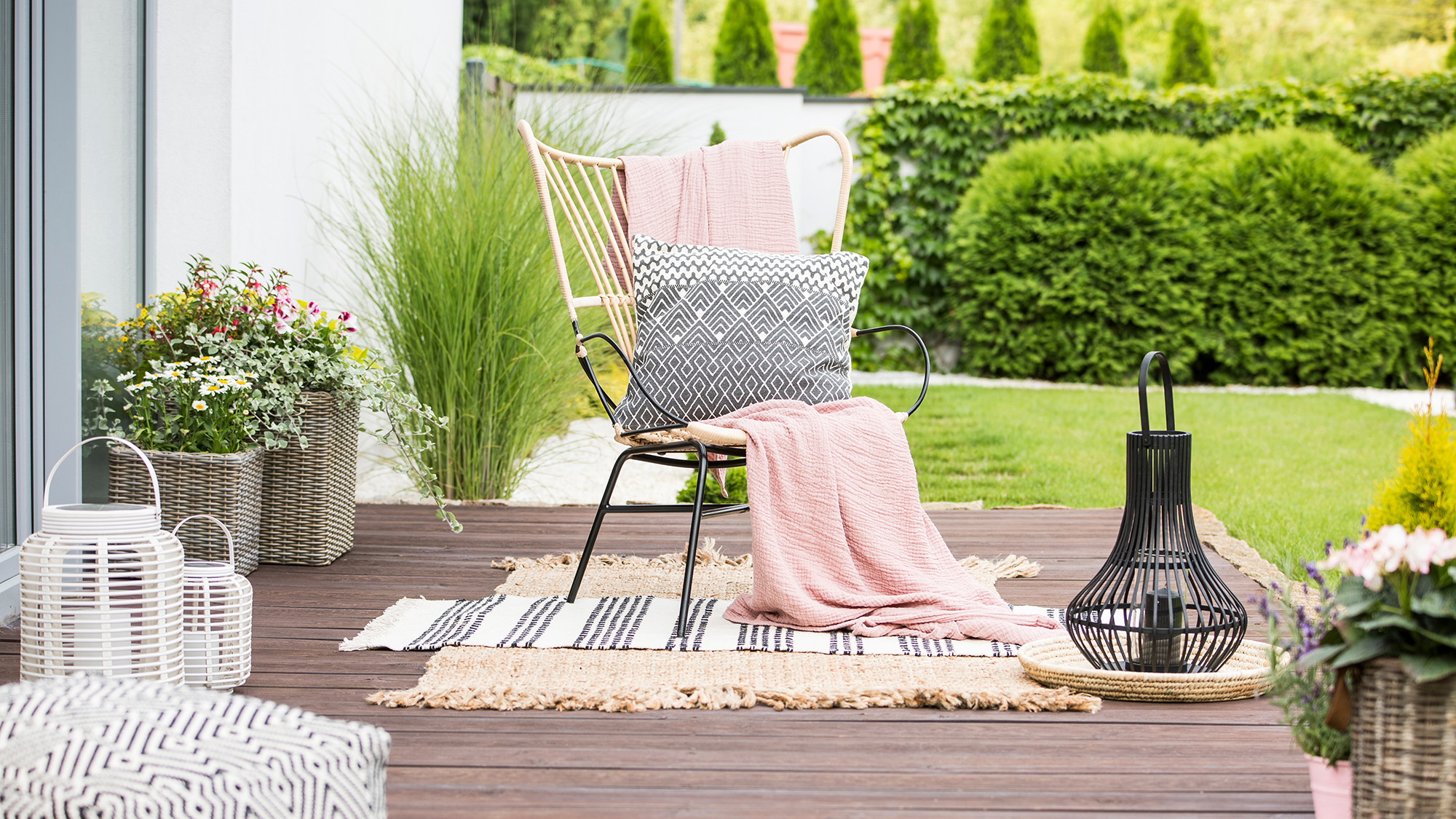
If your outdoor furniture is looking a bit worse for wear and you don’t want to buy new, inject some life back into it by covering it with an old throw. And for a layered look, add old cushions and blankets. Apart from brightening up a tired seating area, a mix of colors and fabrics will add extra vibrancy and texture to your yard.
This theme can continue if you have a decking area, as old rugs can be used beneath outside dining tables or loungers on a patio.
3. Think outside the box
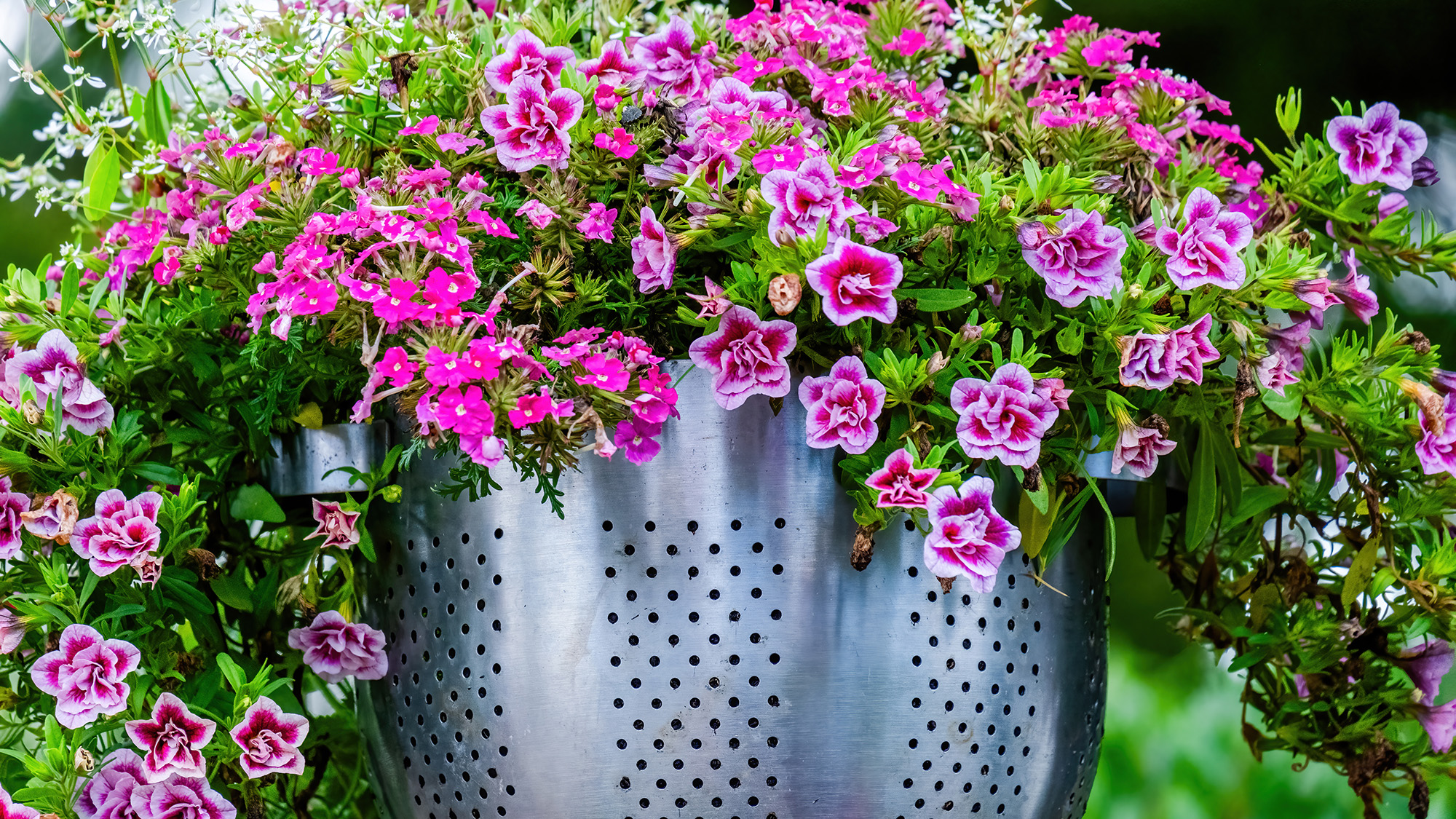
Hanging baskets are a quick way to add instant impact to your yard, and as they are raised above ground level, they take your eye upwards. What's more, they are perfect for small gardens where space is at a premium.
Rather than relying on a shop-bought hanging basket, you can make your own. An old colander — the brighter the better — can be used to hold your plants while adding a pop of color.
For extra savings, grow your own plants from seed. Try trailing petunias, nasturtiums, lobelia and sweet alyssum.
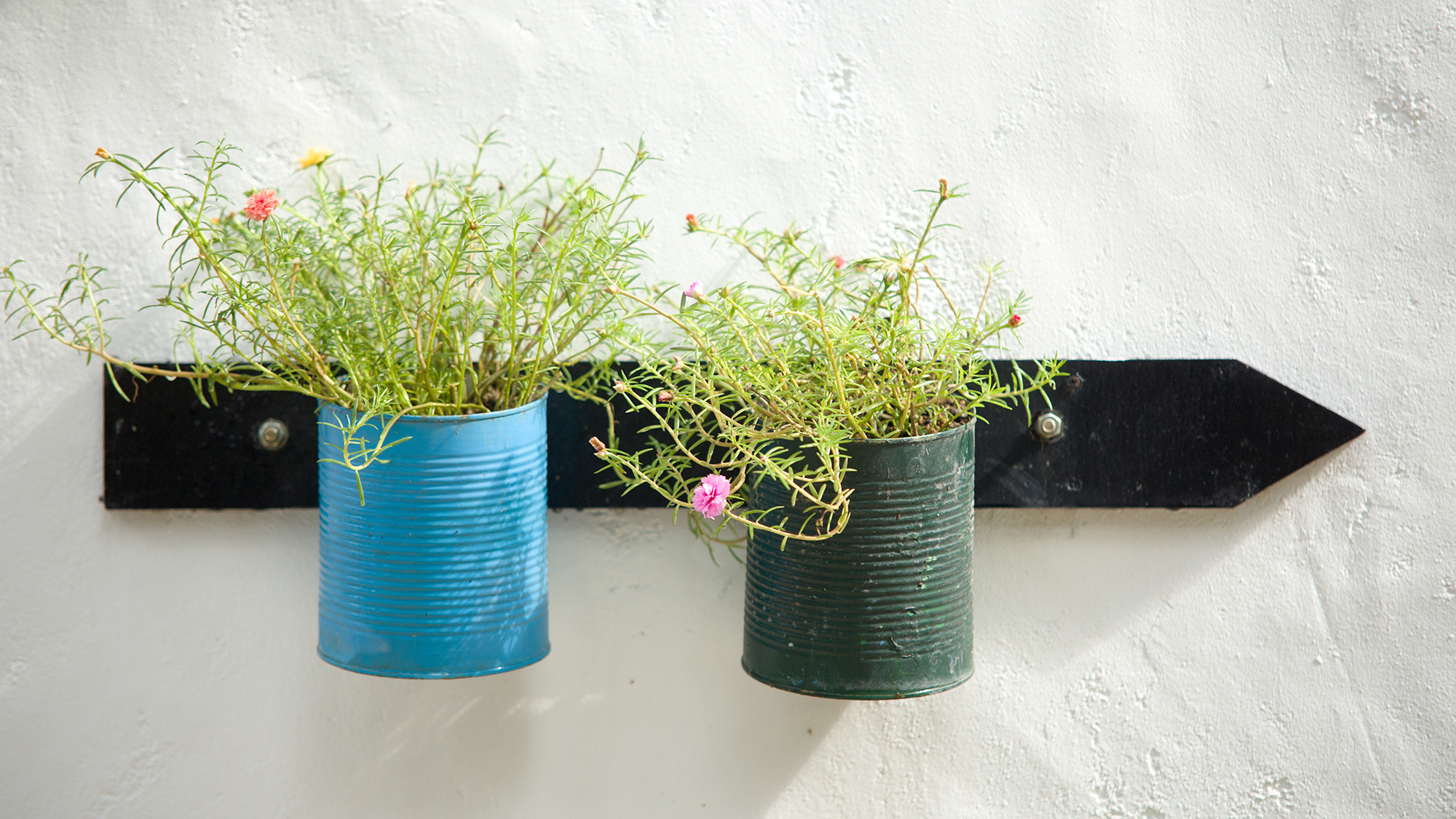
Apart from reusing an old colander, have a hunt around your home for other discarded containers that can be used for outdoor plants. Even old food cans, washed and painted, can make an attractive feature. Or how about those chipped ceramics, such as mugs and serving bowls, that could be given a new lease of life as a planter?
4. Reflect on this
Simple decorative items in your home can be repurposed in the garden. Scented candles in clear glass containers can be cleaned out and used with tea lights to add a warm ambiance, and even an old metal headboard can be repurposed as a decorative backdrop.
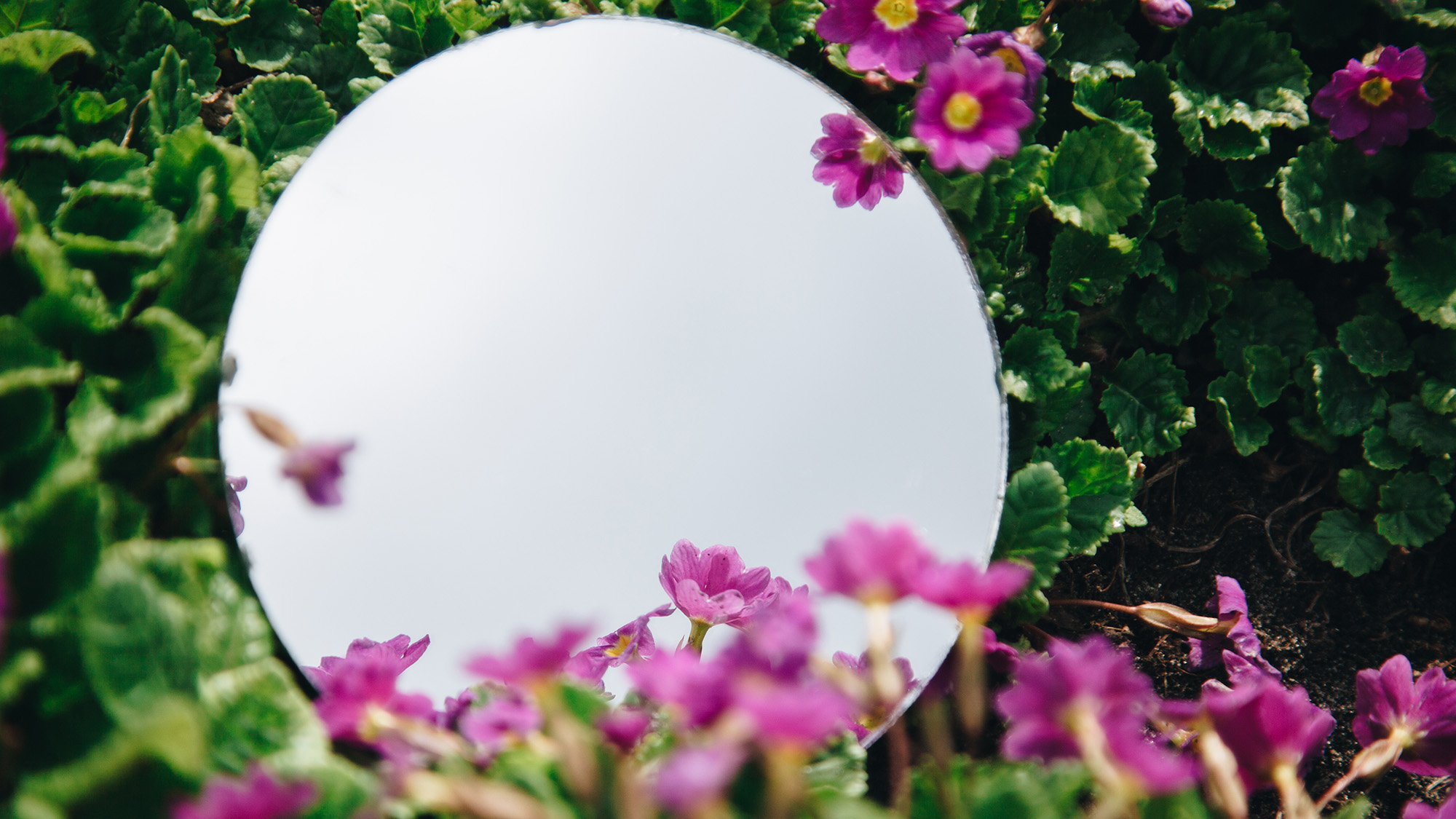
However, one household item that I think works particularly well in a garden is a mirror. Apart from its aesthetic appeal, a mirror’s reflective surface instantly creates an illusion of space, making it appear as if you have more plants than you do.
Prop a large mirror against a fence or wall, or attach a selection of mismatched mirrors to a vertical surface. As long as the mirror isn’t cracked, a frame that is too imperfect to keep in your home won’t look out of place outside.
5. Don't discard your leftovers
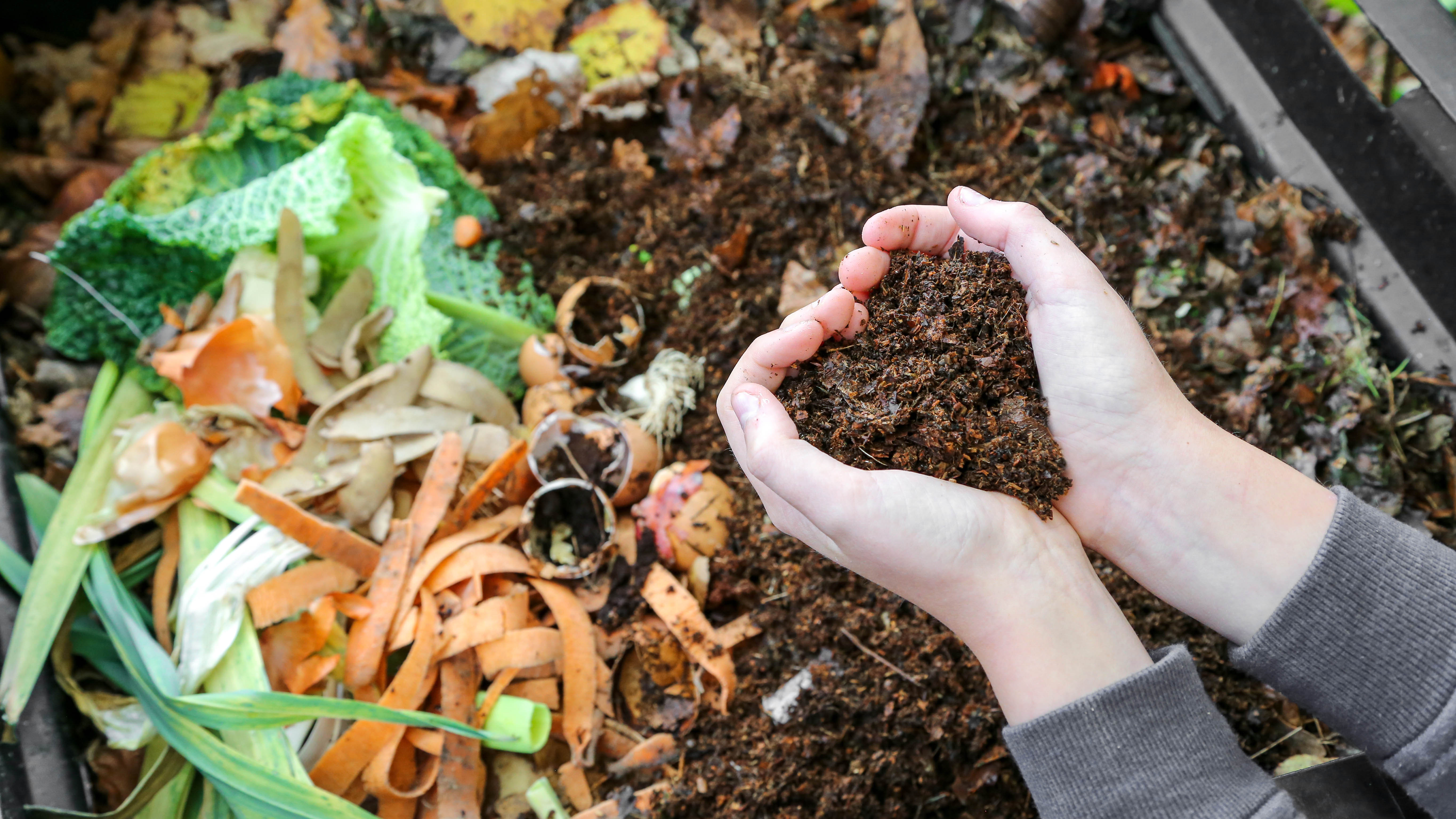
One of the best ways to grow a thriving garden is to make your own compost. It’s free to produce, and you’ll be using up leftover fruit and vegetables and yard waste. Instead of ditching organic matter into the trash, you can recycle it into nutrient-rich soil to improve your soil.
What’s more, if you've previously used shop-bought compost in your pots and containers, don’t throw it out. Michael Griffiths, author of the Easy Garden, shares on Instagram (@the michaelgriffiths) that with a refresh, you can bring it back to life.
He suggests tipping the old compost into a tray, then removing the old roots and debris, then breaking it up so it’s nice and crumbly. It’s now ready to mix in a handful of general-purpose fertilizer (the only part that's not free) and some new compost. He suggests mixing two parts old compost with one part new compost.