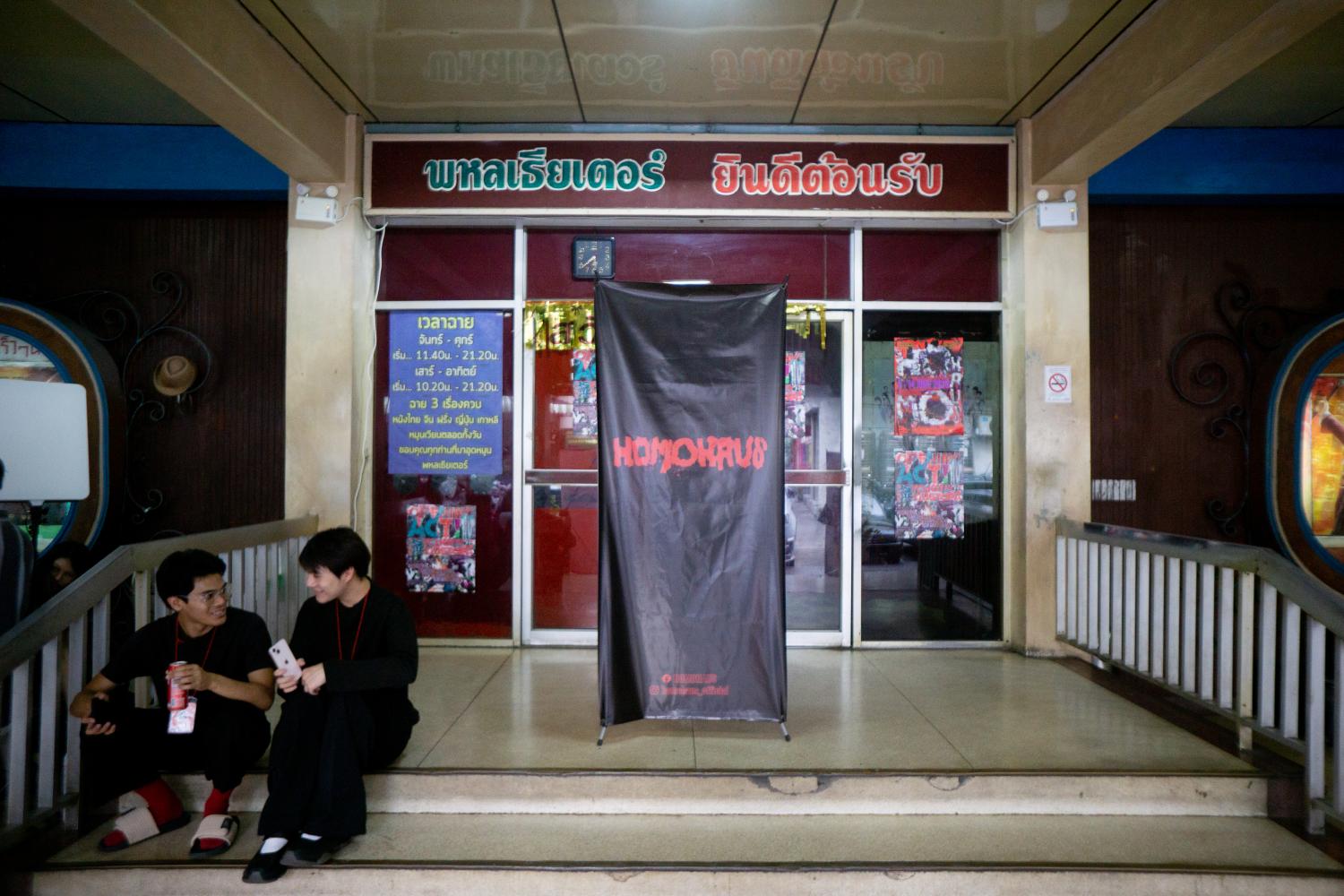
A relic of the cinematic boom of the 1960s, a run-down standalone cinema has a liminal existence. It has an ageing and rusty facade and old signage ironically boasts the screening of new programmes. The main foyer is adorned with outdated film posters and behind red curtains, a damp auditorium is a world of its own.
Yet, this kind of cinema lives a double life. Once, it was a venue for closeted homosexual culture and despite the passage of time, it still is.
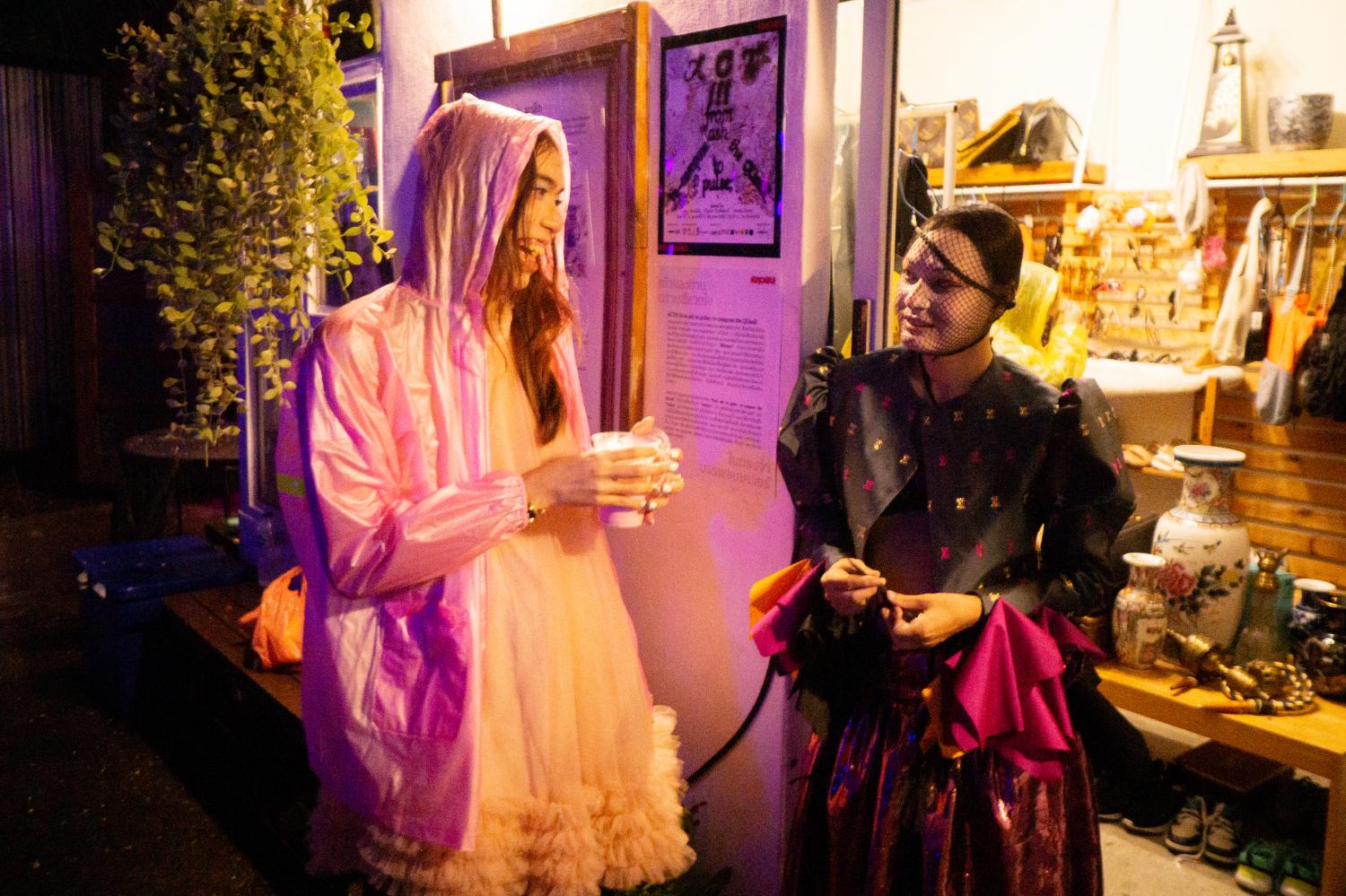
Last month, the third edition of Homohaus Festival returned with the theme "Radical Reincarnation". The 10-day festival kicked off at Phahon Theatre in early June. By drawing on the cinema's queer history, the opening night set the tone for the carnival.
Central to its approach is what Mikhail Bakhtin calls "grotesque realism". Homohaus debases all that is high to the lower body to renew a cycle of life.
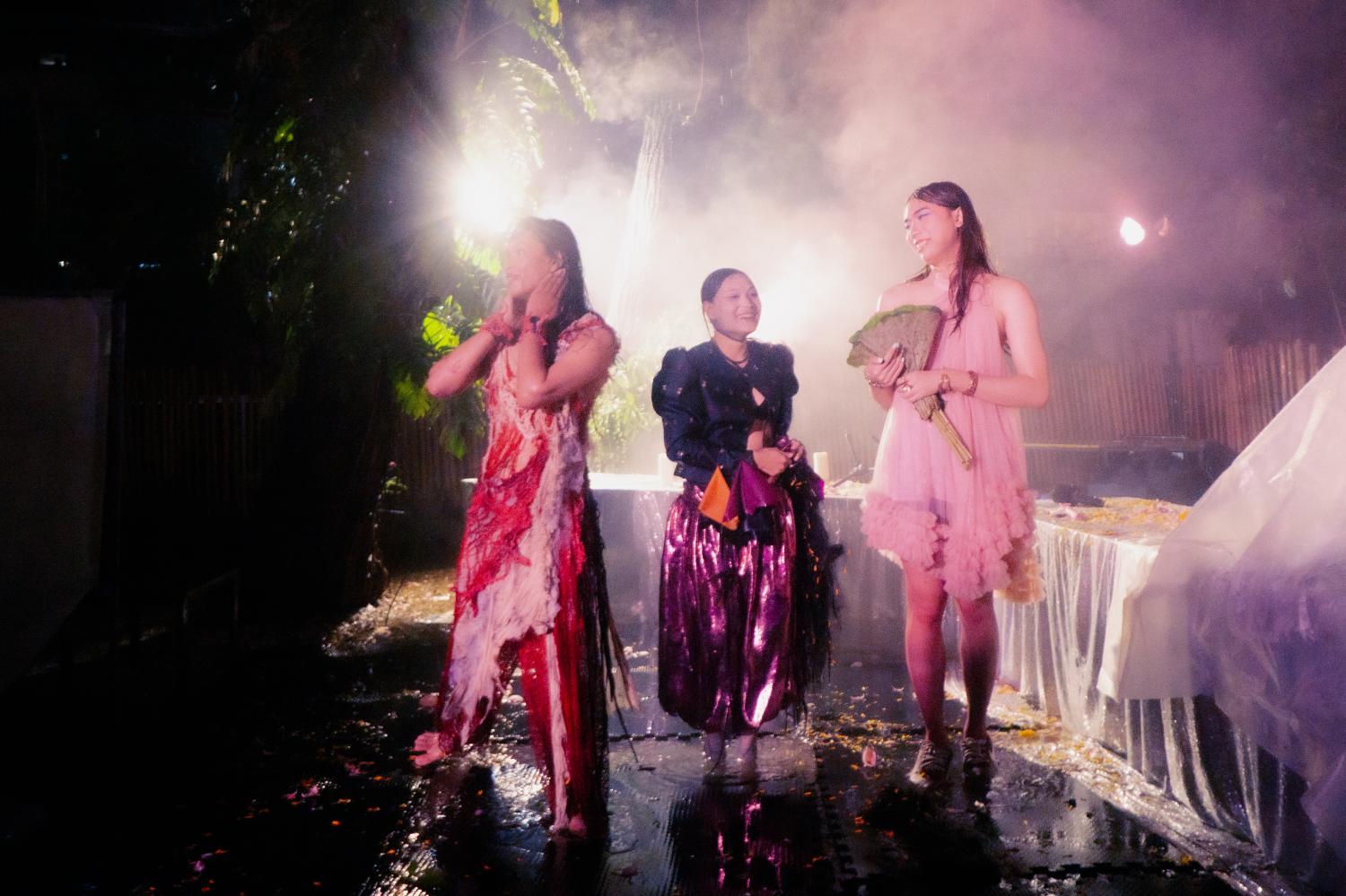
Psychotika Disgustopa
Miss Oat and Catherine P. Müller's opening performance Psychotika Disgustopa: Queer Necromancy Synthflesh Ceremony is a memorial to the abject.
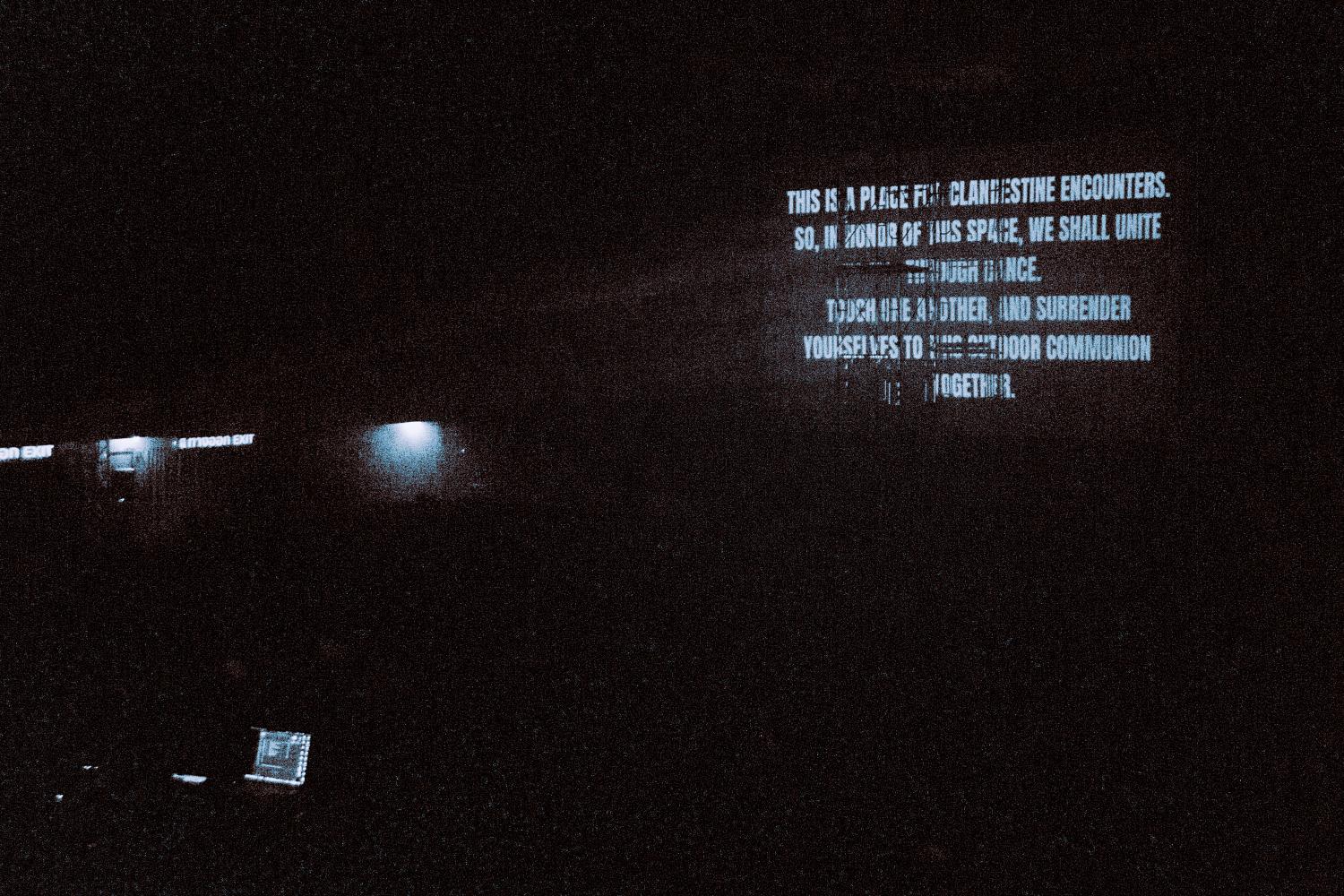
When audiences sink into red-leather spring chairs, the show opens with an invitation to experience "flesh, sweat, and bodily vibration". It revolves around an offering of pha bang sukun (funeral robe) to lost and wandering souls.
However, performers turn the ritual upside down through a mashup of prayers and dance songs, like Bazoo's Pee Fah Party (2000) and Natalie Stybert's Ma Leuk Geuk Geuy (2001). A number of tongue-in-cheek scenes involve queer decorum in front of government and private sponsors.
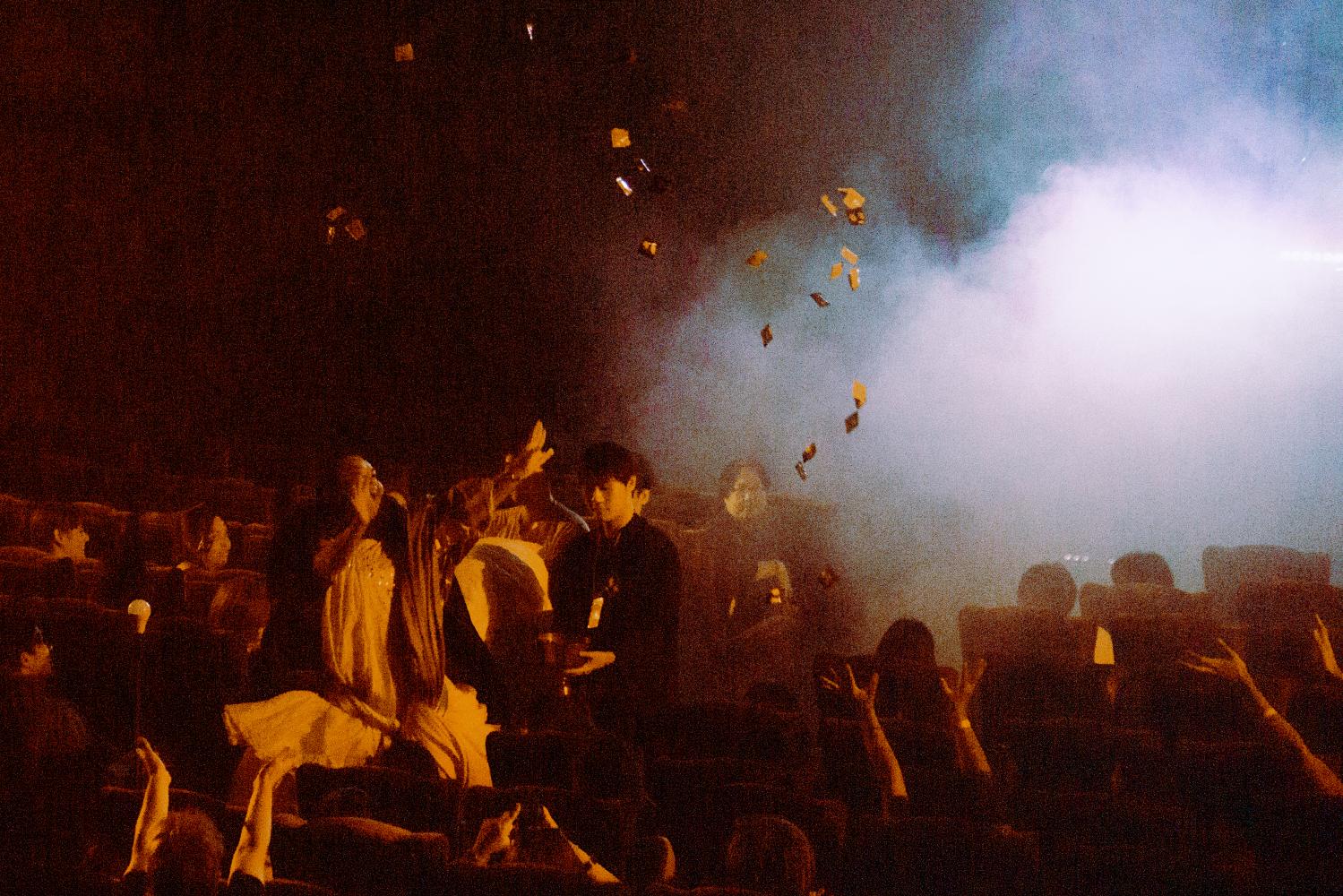
For example, the performer Raptor switches letters, such as uay khom which implies om kuay (oral sex). At fever pitch, they throw condoms to the audience, inviting them to embrace bodily life.
Psychotika Disgustopa is a titillating prelude to Miss Oat and Henrike Iglesias's philosophical meditation Afterlives at Buffalo Bridge Gallery.
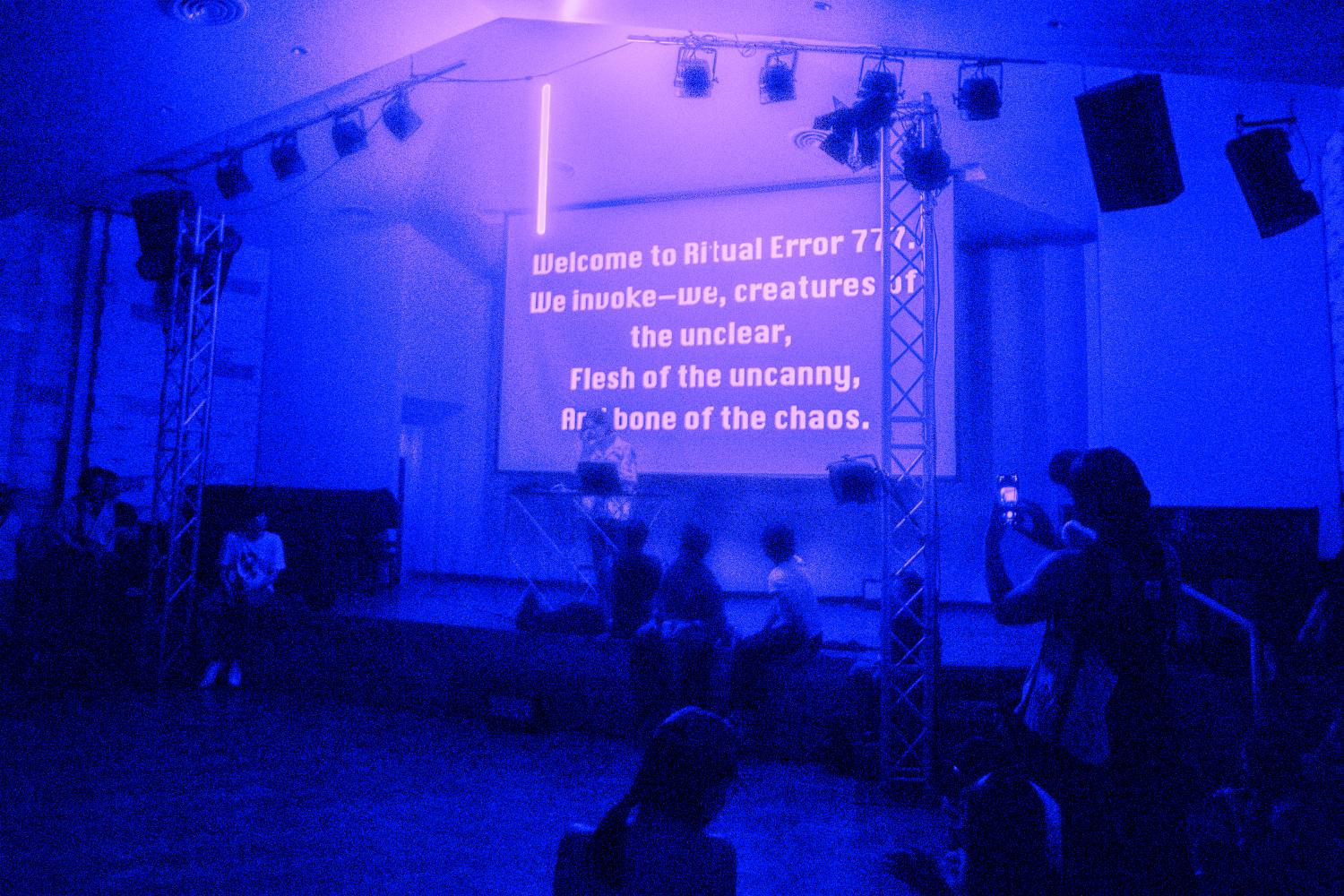
R!tual Error 777
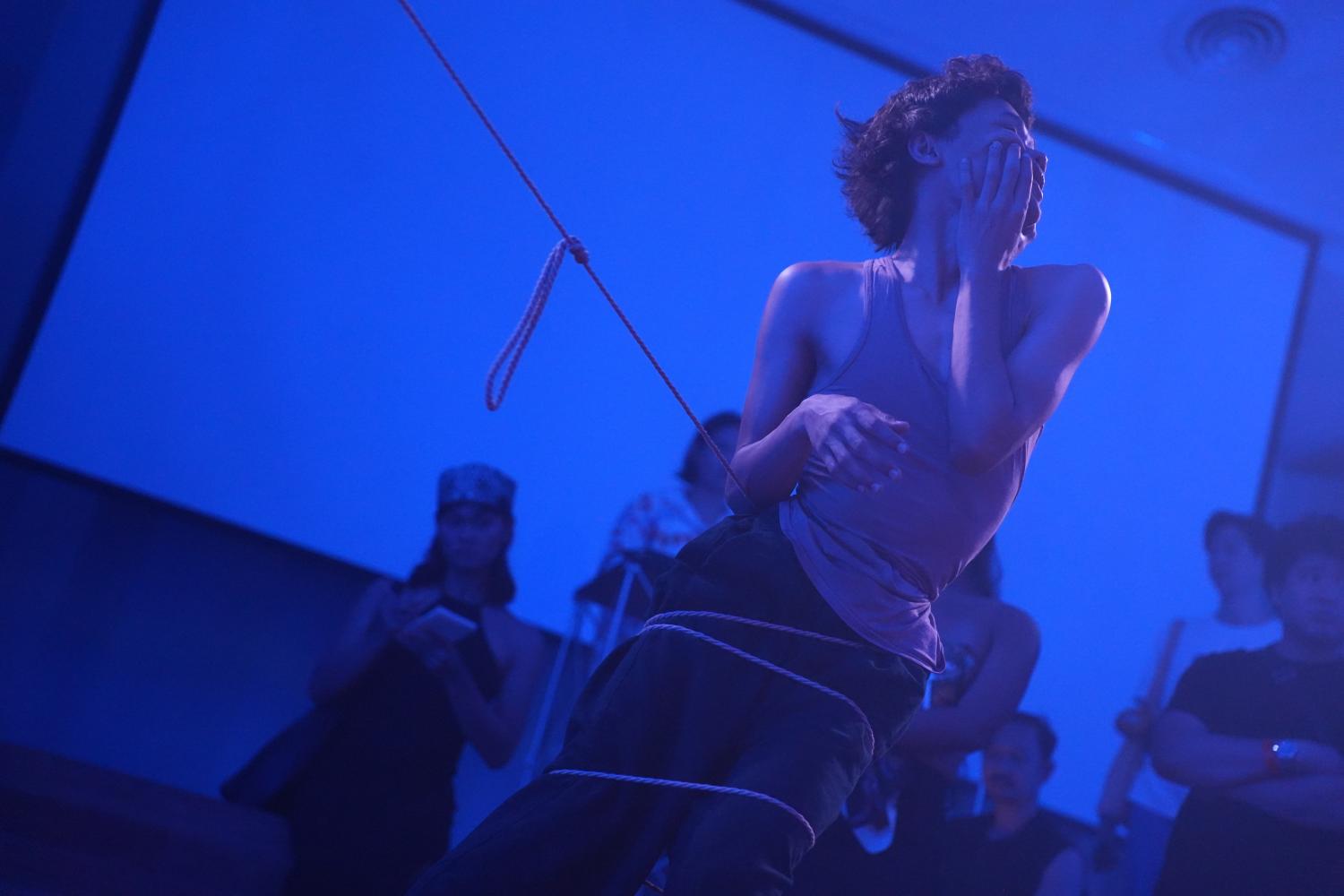
Staged on June 6 and 7 at Goethe-Institut, R!tual Error 777 subverts the ritualisation of body movement. Paopoom Chiwarak and Kelvin Shine Ko perform from two opposite corners of the room.
In the background, a jumble of songs, for example, King Vajiravudh's compositions Siam Manusti (1918) and Chui Chai Phram (1921), help set the context of Siam's modernisation.
I failed to observe not only the title's intentional misspelling (! instead of i), but also their movement. Paopoom does not dance to the beat. He also performs backwards and walks out of the room.
Failure comes down to my lack of knowledge that the elite had been reviving the court culture of Ayutthaya as part of modernisation.
Drama performances were divided between the all-female inner court and the all-male outer court. Moreover, they were staged to display images of civilised Siam to foreigners.
His queering thus highlights the constructedness of what Peter A. Jackson describes as the regime of images, "a product of distinctive character of Siam's semi-colonial relations with the West", that undergirds heteronormativity.
Meanwhile, Kelvin Shine Ko, a dance artist from Dawei, slithers around a chair, caressing his body, pulling up trousers and lying flat and legging up.
After moving to Thailand four years ago, they enjoy more freedom to explore themselves, whether artistically or sexually. It is an irony that they learn the traditional dance of Myanmar and Japan in Thailand.
"Haha, Thais colonise me. No, no, I mean Thais have influenced me a lot," they say. While anti-Myanmar sentiment followed the publication of Thai Rop Phama (1920), Kelvin paints a different picture.
They are a hybrid product of an encounter between home and a host culture, where diasporic identity is shaped, contested, and negotiated.
When all is said and done, the show ends on a loud note with a party that borders on an orgy.
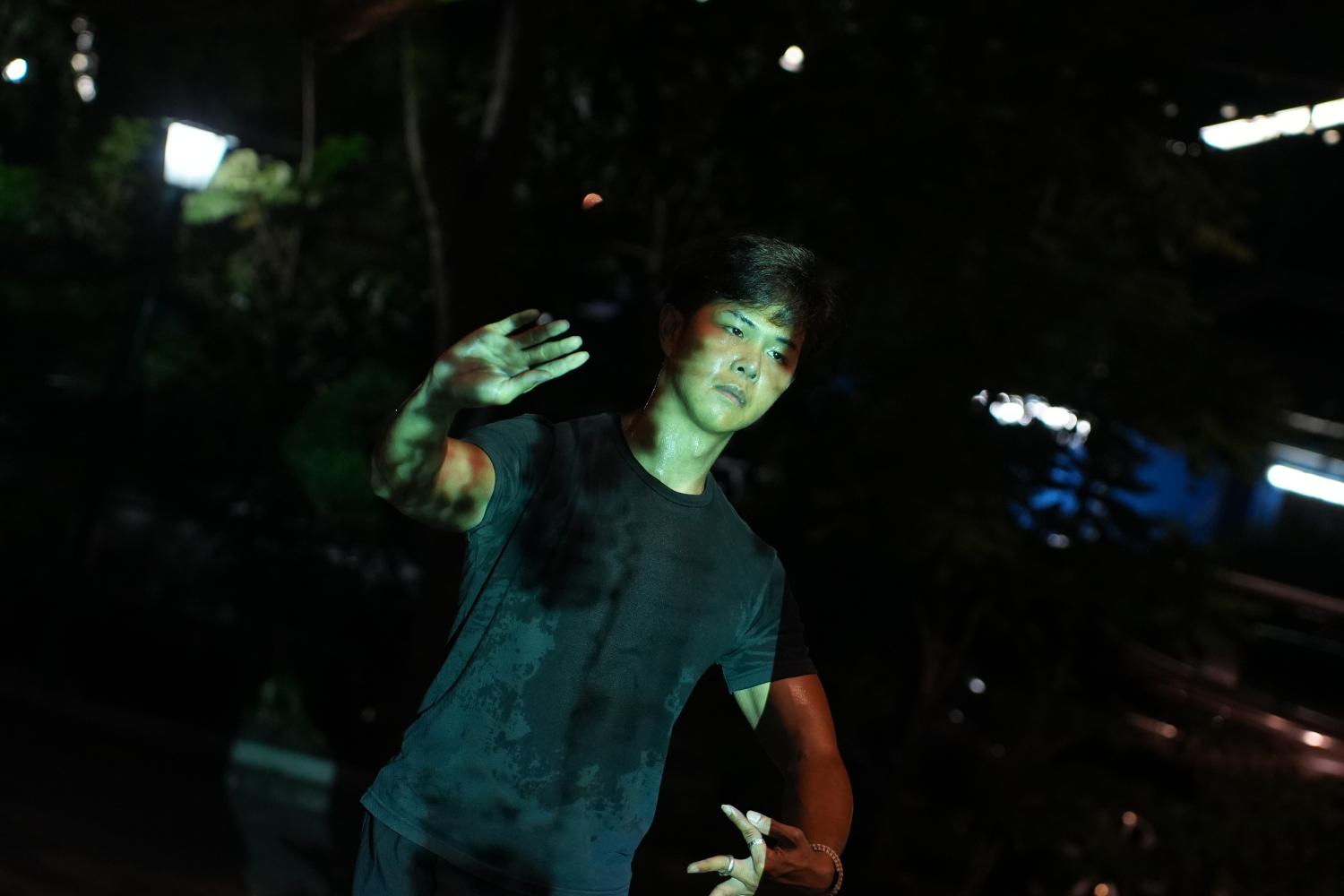
From Ash To Pulse
Performed on June 12 and 13 at Suan-Kru Angoon, From Ash To Pulse: Re-compose The Queer is a life-affirming reclamation of ancestral ties.
Padhamapha Werachainarong, Jessada Chan-yaem and Ishvara Devati initially perform in chronological order, yet they gradually overlap and coincide, inviting audiences to engage individually or collectively. It is by far the most accessible show.
Padhamapha begins with the most lyrical prayer for queer ancestors, appealing to them for protection and moral support. While Jessada and Ishvara take the stage, she retreats to her altar in the background and offers spiritual guidance to those interested.
Her fun cover of Britney Spears' Oops!...I Did It Again (2000) sets the tone for her reading of a personal diary that celebrates a hedonistic approach to life. While caressing a sex toy, she invites audiences to "go flirt, go be fabulous, go lie a little, go tease, go make bad decisions, go be cute like a kitten".
Slang and internet memes, mostly from The Face Thailand, The Take Hormone and Miss Tiffany's Universe, are used to make fun of difficulties in life. "I am a fighter," she says like Ticha. Her show exemplifies how resilient and resourceful queer survival is.
Meanwhile, Jessada starts with a tribute to all kinds of mothers, including "those without wombs", that are manipulated, abused and maimed.
On a screen, Tae Prakardwutthisan's video of a military coup in 1947 hints that the nation-building programme reinforced the gender binary. Due to this haunting legacy, her performance offers salvation to "all kathoeys whose hair was lost beneath the blades of a number-zero clipper".
Her gliding through water to reclaim pieces of them is a parody of Prince Thammathibet's Kap He Ruea (barge-rowing song). As the show comes to an end, her singing comes close to orgasm.
Homohaus laughs in the face of adversity. Despite the global surge of conservative forces, artists unite to make fun of institutional power. The carnival spirit lingers in the use of comic techniques, especially parody and billingsgate registers.
Obsession with all that is bodily and abject points to a new cycle of life. By bringing everything down to earth, including morality, the festival invites all to "a free world".