
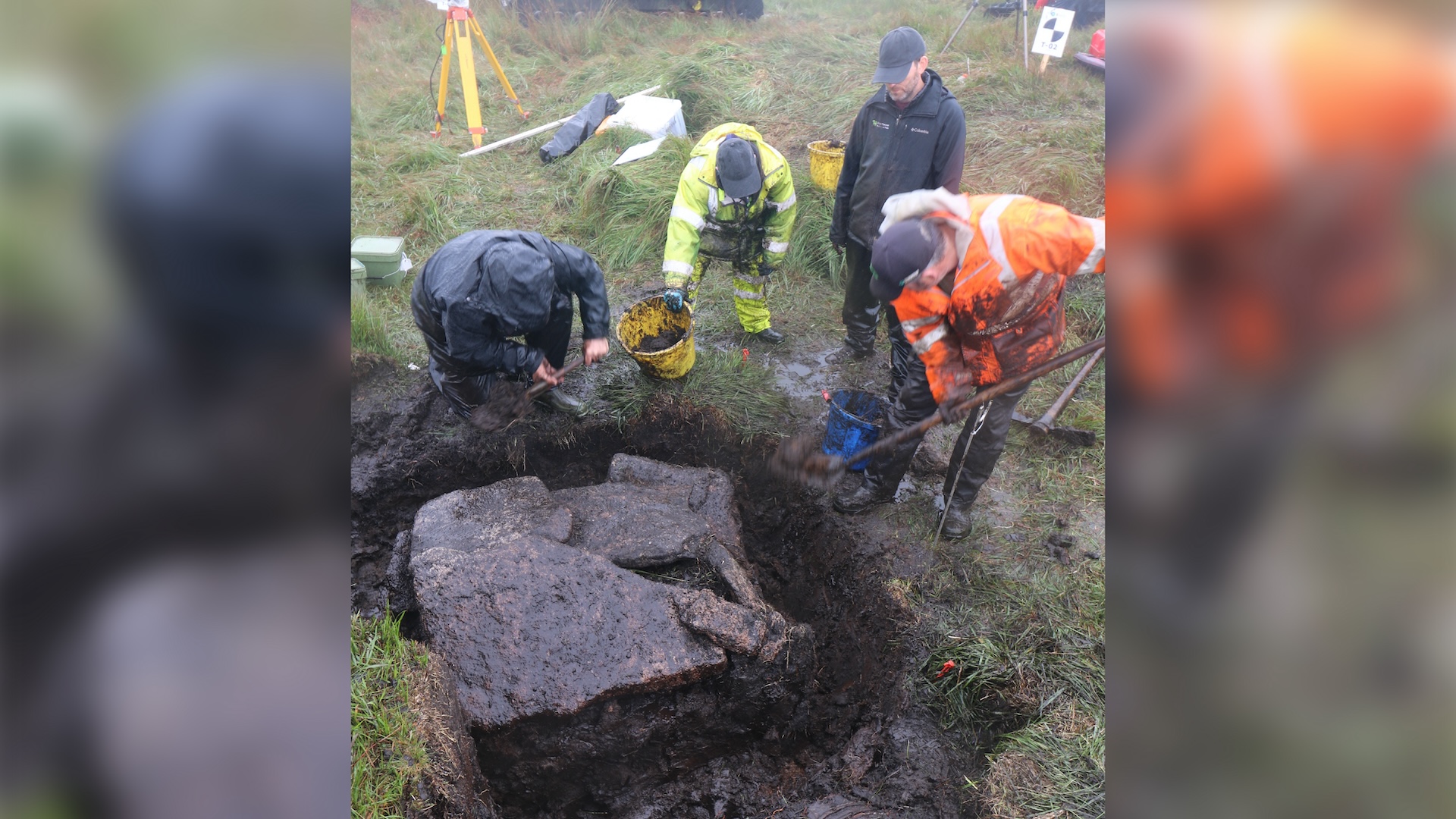
A "stunning" tomb found on an isolated moor in southwest England could help archaeologists understand what life was like 4,000 years ago in the Bronze Age.
Originally discovered in May, the burial chamber began eroding out of the peat at Dartmoor National Park and was excavated in August, according to a statement from the park. The tomb, which measures about 3.3 feet (1 meter) square, was covered with three large, granite stones. This cist-type burial was likely used around 1800 B.C., based on the radiocarbon dating of charcoal from inside the tomb.