
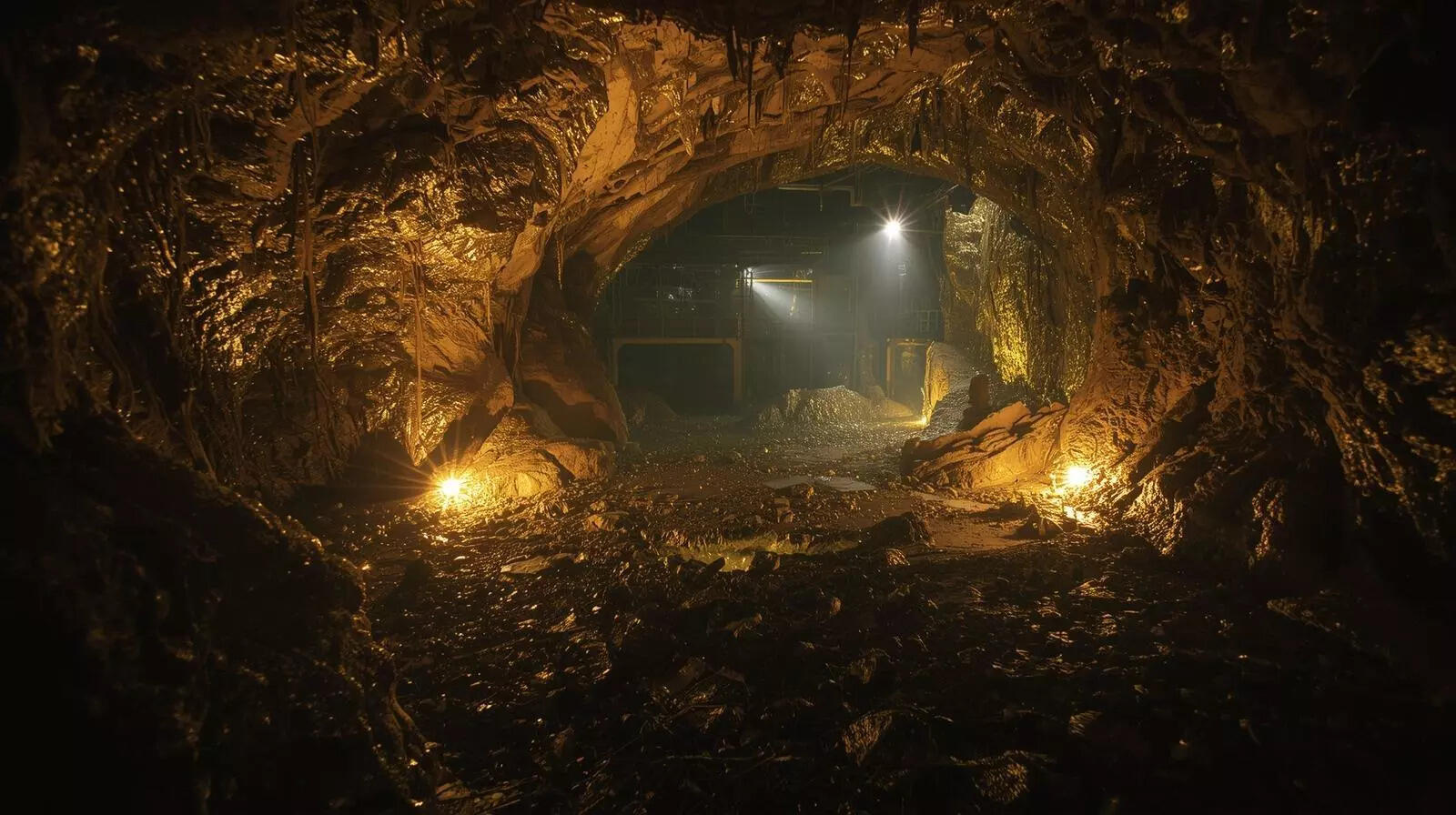
The study focuses on how gold formed and moved within the Sawayaerdun gold deposit in northwest China, a large orogenic system shaped by long periods of burial, deformation and heating. Before any visible gold veins existed, the host sedimentary rocks already contained microscopic pyrite formed during early burial. This earliest pyrite, referred to as Py0, developed within carbon rich layers and was unusually rich in gold, even though that gold was invisible to the naked eye. It was locked inside the crystal structure of the mineral rather than forming nuggets or veins. Along with gold, this pyrite also concentrated elements such as arsenic, cobalt and nickel. These early conditions are important because they show that gold was present from the beginning, stored quietly within common sedimentary minerals long before mountain building began.
Gold concentration linked to early sedimentary minerals and later metamorphism in the Chinese Tianshan mountains
According to the study “Mineralization of the Sawayaerdun gold deposit, South Tianshan, Northwest China: Insights from texture and geochemistry of multistage pyrite and arsenopyrite” as tectonic forces built the South Tianshan mountains, the rocks containing Py0 were compressed and heated during regional metamorphism. Under these conditions, the original pyrite began to deform and partially recrystallise. This process released gold and other elements into hot fluids moving through the rock mass. New pyrite and arsenopyrite formed during this stage, labelled Py1 and Apy1, but these minerals contained much less gold than the original pyrite. The rocks were neither fully solid nor fully fractured at this point, creating a brittle ductile environment where fluids could move but also interact strongly with the host rocks. Much of the gold was no longer locked in place but circulated within the system, ready to be redistributed as pressure and temperature continued to change.
Fluid boiling reshapes the main ore minerals
Later in the deposit’s evolution, pressure drops caused the gold bearing fluids to separate and boil. This led to the dissolution of earlier minerals and the formation of new, more stable ones. Zoned pyrite and well formed arsenopyrite crystallised during this main ore stage. These minerals, Py2 and Apy2, show chemical patterns that reflect repeated dissolution and reprecipitation rather than simple growth. Gold was present, but in lower concentrations than in the earliest pyrite. The process did not create new gold, but it helped move and concentrate existing gold into specific zones.
Late mineral growth contains little remaining gold
In the final stage, late pyrite formed with almost no detectable gold. By this time, most of the gold had already been redistributed into earlier structures or removed from the system. These late minerals mainly record cooling and declining fluid activity rather than active gold concentration.
Isotopes trace metals back to sedimentary sources
Sulfur and lead isotope data show little variation across all mineral stages. This consistency indicates that both sulfur and gold were sourced from the surrounding sedimentary rocks rather than from deep magmatic inputs. Regional metamorphism mobilised these elements, turning solid minerals into gold carrying fluids that later formed the deposit.
Why early pyrite matters for exploration
The main conclusion is that gold enrichment began very early, at the sedimentary stage. Later geological processes redistributed this gold but did not generate it. Identifying sedimentary rocks with early gold rich pyrite is therefore critical for understanding and exploring orogenic gold systems, both in the South Tianshan region and across the wider Central Asian Orogenic Belt.


