
Emma Carey regrets not going for one last run.
She had planned to do her favourite activity but a bout of laziness took hold.

So she convinced herself she would do it the next day before skydiving.
''Fast forward to tomorrow - the day I told myself I would run - and there I am instead, laying paralysed in a hospital bed and being told that I would never walk again,'' Ms Carey says.
She had plummeted more than 4km to the ground strapped to a passed-out skydiving instructor before colliding face first with a cow pasture.
Ms Carey revealed the struggles she experienced in the aftermath of the accident in a speech to 6000 students at Stand Tall, Australia's largest student wellbeing event.
In particular, her fury with herself for her missed run.
"I couldn't believe I'd passed up an opportunity to do the thing I loved most in the whole world," Ms Carey told the crowd on Thursday.
"I felt so much anger and regret and I remember it was the strongest emotion that I'd ever felt."
Lying in her hospital bed, she wrote a reminder to herself: "If you can, you must".
Ms Carey, who eventually learnt to walk again after the 2013 accident, shared her story with thousands of school students at Stand Tall in the hope it would help them overcome their own mental health burdens.
The event, run by a suicide prevention charity of the same name, hosts motivational speakers and encourages the young attendees to cheer and dance in a bid to build resilience against mental health crises.
Angela Farr-Jones founded the organisation after witnessing how widespread mental health struggles are for school students.
"Tragically my kids, who were in late high school years, had been to more funerals than I'd been to," she says.
A third of Australian teens aged 14-19 have experienced suicidal thoughts and behaviours, according to an Australian Institute of Family Studies report.
That would amount to around 2000 students in the audience.
Jessica Watson was another voice who shared her personal challenges to the inspired and youthful crowd at Sydney's TikTok Entertainment Centre.
The former Young Australian of the Year told students of the mental battles she faced at their age, when she etched her name in history for being the youngest person to ever sail the globe solo.
"I still had this niggling doubt in the back of my head," Ms Watson said of her 16-year-old self.
"About whether I'd fall apart, whether I'd go back to being that scared, timid little girl."
With the entire country watching, Ms Watson set sail from Sydney Harbour in 2009.
She was forced to return to land just one day later after crashing her 10m-long vessel into a 63,000-tonne ship.
A media scrum awaited her back on land and demanded to know if she was truly ready to take on the feat.
"This is really going to sound quite strange," she tells students.
"I walked away from this incident with more confidence, as the rest of the world lost confidence."
While Stand Tall focuses on sharing lived experiences and techniques to help students cope with challenges and strengthen their mental fortitude, other organisations have taken a different approach.
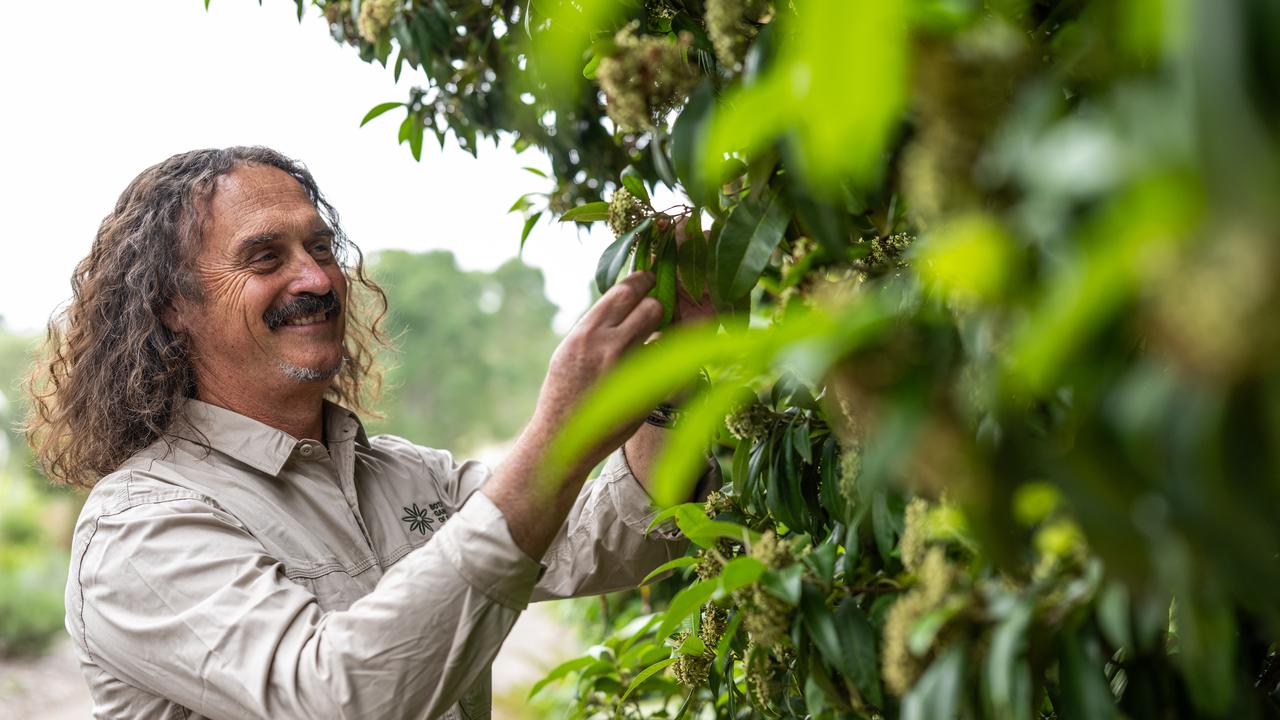
''There is genuine research out there that shows if you get your hand in the soil, there's bacteria that will come up and enter your lungs and enter your brain,'' environmental educator Peter Dawe says.
''You can't avoid feeling good when you're doing that. That's just the reality.''
Mr Dawe leads Youth Community Greening, a program run through the Botanic Gardens of Sydney.
For 12 years he's been working in schools with underprivileged students, youth justice centres, and migrant youth groups to build gardens.
Mr Dawe believes connecting with nature is necessary in a time when adolescents with mental health struggles are more comfortable online than offline.
"One young fellow said that the only type of dirt that he would ever touch is virtual dirt," he said.
"I thought, 'wow, I've never heard that before'."
Too much screen time can lead to behavioural issues for children aged five to 17, according to the Australian Institute of Family Affairs.
Mr Dawe says teachers too often warn him of a child's behavioural problems when he attends schools, but he doesn't want to hear it.
In his experience, the supposedly poorly behaved students change when gardening.
"Which student were you talking about?" he reports asking the teachers at the day's end.
Principals from Indigenous schools tell him students who rarely turn up start appearing everyday when he runs the program at their school.
"I do a lot of work with Aboriginal students ... and I know that they have an inherent connection to the land," Mr Dawe says.
"They have this connection that most of them don't even realise."
Mr Dawe and the founders of Stand Tall hope that they're planting a seed of hope and resilience in students that won't be destroyed by mental health struggles.
Lifeline 13 11 14
beyondblue 1300 22 4636
Kids Helpline 1800 55 1800 (for people aged 5 to 25)