Get all your news in one place.
100's of premium titles.
One app.
Start reading
The Conversation
The Conversation
A.M. Barrett, Chair and Professor of Neurology, UMass Chan Medical School

Stroke survivors may be saddled with an invisible disability known as spatial neglect – but a simple treatment offers significant improvement

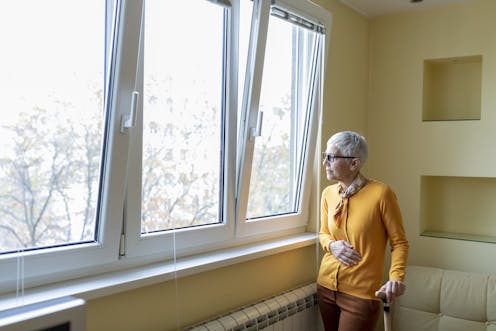
Spatial neglect causes problems when walking, dressing, reading, driving and doing other normal daily activities. Professional Studio Images/E+ via Getty Images

More than half of stroke survivors do not receive rehabilitation after the first days of advanced stroke care. Instead of living for months or years with visible or hidden disabilities, stroke survivors can take advantage of new techniques of advanced rehabilitation to improve their function and freedom.

One condition, called spatial neglect – in which a person’s three-dimensional reality and spatial movements are distorted on one side – is particularly underdiagnosed and undertreated among those who have suffered strokes and other brain injuries.

Sign up to read this article
Read news from 100's of titles, curated specifically for you.
Already a member? Sign in here
Related Stories
Top stories on inkl right now
One subscription that gives you access to news from hundreds of sites
Already a member? Sign in here
Our Picks
Fourteen days free
Download the app
One app. One membership.
100+ trusted global sources.