
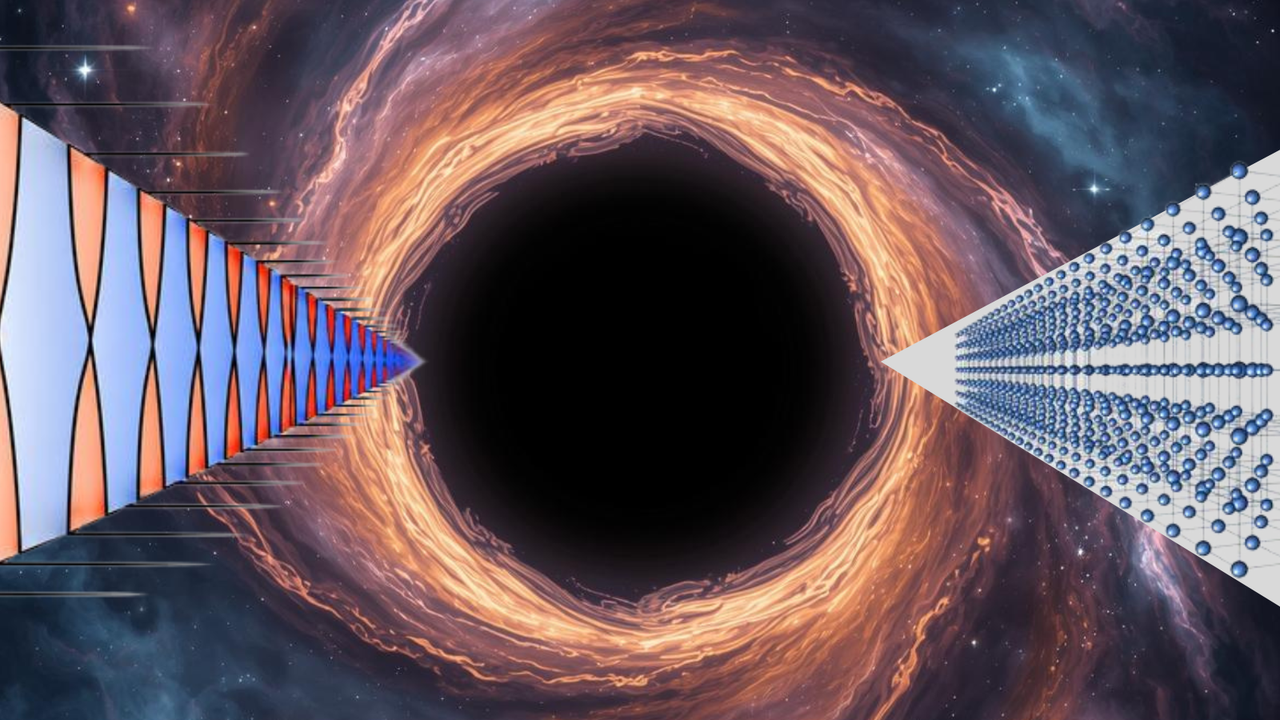
When we think about a black hole, we probably picture some vast cosmic titan, greedily consuming any matter unfortunate enough to fall within its gravitational influence. Thinking deeper, we probably imagine this ravenous cosmic beast forming from the explosive collapse of the core of a massive star. Maybe we even picture a supermassive black hole at the heart of a galaxy, formed from a multitude of mergers between smaller black holes and reaching masses millions or even billions of times that of the sun.
However, as accurate as this picture is, many scientists have long suspected that it is only the tip of the black hole iceberg, representing a single class of "astrophysical black holes" alone. These researchers theorize that black holes can also form at much more diminutive sizes that do not require the existence and death of massive stars or prior pairs of black holes. In particular, many scientists think that tiny black holes, with masses as small as that of a medium-sized asteroid, could have formed directly from density fluctuations in the hot and dense matter that filled the cosmos moments after the Big Bang. These objects have remained hypothetical as evidence of their existence has proved elusive. That hasn't stopped researchers thinking about non-astrophysical black holes and the routes to their formation, however.














