
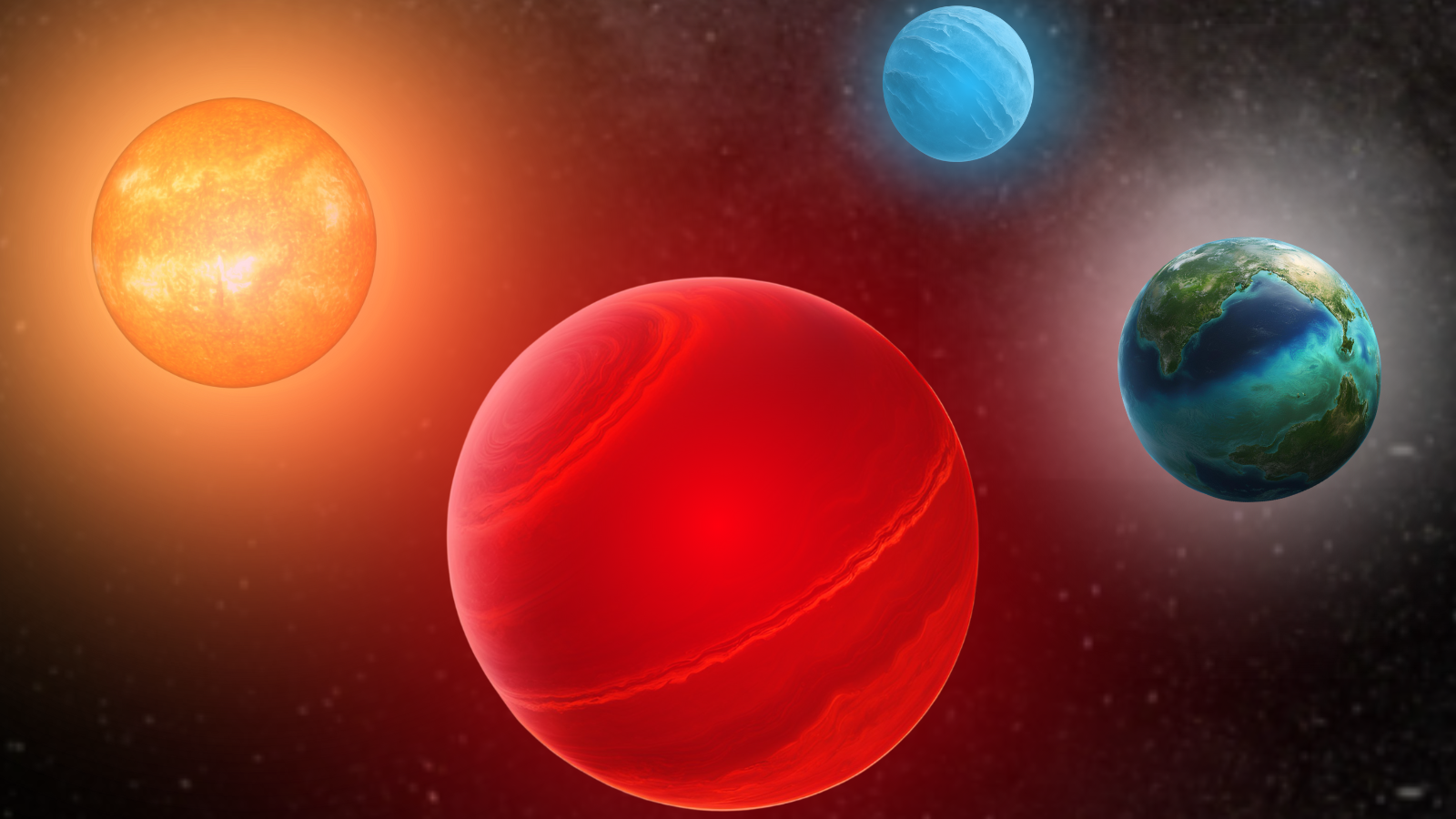
The discovery of an extraordinary multi-planet system has demonstrated that so-called "hot Jupiter" planets may not be lonely giants after all. The findings could force scientists to revise their models of how planets form and how planetary systems evolve.
The system with this unexpected structure is centered around the K-type star WASP-132, located around 403 light-years away in the constellation of Lupus. Its inhabitants are the hot Jupiter (WASP-132b), a newly discovered inner super-Earth (WASP-132c) and an outer distant ice giant planet (WASP-132d).
The discovery was made by a team of researchers hailing from a range of institutes, including the University of Geneva (UNIGE), the National Center of Competence in Research (NCCR) Planets, the Universities of Bern (UNIBE) and Zurich (UZH).













