
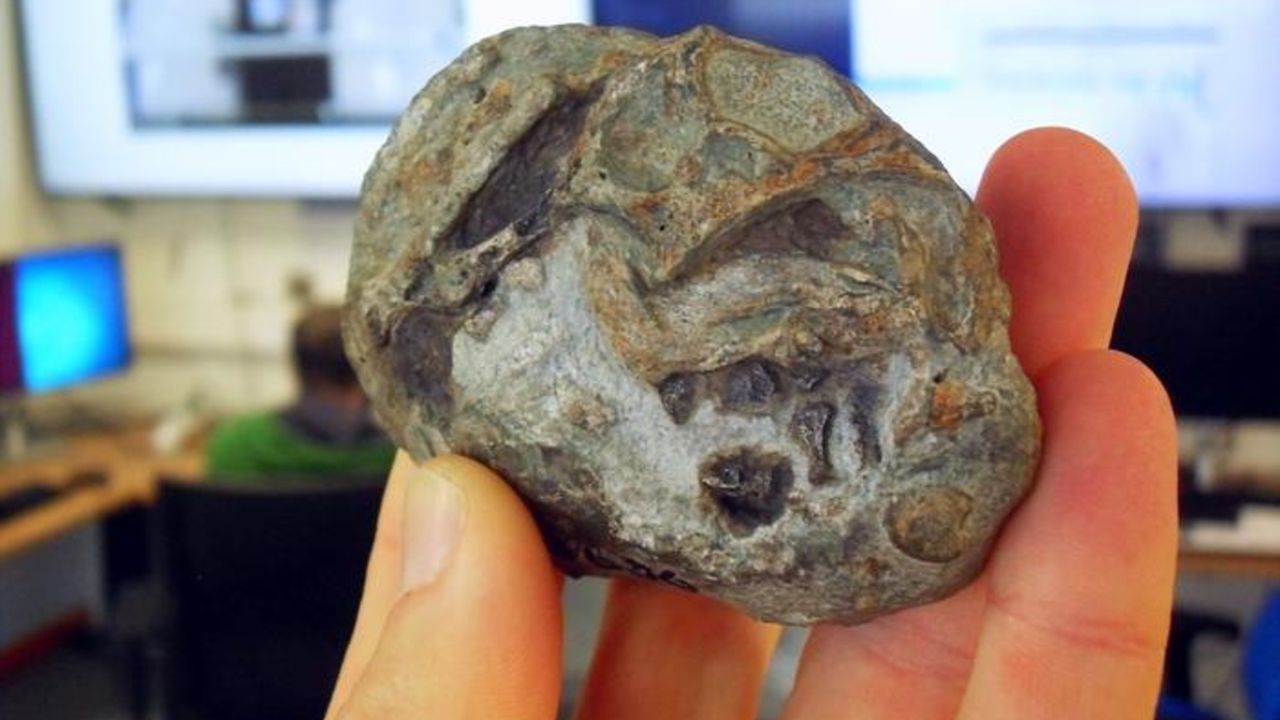
Scientists have cracked a major mystery about mammal evolution after discovering a 250 million-year-old fossilized egg from before the time of the dinosaurs. Researchers say the specimen, which holds a curled-up embryo of the plant-eating animal Lystrosaurus, is the first known egg ever found from a mammal ancestor, proving that mammals' ancestors laid eggs.
The egg could help paleontologists better understand how these animals survived the Permian-Triassic extinction, also known as the Great Dying, which occurred around 252 million years ago. During this event, Earth faced brutal heat, drought, volcanic eruptions and ocean acidification, and 90% of Earth's species died.