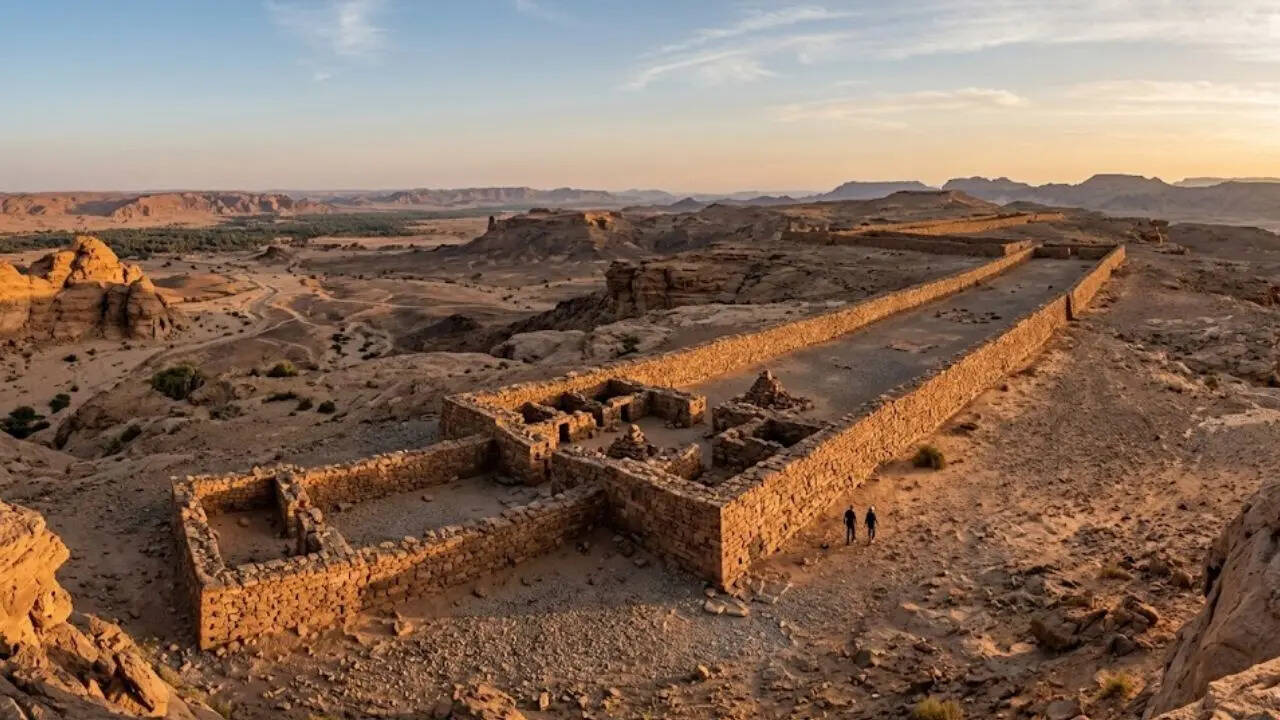
Archaeologists have discovered an extensive prehistoric ritual landscape in Northwest Arabia. This site features massive rectangular stone structures called ‘mustatils.’ These monuments are around 7,000 years old, from the Late Neolithic period, and they were built long before the Pyramids of Giza or Stonehenge. Recent digs funded by the Royal Commission for AlUla show that these weren't just markers. They served as complex centres for communal gatherings and ritual animal sacrifices.
Local sandstone was used to construct some of these structures, which can stretch over 600 meters in length. This marks one of the earliest traditions of large-scale monument construction worldwide. These discoveries offer crucial insights into a sophisticated and socially cohesive society that thrived in what was once a fertile ‘Green Arabia.’ Monumental legacy like this redefines our understanding of Neolithic social complexity, revealing a culture deeply connected through shared spiritual practices and large-scale architectural ambition.