Get all your news in one place.
100's of premium titles.
One app.
Start reading
The Economic Times
The Economic Times

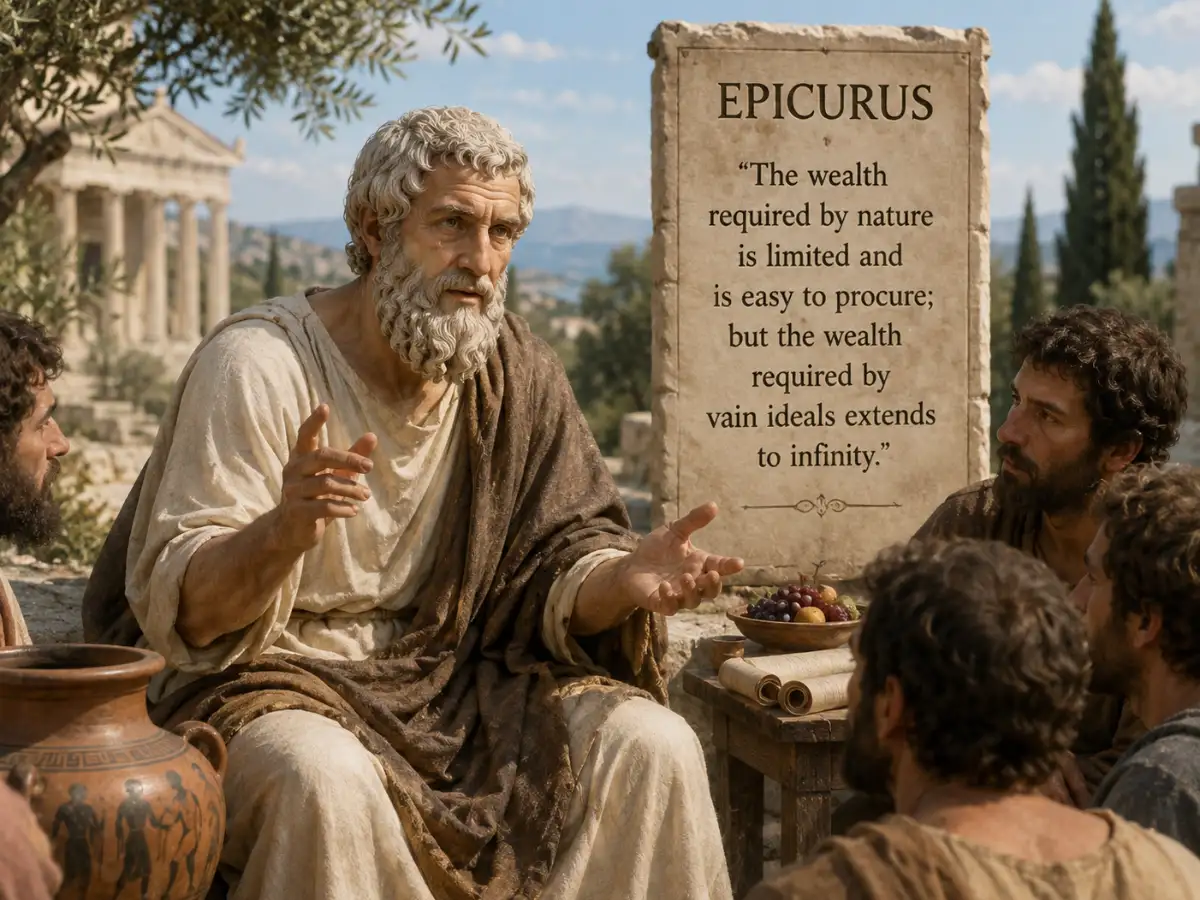
Stoic quote of the day by Epicurus: 'The wealth required by nature is limited and is easy to...' Why one of history's greatest philosophers believed that wanting less was the key to living more

The ancient philosopher Epicurus offered a timeless reminder: true wealth is not about having more, but about needing less. Today's Stoic Quote of the Day comes from Epicurus, who said, “The wealth required by nature is limited and is easy to procure; but the wealth required by vain ideals extends to infinity.”

Although Epicurus is generally associated with Epicurean philosophy rather than Stoicism, many of his ideas about simplicity, self-control and contentment overlap with Stoic teachings and continue to inspire modern readers.

The quote highlights a powerful distinction between natural needs and artificial desires. According to Epicurus, nature asks for very little. Human beings need food, shelter, safety, friendship and good health to live a fulfilling life. These essentials are finite and, in many cases, achievable. Problems arise when people begin chasing wealth, status, fame and luxury without limits. Such desires, he argued, can never truly be satisfied because there is always something more to acquire.

The message remains remarkably relevant in the modern age, where social media, advertising and consumer culture constantly encourage people to seek more than they actually need.

The Difference Between Natural Needs and Vain Desires

Epicurus believed that understanding the difference between genuine needs and unnecessary wants is the key to a peaceful life.

Natural needs are those things that support survival and wellbeing. Hunger can be satisfied with a simple meal. A safe place to sleep provides enough shelter. Friendship and meaningful relationships fulfil emotional needs. Once these essentials are met, additional possessions contribute less and less to happiness.

Vain desires, on the other hand, have no natural endpoint. A person may want a larger house, then an even larger one. They may seek recognition, then greater recognition. They may accumulate wealth but still feel dissatisfied because someone else has more.

Epicurus observed that people often confuse wants with needs. As a result, they spend their lives chasing goals that continually move further away. The pursuit itself becomes endless.

This insight aligns closely with Stoic philosophy. Stoics taught that happiness depends not on external possessions but on inner character and wisdom. External achievements may come and go, but a disciplined mind remains stable regardless of circumstances.

Why Endless Desire Creates Unhappiness

One of the most profound lessons in this quote is that unlimited desires create unlimited dissatisfaction.

When people define success by external markers such as money, status or prestige, they place their happiness in factors they cannot fully control. There will always be a richer neighbour, a more successful colleague or a more luxurious lifestyle to compare themselves with.

This cycle fuels anxiety, envy and frustration. Instead of appreciating what they already have, people become focused on what they lack.

Epicurus warned that such thinking leads to a life of constant craving. The more a person acquires, the more they feel compelled to acquire. Satisfaction becomes temporary because each achievement merely creates a new target.

Modern psychology supports this observation. Researchers often refer to the "hedonic treadmill", a phenomenon in which people quickly adapt to improved circumstances and return to their previous levels of happiness. The new car, promotion or expensive purchase brings excitement for a while, but soon becomes the new normal.

Epicurus recognised this reality more than 2,000 years ago.

How This Ancient Wisdom Applies Today

The quote feels particularly relevant in today's fast-paced digital world.

Many people spend hours scrolling through carefully curated images of other people's lives. Social media platforms often showcase luxury holidays, designer goods, career achievements and picture-perfect lifestyles. Constant exposure to these images can create the illusion that happiness lies just beyond the next purchase or accomplishment.

Epicurus would likely argue that this mindset distracts people from what genuinely matters.

A person with enough food, a comfortable home, supportive relationships and peace of mind may already possess the foundations of a good life. Yet society often encourages individuals to overlook these blessings while pursuing ever-expanding desires.

This does not mean ambition is inherently wrong. Epicurus was not suggesting that people should avoid progress or personal growth. Rather, he encouraged individuals to examine whether their goals genuinely contribute to wellbeing or simply reflect social expectations and vanity.

The distinction is crucial. Goals rooted in personal meaning and fulfilment can enrich life. Goals driven solely by comparison often create stress and dissatisfaction.

The Stoic Connection to Contentment

Although Epicurus and the Stoics belonged to different philosophical schools, they shared important common ground regarding contentment.

The Stoics taught that external possessions are ultimately beyond our control. Wealth can disappear, reputations can change and circumstances can shift unexpectedly. Therefore, tying happiness to these factors is risky.

Instead, Stoicism encourages people to focus on virtues such as wisdom, courage, justice and self-discipline. These qualities remain within an individual's control and provide a more stable foundation for happiness.

Epicurus approached the issue from a slightly different angle but reached a similar conclusion. By reducing unnecessary desires, people free themselves from constant anxiety and become more appreciative of what they already possess.

Both philosophies challenge the modern assumption that more is always better.

They suggest that peace of mind comes not from accumulating endlessly but from understanding what is truly enough.

A Lesson for Everyday Life

Epicurus' quote invites readers to ask a simple but powerful question: How much is enough?

Many of the pressures people experience today stem from the belief that happiness lies somewhere in the future, attached to a bigger salary, a larger home or greater recognition. Yet the pursuit of these goals can become endless if there is no clear definition of satisfaction.

By focusing on genuine needs rather than limitless desires, individuals can develop a greater sense of gratitude and contentment. They may discover that many of the things they already possess are sufficient for a meaningful life.

The wisdom of Epicurus is not about rejecting success or comfort. It is about recognising that material wealth has limits in its ability to provide happiness. Once basic needs are met, the quality of one's relationships, mindset and values often matters far more.

Stoic Quote of the Day

Epicurus' observation remains one of the most insightful reflections on human nature. “The wealth required by nature is limited and is easy to procure; but the wealth required by vain ideals extends to infinity” reminds us that true prosperity is measured not by endless accumulation but by understanding what genuinely matters.

In a culture that constantly promotes more, this ancient quote encourages a different path: appreciating enough. By distinguishing between needs and desires, people can escape the trap of perpetual dissatisfaction and move closer to a life of contentment, balance and inner peace.

Sign up to read this article
Read news from 100's of titles, curated specifically for you.
Already a member? Sign in here
Related Stories
Top stories on inkl right now
Our Picks
Fourteen days free
Download the app
One app. One membership.
100+ trusted global sources.