Get all your news in one place.
100’s of premium titles.
One app.
Start reading
Homes & Gardens
Homes & Gardens
Jill Morgan

Step Inside the Steere Herbarium in the Bronx – And Discover Why Its Ancient Plant Collections Matter Today

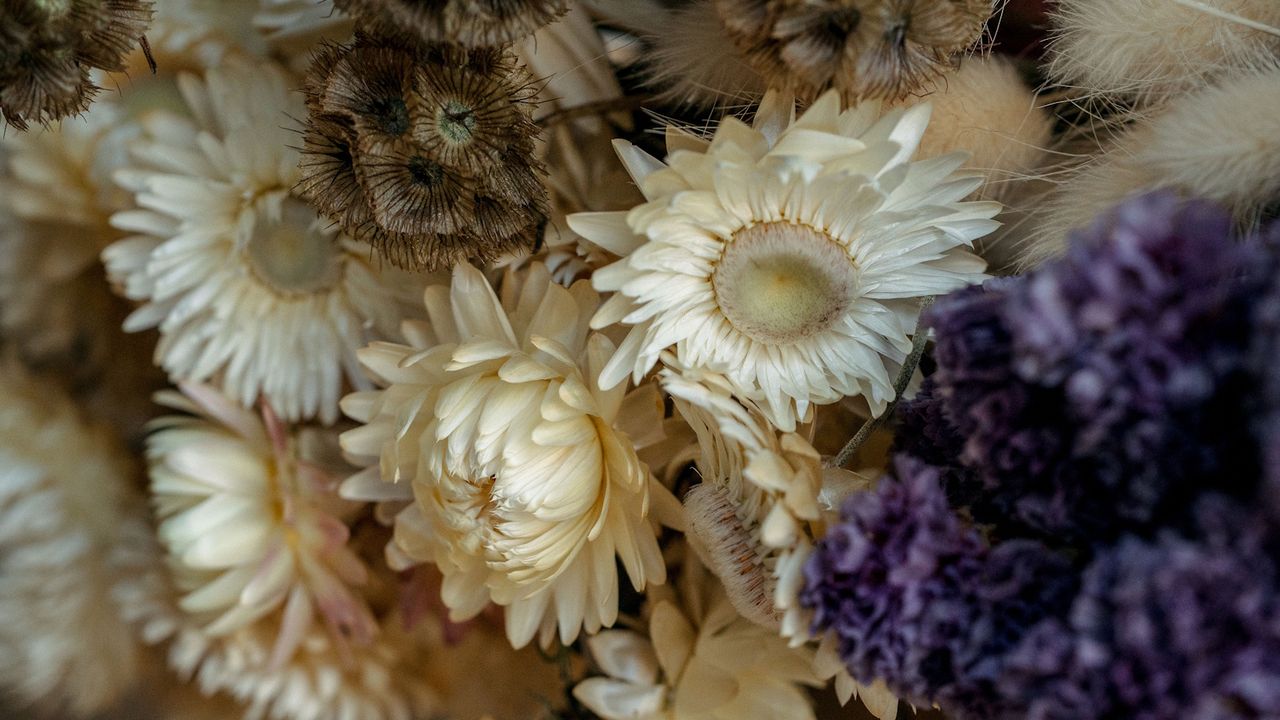
Dried white strawflower with brown dried scabious pods and purple dried statice.

Herbariums are evocative places. As collections of stored plant material, they offer an insight into the past, present and future of our planet. An invaluable resource for academics and businesses, they are often part of revered institutions, such as botanical gardens and universities.

Housing a vast array of plant material, including seeds, stems, foliage and root matter, herbariums provide an opportunity to look back at specimens and collection data from the past. This provides priceless insight into how plants, climate and topography have changed over time.

The William and Lynda Steere Herbarium is located at The New York Botanical Garden and houses a vast collection of 7,800,000 plant and fungi specimens. The largest in the Western world, it is a hub for the NYBG’s botanical research program. Here, we delve into the herbarium world to uncover more about why they are so valuable today.

What is a Herbarium?

A sample of Paeonia officinalis collected by Steven R Hill on 18th May 1986, held in the Steere Herbarium (Image credit: NYBG Steere herbarium)

As a collection of plant material that is preserved and recorded for close study, a herbarium holds a wealth of data and knowledge.

‘Botanists collect plants in the way people have traditionally pressed plants: a piece of plant, in flower or fruit is collected and placed into a plant press (made up of wooden slats and secured with straps: plants are pressed and dried in newspapers, between blotters and corrugates),’ explains Herbarium Curation Manager at Kew Gardens, UK, Nina Davies.

‘At the herbarium, specimens are identified against the main preserved collections, matched against the species they resemble. Care is taken to prepare and mount specimens before they are incorporated into the sequence of a collection.'

While dried and mounted plant samples make up the majority of any collection, other specimens include loose seeds, pollen, wood cross sections, dried bulky fruits, algae, fungi, silica-stored materials and fluid-preserved flowers or fruit.

The Economic Botany Collection at Royal Botanical Gardens Kew, UK (Image credit: Steve Lancefield © RBG Kew)

Whilst the herbarium building at Kew dates from 1852, The Steere Herbarium in New York has a more futuristic feel.

‘At NYBG, our purpose-built facility is a state-of-the-art, 69,000-square-foot building with specimens housed across four full floors,’ says Director Emily Sessa.

‘These are massive, carefully ordered rooms lined with floor-to-ceiling cabinets on rolling compactors to maximize specimen storage space.

'There is a distinctive sound and scent to the herbarium: quiet except for the hum of HVAC units working to keep the temperature and humidity low and infused with the smell of old paper and dried plants.'

Why These Collections Are Valuable To Us Today

Inside the Herbarium at Royal Botanical Gardens Kew, UK (Image credit: RBG Kew Steve Lancefield)

These painstakingly catalogued specimens provide a direct and personal link to the past.

‘While our herbarium infrastructure is rigorously modern, details like hand-written labels and carefully arranged specimen material connect you to the people who made these collections over the course of many decades, and who were engaged in the same endeavour as us, to understand and preserve the remarkable biodiversity of our planet,’ says Emily Sessa.

Nina adds, ‘Each specimen is a unique data point, collected from a certain place and time, providing scientists with collections essential to describe new species, providing data for conservation assessments, climate studies, to extract DNA and biochemicals to name a few.'

How Herbariums Are Looking To The Future

Herbarium collections, such as that at Kew are an invaluable resource for technical advances and conservation (Image credit: RBG Kew/ Ines Stuart-Davidson)

Across the world herbariums are diligently digitizing their collections to make them accessible to scholars, scientists, historians, conservationists and horticulturalists.

DNA analysis is helping to accurately identify species, clarify evolutionary evidence and inform future conservation plans too.

This rise in detail and accessible data has led to ground-breaking discoveries as Dr Matthew Pace, Assistant Curator to the Steere Herbarium explains.

‘A 2010 paper estimated there are approximately 70,000 plant species that remain to be described, and that natural history collections such as the William and Lynda Steere Herbarium are a primary source for finding new species,' he says.

'NYBG is a global leader in systematics and biodiversity science, and many of the species we describe face acute conservation concerns.’


If you are inspired to savour and enjoy your own plant collection for years to come, then you can familiarise yourself with these DIY seed storage ideas, and be sure to avoid these seed harvesting and collecting mistakes.

Sign up to read this article
Read news from 100’s of titles, curated specifically for you.
Already a member? Sign in here
Related Stories
Top stories on inkl right now
One subscription that gives you access to news from hundreds of sites
Already a member? Sign in here
Our Picks
Fourteen days free
Download the app
One app. One membership.
100+ trusted global sources.