
Get all your news in one place.
100's of premium titles.
One app.
Start reading
Ideal Home
Ideal Home
Lauren Bradbury

Is regular mopping or steam mopping better for your floors? My advice as Ideal Home’s Floorcare Expert

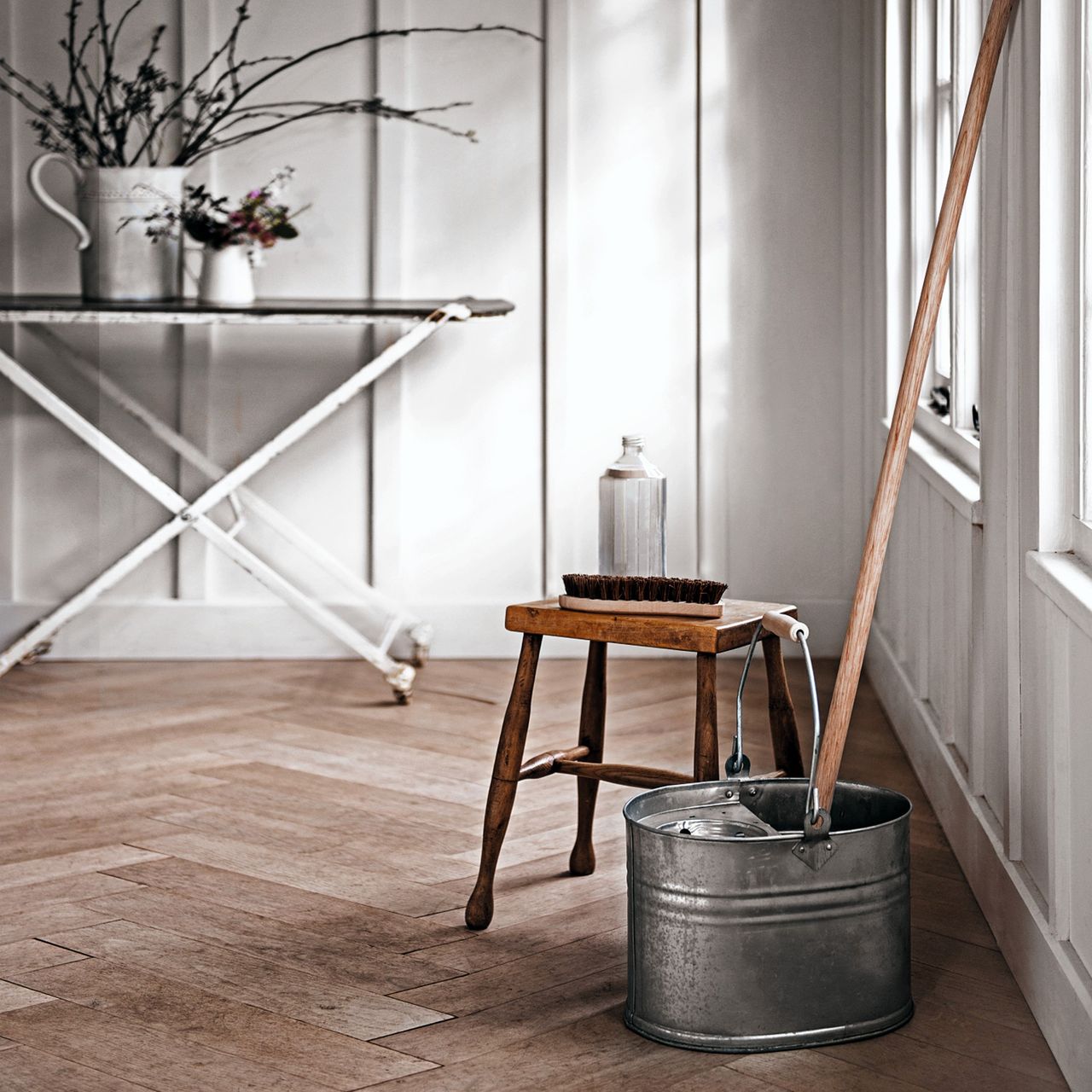
Mop bucket in room with hardwood flooring.

A mop is a mop, right? Well, not quite. Although any mop will ultimately aim to clean your hard flooring, the steam mopping vs regular mopping debate is definitely one to consider if you haven’t already.

Yes, the best mops come in so many different shapes and forms. From the traditional Komodor-esque mop with cotton strands and a matching bucket to spray mops and modern steam-cleaning mops, these cleaning tools offer the same result but very different processes. But does one trump the other? And which is better for a clean home?

To help you understand whether regular mopping or steam mopping is better, I’ve put these two cleaning tools against each other. And with the help of expert knowledge, I’ve been able to choose an overall winner.

Shark Steam & Scrub Automatic Steam Mop with Steam Blaster

This Shark steam mop seriously impressed us during testing, and the rotating mop pads work hard to leave a sparkling finish. Plus, the SteamBlaster setting tackles stubborn stains.

Minky Spritz & Spin Spray Mop

Crowned the 'best overall' mop in our guide, this spray mop is easy to use and easy to store thanks to the lack of bucket - but it still gets the job done quickly and efficiently.

Steam mopping vs regular mopping: What’s the difference?

Ultimately, the main difference between a steam mop and a regular mop can be found in the name.

You typically plug a steam mop into the mains, where it uses electricity to heat up water and generate steam that’s then directed towards your floors. As the steam mop glides over the floors, the steam loosens dirt, which the mop head then picks up.

On the other hand, regular mopping is more of a manual process and requires the cleaner to soak a mop head with water (and/or a cleaning solution) before using that alone to scrub a floor. This requires you to understand how to mop properly, so you don’t make any mistakes.

Steam mopping vs regular mopping: Which is more effective at cleaning?

Using either a steam mop or regular mop will result in cleaner floors, and both can be extremely effective.

In fact, Graeme Shelley, Managing Director at Factory Direct Flooring, told me, ‘Mopping and steaming can be amazing for cleaning hard floors and killing germs, and our swab tests prove it. On average, steaming reduced 77% of floor bacteria, while mopping with white vinegar and water cut 71% of germs, and mopping with detergent by 70%.’

This proves that steam cleaning offers slightly better results when you want a more hygienic clean, and another perk of steam cleaning is that it’s also a very eco-friendly option.

Testing the Shark Steam & Scrub Automatic (Image credit: Future / Rebecca Lawton)

A spokesperson at Nationwide Cleaning told us, ‘Steam mopping is like a superhero when it comes to cleaning floors. Instead of chemicals, it uses hot steam to kill germs and dirt. Plus, the steam gets into tricky spots, providing you with the peace of mind that every surface has been properly cleaned.’

On the other hand, a regular mop is only as good as the cleaning solution that’s used at the same time. And if you don’t use the correct cleaning solution, you could be wiping wet germs and grime around your home.

However, it is much easier to make steam cleaning mistakes that can affect overall results - especially as there are many things you should never clean with a steam cleaner. This includes some flooring.

Testing the Beldray Clip-to-Grip mop (Image credit: Future PLC/ Kezia Reynolds)

Graeme warns, ‘Moisture is one of real wood's biggest enemies, so steam cleaners (or any cleaning method involving excessive moisture) are best avoided. A well wrung-out mop is OK, but make sure to dry it afterwards with a soft towel.’

He adds, ‘Standard laminate is also prone to moisture damage. It can usually handle the odd spill if you clean it up quickly. But the humidity from a steamer can make the outer layers peel, or even penetrate the HDF coreboard, leading to swelling and warping.’

These risks are lower with regular mopping, but you will have to sacrifice some of the cleanliness. So, it’s important to tailor this cleaning to your own circumstances.

Steam mopping vs regular mopping: Which is easier?

If you’re toying between a steam mop and a regular mop, it’s important to consider your level of dexterity. After all, both mops are extremely easy to use, and the instructions are fairly self-explanatory. They do have their downsides, though.

Mopping can be tricky for those with mobility issues, due to having to move around a heavy bucket of water. However, there is the option to choose a spray mop, which has an integrated bottle for the water and cleaning solution. These are generally much lighter and easier to use.

(Image credit: Future PLC/Lauren Bradbury)

On the other hand, something you’ll need to consider when deciding between a steam mop or a regular mop is that a steam cleaner is an electrical appliance. This means you can only steam mop as far as the lead will go before you have to unplug it and find another socket, just like with vacuuming.

Both also require a certain level of maintenance. With both steam mops and regular mops, you’ll need to clean the mop head properly and replace it when it shows signs of wear and tear. Steam mops can also struggle with limescale build-up in the water tank, which is why experts suggest using purified water - like this Deionised Water (£8.29 at Amazon) or descaling it regularly.

Steam mopping vs regular mopping: Which is easier to store?

Buying a new home cleaning appliance is all well and good until you realise that you don't have the space to store it. If you have a small home with limited storage options, this can severely impact your buying decision. So, which is easier to store?

Well, you probably don’t need us to tell you that steam mops are generally much larger than regular mops. Similar to an upright vacuum cleaner, their large head and handles normally have to stand upright, and they are rarely removable.

This is where regular mops can reign supreme. If you buy a spray mop rather than a mop with a bucket, you can slide it into any storage crevice or stand it upright in any corner. Many of the heads are also removable, so you can even store them in two places if you lack space.

Steam mopping vs regular mopping: Which is more affordable?

If you’re still unsure who wins in the steam mopping vs regular mopping debate, perhaps the price of both will tip you to one side or the other.

Generally, a regular mop will be much cheaper than a steam mop. And the cheapest model we’ve tested so far is the Minky Pet Flex Mop (£16 at Very). Of course, you’ll need to buy your own cleaning solution on top of that, but that will cost you just a few extra pounds. However, you can also pay around £70 for a mop if you’re willing to up your budget.

Testing the Vileda Steam Mop Plus (Image credit: Future PLC/Lauren Bradbury)

This is significantly cheaper than steam mops, but the beauty of many steam mops is that many of them can also be used for so many other cleaning tasks. For example, the Beldray 15-in-1 steam cleaner (£70 at Argos) can also be turned into a handheld steam cleaner that will clean everything from ovens to tiles. So, you definitely do get more bang for your buck.

However, it’s also important to note that you’ll need to pay for the cost to run your steam mop, too. This will depend on the wattage of the steam cleaner and the current energy price cap. And while it certainly won’t cost you a fortune, it’s still another cost you need to consider.

Final verdict: Which one do you need?

Deciding between a steam mop and a regular mop is a difficult one, as they both have their advantages and disadvantages. In fact, it’s impossible to choose between them both, which is why I ultimately believe that having both at your disposal will work in your favour.

This is especially true if you have a variety of different floors in your home but still want to keep everything squeaky clean. By having both on hand, you can make sure that every floor surface gets the attention it deserves without harming it in the process.

This is seconded by Atit Chopra, Product Development Director at Beldray, who says, 'Both traditional and steam mopping will achieve clean floors, however the methods are suited to different floor types, each offering specific benefits.'

Testing the Vax Steam Fresh Combi S86-SF-C Steam Mop (Image credit: Future PLC)

'Steam mops effectively remove stains, kill bacteria and sanitise tiles, hardwood and laminate floors without the need for harsh chemicals, making steaming a favoured option for those with pets or allergies.'

'Traditional cloth or flat mops, however, can be used on all types of flooring. They give you more control over water usage, making them a versatile option as they are suitable for even delicate flooring materials such as vinyl.'

If you do have floors suitable for steam cleaning and you only have space in your budget for one option, though, I’d recommend a steam cleaner as it offers so much more.

FAQs

Is steaming floors better than mopping?

Steaming floors help you tackle dirt, grime, and stains without the use of cleaning solutions, which can be a major bonus. In fact, it’s generally considered that they offer a better and more effective clean than mopping, as the heat and steam generated from this appliance can also kill bacteria in the process.

However, it’s important to realise that it’s not possible to steam all types of floors. If you have unsealed hardwood or laminated flooring, you should avoid steaming them at all costs, as it can affect the integrity of the planks and damage them beyond repair.

What are the cons of steam mops?

One of the biggest cons of steam mops is the fact that they cannot be used on all floor types. You need to be extremely careful when exposing certain flooring to this intense heat and steam, and using a steam mop on the wrong flooring can cause serious damage.

Alongside this, they are also much bigger than regular mops and may be harder to store. Generally, they are also more expensive than regular mops.

Now you know the outcome of the steam mopping vs regular mopping debate, you’ve probably got a hankering to clean your floors…

Sign up to read this article
Read news from 100's of titles, curated specifically for you.
Already a member? Sign in here
Related Stories
Top stories on inkl right now
One subscription that gives you access to news from hundreds of sites
Already a member? Sign in here
Our Picks
Fourteen days free
Download the app
One app. One membership.
100+ trusted global sources.