
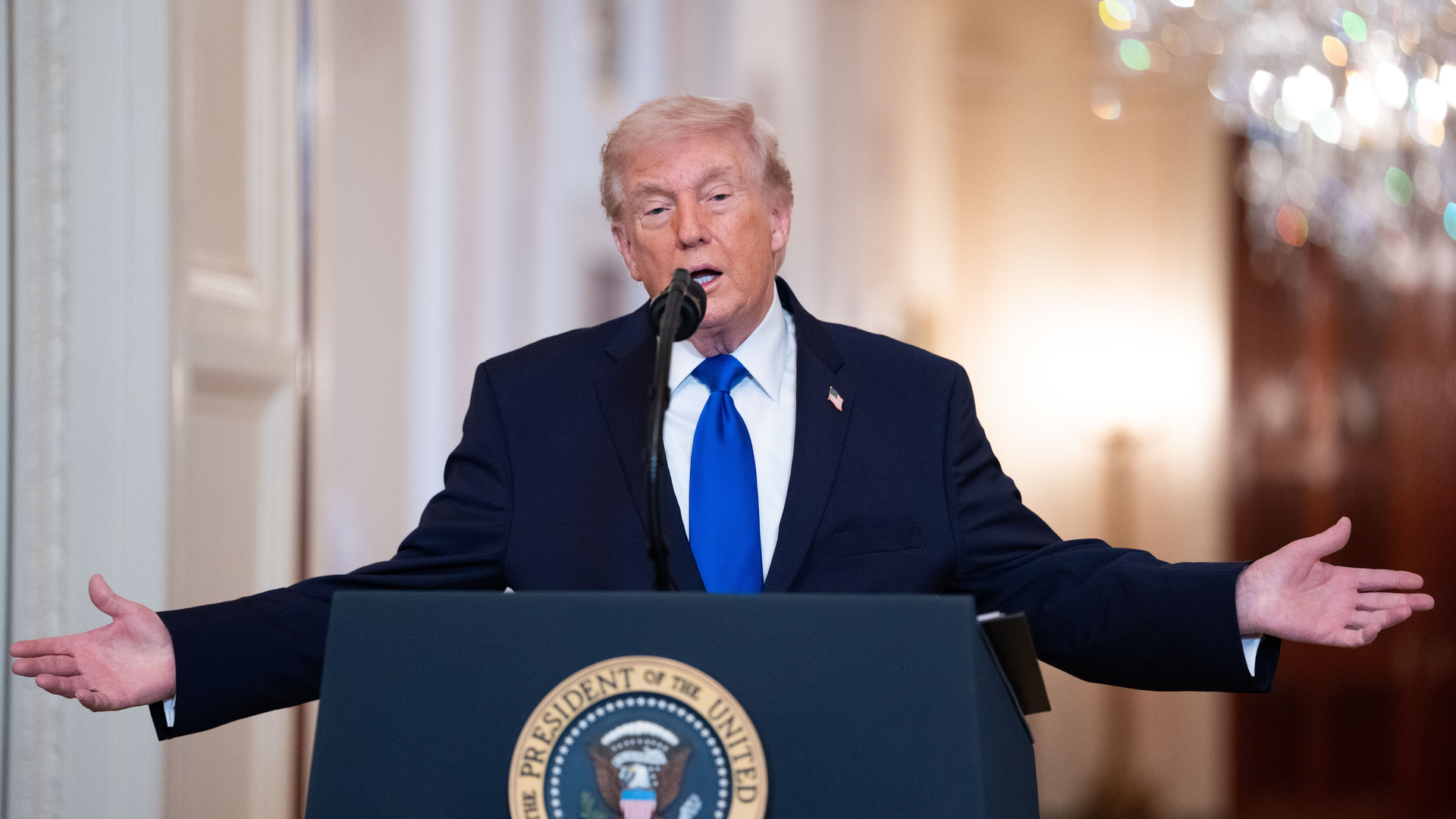
During his State of the Union address on Feb. 24 President Donald Trump pledged to protect Social Security and Medicare. He proposed a new savings plan for millions of private-sector workers who have no employer-sponsored retirement plan.
“Half of all working Americans still do not have access to a retirement plan with matching contributions from an employer. To remedy this gross disparity, I’m announcing that next year, my administration will give these oft-forgotten American workers access to the same type of retirement plan offered to every federal worker. We will match your contribution with up to $1,000 each year.”

Here’s what this proposal could mean for your 401(k), IRA and Social Security benefits.
The Federal Match Could Encourage More People to Save for Retirement
Roughly 56 million Americans don’t have access to retirement savings plans at their jobs, according to 2025 research from Pew Charitable Trusts. So, a $1,000 federal match will make a huge difference for private sector workers. Plus, the account will offer low-cost, index-based investment choices.
Read More: What’s Happening to Your $2K Check Now That Trump’s Tariffs Have Been Rejected?
Find Out: How Middle-Class Earners Are Quietly Becoming Millionaires — and How You Can, Too
“The ability to match your contributions gives millions of people the incentive to know that for every dollar you contribute, you’ll receive a free amount, which will be the best return this plan can offer,” said Alonso Rodríguez Segarra, CEO at Adivise Financial.
The accounts will be similar to the Thrift Savings Plan signed in 2022, a retirement plan for federal employees and uniformed service members.
“While the variety of investment funds offered is limited, all these funds have one of the best expense ratios in the industry. This helps reduce future costs and thus optimizes the investments of participating parties,” said Segarra.
The program is set to begin in 2027, and workers under specific income thresholds can earn the match.
“It’s a wonderful initiative that will have a very positive impact, but we know it won’t be the solution to America’s retirement problem,” Segarra noted.
What Might Be Missing
A lesser-known issue is where the federal match would go. Under current SECURE 2.0 rules, the match is deposited into pre-tax accounts, not Roth accounts. Andrew Lokenauth, founder of TheFinanceNewsletter, notes this could affect future tax bills.
“If you’re a lower-income worker who gets matched into a traditional IRA, you’ll owe taxes on those funds when you withdraw in retirement. For lower-income earners, a Roth structure would actually serve them better long-term.”
In other words, the account type you’re automatically placed into today could determine how much of your retirement savings you keep decades from now.
Editor’s note on political coverage: GOBankingRates is nonpartisan and strives to cover all aspects of the economy objectively and present balanced reports on politically focused finance stories. You can find more coverage of this topic on GOBankingRates.com.
More From GOBankingRates
- 12 Costco Deals for 2026 To Grab as Soon as Possible
- I'm a Mechanic: 5 Money-Pit Luxury Cars To Avoid in 2026
- 5 Clever Ways Retirees Are Earning Up to $1K Per Month From Home
- 9 Low-Effort Ways to Make Passive Income (You Can Start This Week)
This article originally appeared on GOBankingRates.com: State of the Union: How Trump’s Economic Agenda Could Affect 401(k)s, IRAs and Social Security Checks