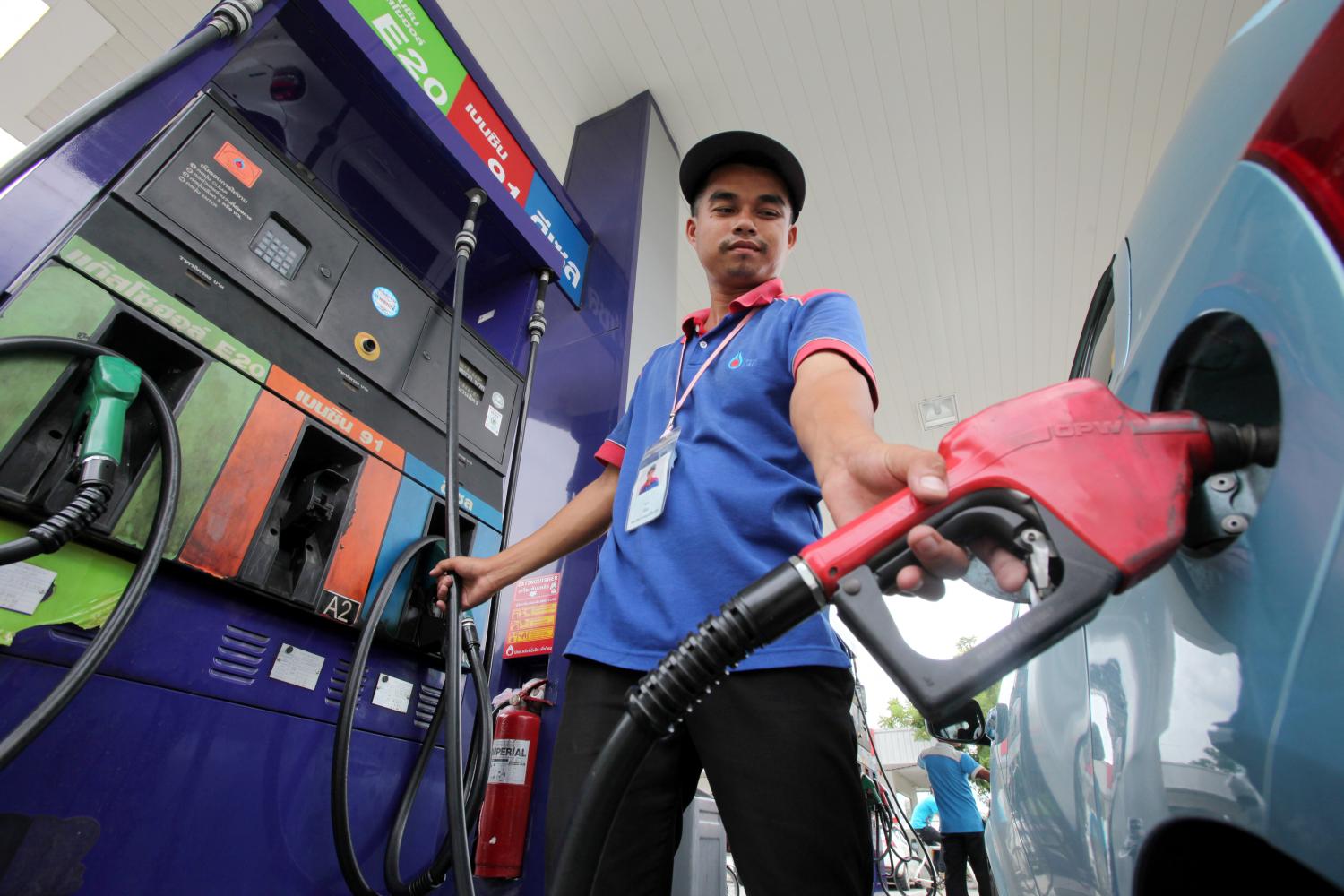
The government is looking for additional sources of funding to finance its energy subsidies, as its financial assistance is running low while global oil prices are approaching US$100 a barrel.
The Oil Fuel Fund Office (Offo) previously paid 7 billion baht a month to cap the diesel price at 29.94 baht a litre, compared with the regular price of 33.73 baht a litre -- driven by a global surge in oil prices -- and fix the price of liquefied petroleum gas at 318 baht per 15-kilogram gas cylinder, compared with the regular price of 432 baht.
The subsidies are likely to increase as global oil prices are expected to reach $88-$93 this week, up from a previous range of $80-$85.
Offo, which has debt worth 14 billion baht, will be granted a 20-billion-baht loan from commercial banks and a 10-billion-baht provisional loan over the next few months to support its subsidy programme.
The loans are near a legal limit of 40 billion baht under the Offo Act.
The Energy Ministry's permanent secretary Kulit Sombatsiri said the subsidies will exceed 7 billion baht per month as a $1 increase in the price of crude oil will raise the retail oil price by 0.20 baht per litre.
Policymakers are expected to identify the new sources of funding to support the subsidy scheme by the end of February.
They are struggling to control domestic oil prices and may need to reduce oil excise tax as a last resort.
Rising energy prices also involve an uptick in electricity bills due to higher prices of liquefied natural gas (LNG).
LNG supply from domestic sources is expected to decrease due to a delay in gas production at the Erawan gas block in the Gulf of Thailand, causing gas delivery to decline by 16%.
This causes Thailand to buy more LNG overseas, but the imports will increase the fuel tariff, which is used to calculate power bills, by 0.16 baht per kilowatt hour.
Natural gas makes up almost 70% of fuel used for electricity generation.
Authorities are trying to control the fuel tariff amid conflicts among some oil-rich countries that threaten to further drive up global oil prices.
One way is to postpone the decommissioning of two coal-fired power plants in Lampang, while another option is to have more purchases of electricity generated by biomass, said the Energy Regulatory Commission's secretary-general Khomgrich Tantravanich.