Sir Keir Starmer has vowed closer ties with Europe amid a looming crisis over rocketing energy and food bills as a result of war in the Middle East.
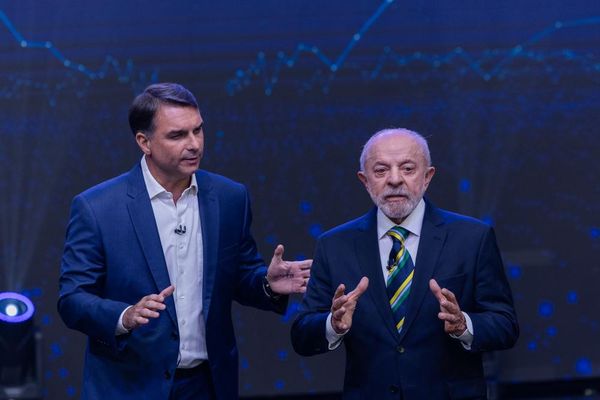
The Prime Minister held a press conference on Wednesday in which he insisted he would not change his position on Britain's involvement with the US-Israeli attacks against Iran despite “pressure” from Donald Trump.
Sir Keir revealed Foreign Secretary Yvette Cooper will host a meeting of international leaders to “assess all viable diplomatic and political measures” to re-open the vital Strait of Hormuz shipping route.
It comes after Trump said he was strongly considering pulling out of NATO.
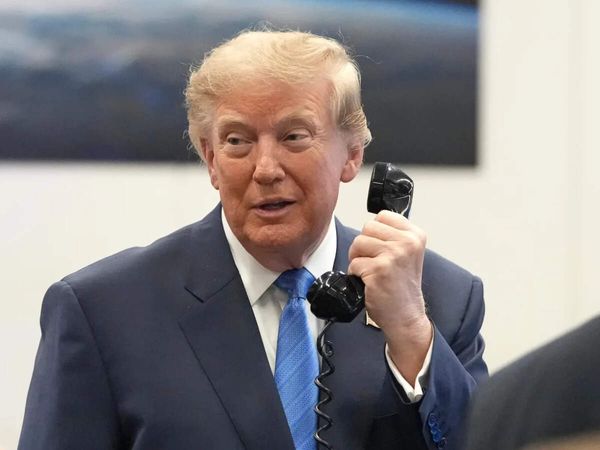
The threat followed a scathing attack, where the US President told Britain and other countries who are not doing more to support the US war effort to “go get your own oil” and secure the Strait of Hormuz themselves.
Sir Keir dismissed the comments as "noise" and said ministers would shortly be announcing a new summit with EU leaders which would lay out “closer economic co-operation, closer security co-operation, a partnership that recognises our shared values, our shared interest and our shared future”.
Sir Keir warned that the impact of the Iran war will "affect the future of our country" but insisted that "no matter how fierce this storm, we are well-placed to weather it".

He added that Britain will pursue a closer security and economic partnership with the European Union in light of the oil crisis after Brexit did “deep damage to our economy”.
The Prime Minister said: "We will continue to stand up for the British national interest, and we will continue to do what we must to guide our country calmly through this storm.
“However, it is increasingly clear that as the world continues down this volatile path, our long-term national interest requires closer partnership with our allies in Europe and with the European Union."
He added: “Brexit did deep damage to our economy, and the opportunities to strengthen our security and cut the cost of living are simply too big to ignore.
“In the coming weeks, we will announce a new summit with our EU partners, and I can tell you that at that summit, the UK will not just ratify existing commitments made at last year's summit.
“We want to be more ambitious. Closer economic co-operation, closer security co-operation, a partnership that recognises our shared values, our shared interest and our shared future.
“A partnership for the dangerous world that we must navigate together, a world where this Government will be guided at all times by the interests of the British people.”
Asked about the US president's comments, Sir Keir said: "Firstly, NATO is the single most effective military alliance the world has ever seen, and it has kept us safe for many decades, and we are fully committed to NATO.
"Secondly, that whatever the pressure on me and others, whatever the noise, I'm going to act in the British national interest in all the decisions that I make.
"And that's why I've been absolutely clear that this is not our war and we're not going to get dragged into it.
"But I'm equally clear that, when it comes to defence and security and our economic future, we have to have closer ties with Europe.”
In an interview with BBC Breakfast, Chancellor Rachel Reeves indicted that working, middle class families would miss out on any Government support for energy bills, which will based on household income.

She also refused to commit to immediate help for drivers facing rocketing petrol and diesel costs.
“I want to learn the lessons of the past because when Russia invaded Ukraine, the richest, the best-off third of households got more than a third of the support,” she said.
“That makes no sense at all.”
She added she had to be “careful” with cuts to fuel duty or VAT on petrol because it risked pushing up inflation.
The Chancellor will meet supermarket bosses and regulators on Wednesday to discuss the impact on consumers amid warnings that food inflation could soar higher than 9 per cent by the end of 2026.
The Food and Drink Federation (FDF), which represents 12,000 food and drink manufacturers, hiked its inflation forecast for the year in light of the Iran war.
Economists for the trade body are now predicting that food inflation will reach at least 9 per cent by the end of the year, up from the 3.2 per cent that it had forecast in September last year.
Since fighting began in Iran, oil prices have soared in response to Tehran’s block on tankers passing through the Strait of Hormuz.
Families with a 55-litre diesel car face paying more than £100 at the pump for the first time since December 2022.
It comes as President Trump alleged on his Truth Social platform that the UK was among several countries which “can’t get jet fuel” ahead of the Easter bank holiday weekend – a claim which industry body Airlines UK has refuted.


The price most households pay for energy under regulator Ofgem’s price cap will fall by 7 per cent, or £117 a year, to £1,641 from Wednesday.
But respected energy analyst Cornwall Insight said its prediction for the watchdog’s price cap from July to September now stands at £1,929 for a typical dual fuel household – an increase of £288 or 18 per cent on April’s cap.
RAC figures on Tuesday showed average diesel prices at UK forecourts were 182.8p per litre, up 40p since the start of the conflict, which brought the cost of filling up a 55-litre family car to £100.52.
The average cost of petrol is 152.8p per litre, an increase of 20p since the war began.