Get all your news in one place.
100's of premium titles.
One app.
Start reading
The Independent UK
The Independent UK
Simon Walters

Starmer’s popularity boosted by Iran war rift with Trump, poll shows

Dramatic new evidence of the popularity of Sir Keir Starmer’s decision to stand up to Donald Trump over the Iran war has emerged.

The prime minister’s personal approval rating increases by 26 points when voters are reminded of his spat with the US president, according to a JL Partners survey for the Independent.
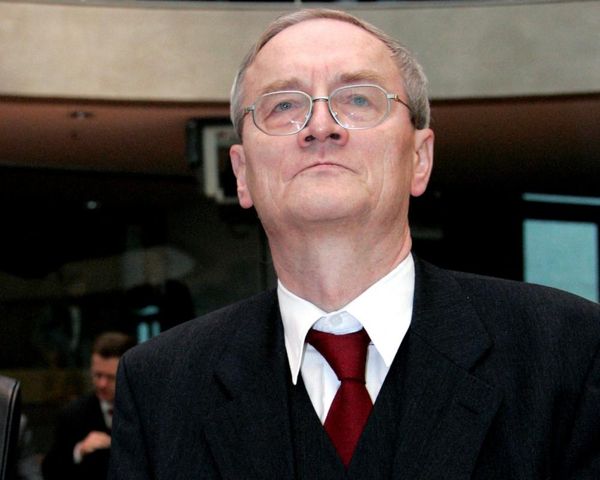
Although Sir Keir is still seen negatively overall at minus 14, it is markedly better than the minus 40 he scores when his stance on the war is not highlighted.

The findings will encourage the PM’s supporters, who hope his cautious approach to Mr Trump’s attack on Iran may help him avoid a leadership challenge if, as expected, Labour does badly in May’s local elections.

President Trump has repeatedly criticised Starmer and the UK over the war in Iran, this week describing the country’s aircraft carriers as ‘toys’ (AP)

Sir Keir’s refusal to allow the US to use British bases in its initial bombing was in stark contrast to Conservative Party leader Kemi Badenoch and Reform’s Nigel Farage, who both criticised him for doing so.

However, Ms Badenoch and Mr Farage have both backtracked since then, prompting the prime minister to turn his fire on them.

He has argued that by making “the wrong call” on whether to take Britain to war, they have shown they are not fit to run the country.

Sir Keir’s refusal to endorse Mr Trump’s declaration of war on Iran has led to a series of insults by the US president.

In his most wounding jibe, Mr Trump said Sir Keir had demonstrated he was “no Churchill”. For his part, the prime minister said he would not “hang on the president’s latest words”.

Mr Trump kept up his attack last weekend, posting a clip of a sketch on the new UK version of America’s Saturday Night Live satirical TV show mocking Sir Keir as a ”coward” who is terrified of the president.

Defiant Sir Keir said he would not be intimidated, stating: “A lot of what is said and done is undoubtedly said and done to put pressure on me, I understand exactly what is going on.”

An explosion erupts following strikes near Azadi Tower, close to Tehran’s Mehrabad International airport, on 7 March (AFP/Getty)

He refused to “waver”, claiming pointedly it had “served [him] well in recent weeks” – a clear reference to polls showing voters think he is right to disagree with Mr Trump.

The findings emerged from a split-sample survey by JL Partners.

Half of the respondents were asked whether they had a positive or negative view of the prime minister, while the other half were asked the same question after being told of Starmer’s refusal to allow the US to use British bases to attack Iran, Mr Trump’s “no Churchill” jibe and his claim that the historic Anglo-American special relationship is ”obviously not what it was”.

An overwhelming 57 per cent of the first group said they had a negative view of Sir Keir; only 17 per cent had a positive view.

However, when the second group were reminded of Sir Keir’s differences with Mr Trump, the number who view him negatively fell to 42 while the number who view him positively rose to 28 per cent.

While Sir Keir’s ratings appear to have benefited from his handling of the war, the opposite has occurred to Mr Trump among US voters.

According to a Reuters/Ipsos poll this week, 61 per cent of Americans disapprove of the attacks on Iran, compared to 35 per cent who approve.

Political pundits have attributed this to the apparent mismatch between his decision to launch a major war in the Middle East and his pre-election pledge to end “stupid wars”.

The USS Tripoli, an amphibious assault ship carrying thousands of sailors and marines, arrived in the Middle East on Saturday (US Central Command)

The president’s overall standing in the US has also continued to decline during the conflict.

When he entered the White House last year at the start of his second term, his approval rating stood at 47 per cent, with 41 per cent disapproving of him, an overall positive rating of plus six.

The Reuters/Ipsos poll indicated that the number who disapprove of him has now soared to 62 per cent; the number who approve of him has fallen to 36 per cent, an overall negative rating of minus 26 per cent.

Tom Lubbock, co-founder of JL Partners, said: “If you’re just looking at the cold electoral politics, there is a major reputational premium to be gained for the prime minister positioning himself in opposition to the US president on the Iran conflict. It has worked for a variety of leaders around the world. The survey suggests that the more people are aware of the prime minister’s disagreement with the US president, the more his standing improves.”

JL Partners interviewed 1,500 adults in the UK online on 14-16 March.

Sign up to read this article
Read news from 100's of titles, curated specifically for you.
Already a member? Sign in here
Related Stories
Top stories on inkl right now
One subscription that gives you access to news from hundreds of sites
Already a member? Sign in here
Our Picks
Fourteen days free
Download the app
One app. One membership.
100+ trusted global sources.