
Get all your news in one place.
100’s of premium titles.
One app.
Start reading
The Independent UK
The Independent UK
Alisha Rahaman Sarkar

Starbucks sells majority stake in China business as local competitors eat into market share

Starbucks is selling up to 60 per cent of its China operations to private investment firm Boyu Capital in a deal valued at over $4bn (£3bn).

Starbucks – the world's largest coffee chain – said on Monday it would continue to own and operate its stores in China while licensing its brand and intellectual property to the new firm.

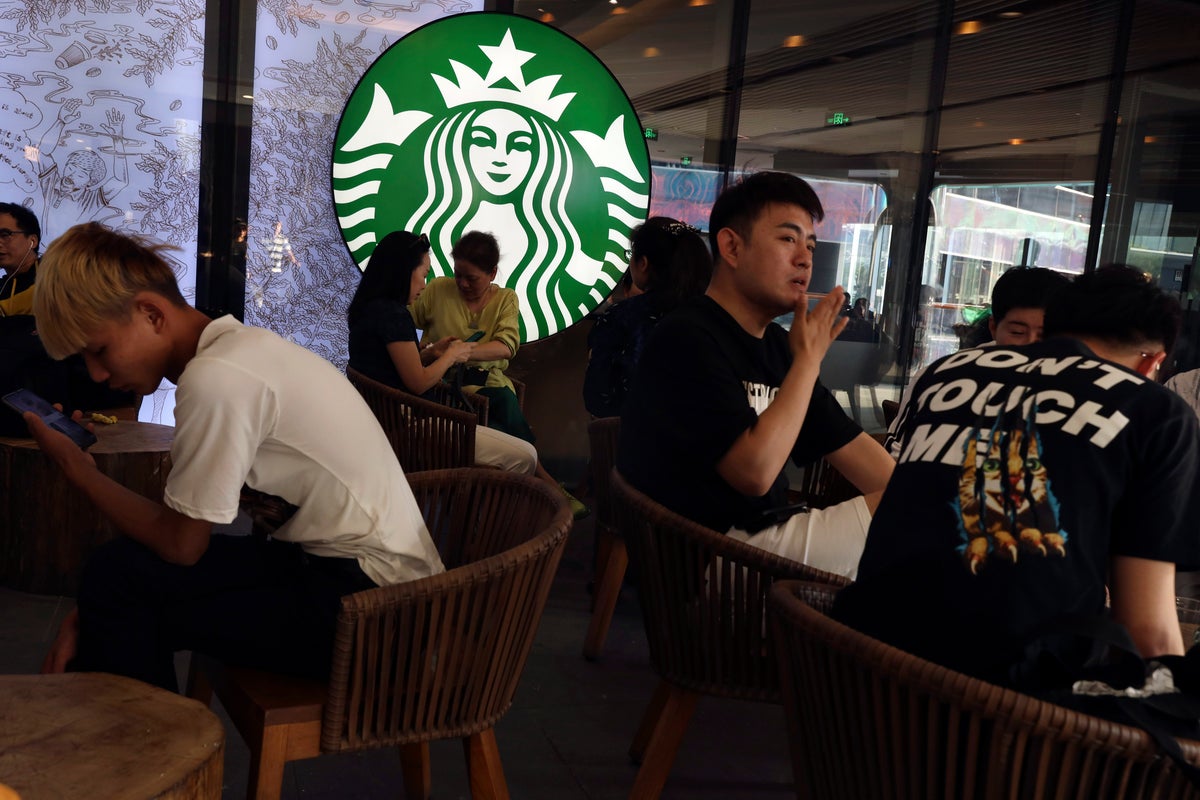
The American company, based in Seattle, entered China in 1999 and expanded widely to make it its second-largest market. It currently runs nearly 8,000 stores in the Asian country.

However, its market share has declined in recent years due to fierce competition from local coffee chains, like Luckin and Cotti, which offer cheaper products.

Starbucks has grappled with staying competitive without dropping prices as a slowing economy has made Chinese consumers more price sensitive.

The company said that it expected the value of its China business to exceed $13bn (£9.91), including proceeds from the sale and revenues from its retained stake and licensing over the next 10 years.

“This approach allows us to combine the strength of the Starbucks brand, our coffee expertise, the third place and our unique partner culture with Boyu’s deep knowledge of the China market and local expertise,” Brian Niccol, Starbucks’s chief executive, said in a statement.

He said the joint venture with Boyu – one of the biggest deals involving a Chinese operation – would be completed in early 2026.

Boyu Capital, founded in 2010 by the grandson of former Chinese president Jiang Zemin, is based in Hong Kong, with offices in Singapore, Shanghai and Beijing. The private firm invests in consumer and retail, financial services, healthcare, and media and technology sectors, according to its website.

Starbucks saw its market share in China, home to over a fifth of its cafes, fall sharply to 14 per cent last year from 34 per cent in 2019, according to Euromonitor International.

To arrest the fall, the American chain has cut prices for some non-coffee beverages and accelerated the introduction of new localised products.

Arguing that it would be a mistake for Starbucks to enter into an aggressive price war with the likes of Luckin, analysts said the company should focus on its traditional strength of being the coffee chain where people wanted to meet and spend time.

Luckin now runs more than 20,000 franchise stores across China, well ahead of 7,800 for Starbucks, but its focus is on takeaway and delivery.

Comparable-store sales in China increased 2 per cent in the quarter that ended on 29 June as compared to zero growth in the previous quarter.

Beyond China's slowing economy, Starbucks' annual filing for 2024 also listed among risk factors "escalating US-China tension", driven by tariffs, boycotts, and “increasing political sensitivities” in the Asian country.

The deal with Boyu caps a global financial drama that became public over a year ago when former chief executive Laxman Narasimhan said the company was in the early stages of exploring strategic partnerships to boost growth in the Chinese market.

In recent years, Western brands have faced substantial challenges, forcing them to reduce operations in China due to growing domestic competition. Yum! Brands, the parent company of KFC and Pizza Hut, separated its China business in 2016 after years of weak performance.

Fashion retailer Gap and ride-hailing giant Uber are among the global brands that have faced similar challenges in navigating the country’s competitive landscape.

Sign up to read this article
Read news from 100’s of titles, curated specifically for you.
Already a member? Sign in here
Related Stories
Top stories on inkl right now
One subscription that gives you access to news from hundreds of sites
Already a member? Sign in here
Our Picks
Fourteen days free
Download the app
One app. One membership.
100+ trusted global sources.







