
Nintendo is often impugned, wrongfully to my mind, as being a company perennially behind the times, slow to adopt new technologies and slower still to innovate. Critics of the company will often cite the Japanese publisher’s reliance on a handful of key franchises generation after generation as evidence of this creative immobility.
Released: 21 February 1993
Publisher: Nintendo
Developer: Argonaut Software
Platform: SNES

Star Fox is a wonderful example of how this simply has never been the case. When it was released in 1993 it wasn’t the first attempt at making a 3D game, nor even the first to launch on a console, but it was technologically one of the most ambitious, pushing the boundaries of what was thought possible on a 16-bit machine.
The same year Doom would be landing on PCs and Daytona USA would arrive in arcades, but such experiences wouldn’t be available on consoles for at least another year and certainly nothing close was thought possible on a home console. Star Fox managed to create a third-person shooter experience, albeit on rails, full of colour, action and polygonal objects with fantastic maneuverability.
Diamond in the rough


This feature originally appeared in a 2017 issue of GamesTM. Sadly, that publication has since shut down, but you can subscribe to Retro Gamer or buy an issue of the specialist mag for all things classic console gaming!
By modern standards it may be a lot of smoke and mirrors and may be limited by its hardware, but Starfox was a revelation of technology and design for its time and spurred the SNES on for the next four years as Nintendo bypassed the 32-bit era and headed straight for the N64.
It was also a stunning collaboration between East and West. Argonaut Games was the team largely responsible for making Star Fox a reality. It first impressed Nintendo by bypassing the publisher’s own copyright safeguards on the Game Boy and convincing it that it could improve on its own 3D shooter, Starglider, released on Atari and Amiga in 1986.
This young, upstart team of developers based in Colindale in North West London was even more unlikely a collaborator for the Kyoto-based firm back in the early '90s than such a collaboration would seem today. But its technical prowess in rendering 3D visuals on relatively limited hardware was already very impressive and Nintendo wisely saw potential in working together. And so it was that Argonaut handled the technology and programming of Star Fox while Nintendo, lead by Shigeru Miyamoto as producer on the project, offered its expertise in design and story.
It was Miyamoto who pushed for the game to star anthropomorphised animals, themselves inspired by creatures from Japanese folklore that he regularly saw in a shrine close to Nintendo’s Japanese headquarters. So while much of the sci-fi influence for Star Fox was taken from Star Wars, Star Trek and Thunderbirds, it struck out in its own way with a different team of heroes to what we had seen elsewhere and a different sensibility.

In terms of gameplay, Star Fox brought incredible immediacy and tactility to space combat. The best Star Wars games and other shooters had attempted to recreate interplanetary combat in gaming form, but Nintendo smartly worked within the confines of an on-rails system, allowing plenty of movement within a constrained window and pacing the experience perfectly.
The first moment you encounter a boss battle in the game, as alarms sound and the music changes rhythm from upbeat action to something far more ominous and foreboding (like Out Run switching to Castlevania), it’s a truly spine-tingling experience. The sense of threat and scale at work here was far more epic than the SNES could have any right to expect given its limited power.
Leading the charge

Argonaut first impressed Nintendo by bypassing the publisher's own copyright safeguards on the Game Boy
Which brings us to the true triumph and long-lasting influence of Star Fox for which Argonaut gets the credit, since none of polygonal trickery and grand set pieces would have been possible without the game’s in-built Super FX chip.
Included inside the cartridge of every copy of the game, the Super FX chip greatly enhances the graphical processing ability of the SNES, allowing for far more advanced techniques, in this instance the polygonal ships and enemies of Star Fox.
The Super FX chip would go on to impact a number of other games, however, including Stunt Race FX and Dirt Racer. An updated version of the chip, which would have powered the canceled and recently revived Star Fox 2, would bring Doom, Winter Gold and Super Mario World 2: Yoshi’s Island to the system, proving that the chip was able to bring a lot more to the table than just 3D effects, but vastly improved 2D texturing, allowing the vision of concept artists to come to life in unbelievable ways.

Despite being finished, Star Fox 2 was canceled in 1995 only to be released in 2017 on Super NES Classic Edition.
Thanks to the success of Star Fox a number of its core team were actually hired by Nintendo and would go on to great success working in Japan. Most notable among them was probably Dylan Cuthbert who went on to found Q-Games and the PixelJunk series.
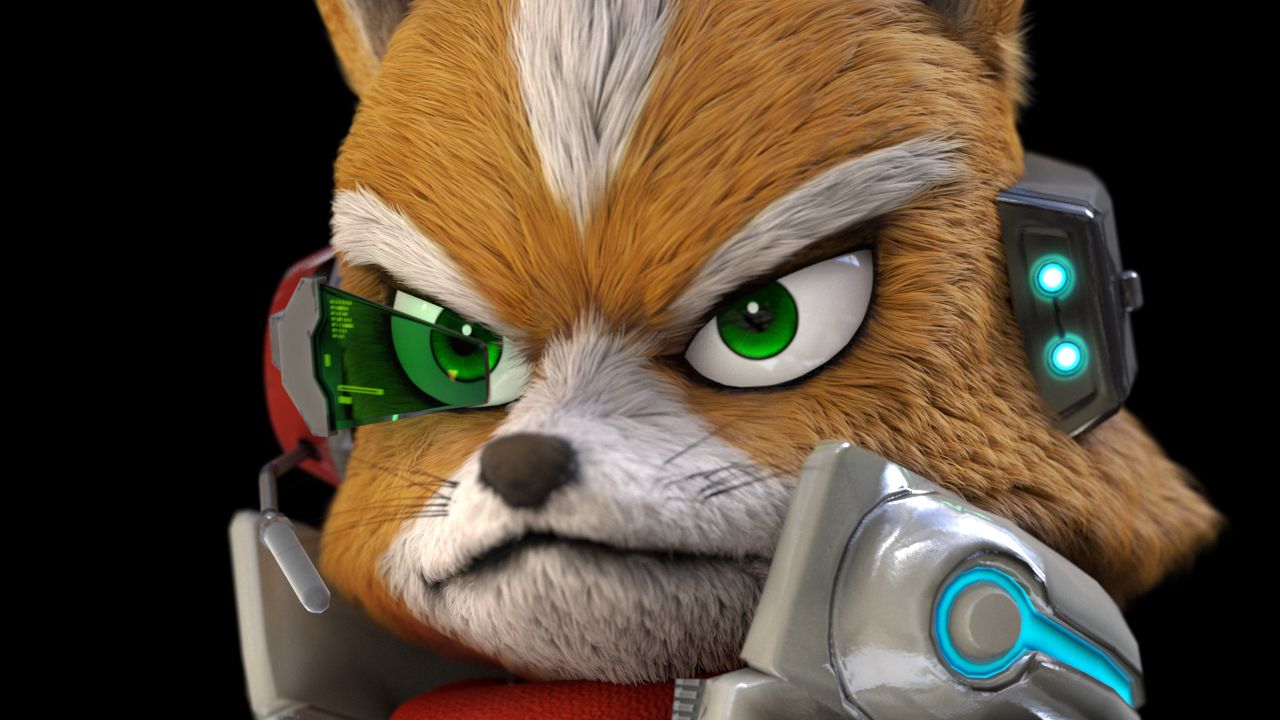
As for Fox McCloud, we’ve seen him and his team of merry animals take on adventures on virtually every format of Nintendo consoles since 1993, on a number of occasions actually re-telling the same story as this original game.
Star Fox's breakthrough graphical styling and its technological advances are thought to have been a massive influence on Miyamoto and Nintendo’s thinking about the future of the company and its franchises as a new 3D era of gaming was close at hand. Without this first introduction, experiment and gamble on a new innovation, games like Super Mario 64 may not have appeared so soon after.
If you want to dig deep into the world of retro gaming, here's how Destroy All Humans' sci-fi action oddity conquered all.