Kaohly Her has one of the most striking background stories in US politics – a Hmong refugee born in a bamboo hut in the mountains of Laos who came to the US at age three as part of a Vietnam-war era resettlement program.
Now, as the newly installed mayor of Saint Paul, the city twinned with Minneapolis, she has emerged as an important figure in Minnesota, the solidly Democratic state targeted by the Trump administration’s exercise of controversial immigration policies.
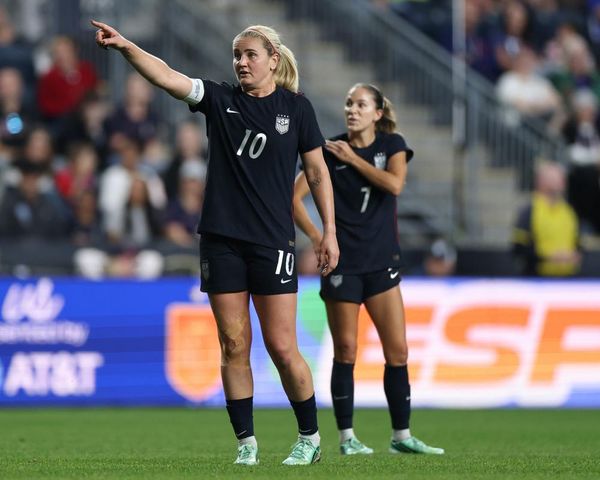
Her, the first woman, first Asian American and first Hmong American to serve as Saint Paul mayor, started her term just three weeks ago, vowing in her inaugural address to confront what she called “the incursion” of the federal government “head-on”.
That week, Renee Good, a US mother of three who lived 15 miles away in Minneapolis, was killed by an Immigration and Customs Enforcement (ICE) officer. Since then, Her has been placed under federal investigation for allegedly obstructing federal immigration enforcement.
A church service in the mayor’s city was interrupted by anti-ICE protestors, with several facing charges under the Face and KKK Acts, and a friend’s brother-in-law, ChongLy Scott Thao, 57, was photographed being taken from his home by ICE officers in freezing temperatures wearing only shorts, a blanket and sandals, a sight Her later said was “heartbreaking”.
Thao – a US citizen – was later returned to his home and Department of Homeland Security (DHS) assistant secretary for public affairs Tricia McLaughlin said his arrest was part of a targeted operation seeking two sex offenders living at Thao’s address, though she provided no evidence to back up that claim.
For Her, it has been a baptism by fire.
“We’re moving quickly to address the times we’re in,” Her told the Guardian in an interview. The mayor’s office is working with dozens of advocacy groups to teach constitutional observer courses “to train people how to engage in videotaping without interfering with ICE operations” and with local law enforcement on procedures when emergency calls about ICE sightings come in.
“We’ve put together some lifelines that we think are critical,” Her says. “If somebody has an abandoned vehicle because they were detained by ICE, we have a program so they can get access to their vehicles without paying large fees.” The ability of ICE to stage in local parks has also been challenged.
Saint Paul has a separation ordinance that prohibits coordination with ICE and has joined a lawsuit designed to end the ICE surge – an action that the US justice department has deemed “legally frivolous”.
“Saint Paul has been under siege by ICE starting back in June already. We’re home to one of the largest Hmong communities in the country, but when the ICE raids started they flew under the radar. They’ve only come to light recently since the shooting of Renee Good, and it’s escalated since.”
Her’s life in the US began in Chicago and she arrived in Saint Paul via Wisconsin. Her father worked for the US government in Laos, and her grandfather fought alongside the US army in the CIA-backed Laotian civil war. Resettled in the US, Hmong families were dispersed across the US to create less visibility because the so-called “secret war” was domestically unpopular.
Her’s political career began after 15 years in the investment and finance sector, first as a community organizer, then as the director of a Hmong women’s organization and serving on the Saint Paul human rights commission and as the administrator of Saint Paul’s board of education.
From 2019 to 2025, she served in the Minnesota house of representatives, as a member of the Minnesota’s left-liberal Democratic-Farmer-Labor party. She served as policy director for the two-term Saint Paul mayor Melvin Carter before challenging and beating him in November, vowing to deliver a more engaged administration.
“The part of me that brought me into public office was the love that is inside of me,” Her says. “In my culture, you never leave my house without a meal. There’s nothing that has prepared me better to take care of a city in a time of crisis than by being raised as a Hmong woman.”
At her swearing-in, Her delivered a powerful tribute to Melissa Hortman, the Democratic Minnesota state lawmaker who, along with her husband, was gunned down on her doorstep last year in a politically targeted killing. Her said it was Hortman’s “mentorship and example that lead me to run for this office”.
“Melissa’s words resonate with me,” the mayor now says. “Am I honoring her legacy? The way she taught me to lead and how to center people.”
Her says her immigrant experience hasn’t changed in Minnesota, “which has always been a state welcoming to immigrants and refugees”. But what has changed is “other people’s rhetoric in other states, and people calling for certain measures to happen at the borders, has brought increased scrutiny to our immigrant refugee communities”.
The attention of the federal government on Minnesota – including a focus on alleged fraud in the Somali American community that precipitated the decision of the governor, Tim Walz, not to seek re-election this year – is down exclusively to Donald Trump, Her says.
“His disdain toward the state, and the fact that he has never been able to win here, made it very clear that there was a retribution to be paid and he is making good on that. People want to talk about this as an immigration issue, but it is not. Minnesota has always welcomed its refugees.
“It is only now because of the political change that the federal government has decided they’re going to do immigration differently, and we would be the state to pay the price for it,” she adds. “I don’t want people to be mistaken into thinking this is an isolated action – the plan is to do this across the country.”
In Davos, Trump repeated the claim that the DHS was only targeting “murderers, drug dealers and the mentally insane” and cracking down on “$19bn in fraud that was stolen by Somalian bandits” and was not targeting migrants who had come to work on farms and in service industries.
But Her points to an underlying racism. “We have undocumented immigrants here who are from European countries, but none of those people are being targeted.
“I want us to be clear what we are looking at – if you are an immigrant who has darker skin color or an accent, [the message is] you do not belong here. That’s a very new stance because that’s what America stands for.”
In Saint Paul’s Hmong community, Her has noticed that the markets are empty and it’s easy to find parking. “They would normally be bursting at the seams, and the few people that were [there] were getting their food quickly and leaving. Everyone is afraid. I have family members who haven’t opened their drapes in days because they’re afraid someone can see in and see that they are Asian.”
“ICE agents have been asking where Asian people live,” Her claims. “We are living through an unprecedented time in out country.”
McLaughlin, the DHS assistant secretary for public affairs, has said claims of racial profiling “are disgusting, reckless and categorically false”. “What makes someone a target for immigration enforcement is if they are illegally in the US – not their skin color, race or ethnicity,” she added.
On Thursday during a visit to the Twin Cities, JD Vance urged state and city law enforcement to help federal immigration officers. “We’re doing everything that we can to lower the temperature,” the vice-president said, adding that he wants “state and local officials to meet us halfway”.
But Vance didn’t reach out to Her on his trip to the state. “I would gladly meet with him,” Her says.
Raising the current political temperature is not part of Her’s plan. She has taken a more measured rhetorical line than other, white elected officials, perhaps because Minnesota’s left-liberalism hasn’t always served racially diverse communities.
If anything, Her says, federal actions in Minnesota, alongside threats to withdraw funding, are pushing communities together.
What the administration is doing, Her says, is “unifying us, bring us together and making us strong. People want this to be a partisan issue, but it is not.” Like Hortman, Her has maintained measured relationships with her conservative counterparts in the state.
“At the federal level, they do not realize that we are different in Minnesota. Even if we disagree, there is a fundamental belief in humanity. I hope that people can see what was happening here is bigger than parties – it’s really about people’s fundamental human rights. I hope that people see this is about preserving our democracy and not about party lines.”
• This article was amended on 25 January 2026. Melissa Hortman was a Minnesota state lawmaker, not a congresswoman as an earlier version stated.