
Get all your news in one place.
100’s of premium titles.
One app.
Start reading
Operation Sports
Operation Sports
Asad Khan

SSX 3: The Open-World Pivot That Made Snowboarding Sims Soar

In 2003, the gaming world was captivated by open-world games. Grand Theft Auto: Vice City had just reshaped urban chaos into a sandbox of unlimited possibilities, while Morrowind lured players into vast, expansive continents. Consoles like PS2 and Xbox were constantly being pushed to their limits by developers who chased the “bigger is better” idea. 

Enter SSX 3, EA’s fearless snowboarding sequel that could’ve struggled under the high expectations, due to its predecessor’s success. Both the original SSX and SSX Tricky relied on menu-driven track selection, a feature that felt dated. 

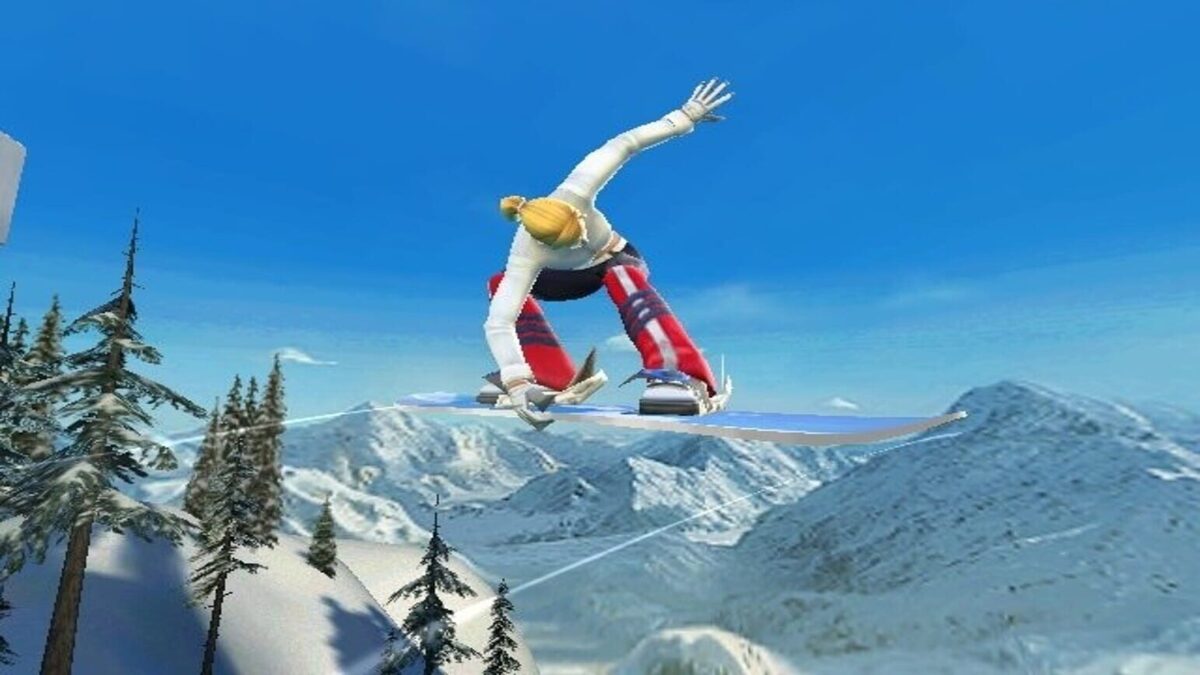
However, SSX 3 scrapped this idea for a single, sprawling mountain split up into three peaks, blending multiple different race events. This meant no loading screen or menu, just hazards and threats from summit to base lodge. SSX 3 was by no means a skateboarding game, but it often exceeded them in gameplay.

Operation Sports App Screenshot

Operation Sports App

Your ultimate companion for sports gaming. Access in-depth coverage, thoughtful discussion, and a community built around the games—and sports—you love.

Your ultimate sports gaming companion.

4.8

Architecture Over Real Estate

Image: EA

Peak 1 greets you with lenient groomers and fundamental jumps, a pleasant ramp-up hidden as a resort playground. Ascend via chairlifts or heli-drops, and Peak 2 unshackles powder bowls riddled with disguised chutes and rail mazes. By Peak 3, the terrain turns ferocious: ice fields, pure cliffs, and avalanches that demand pristine carving. 

It is a rapidly worsening situation, where every path tells a story of risk. Miss a ledge on Peak 2? You’re ragdolling into the abyss, learning the mountain’s unforgivingness the difficult way. 

One of the flagships is the All-Peak Race, a ruthless 30-minute gauntlet from Peak 3’s summit to the valley floor. No checkpoints in sight, no mercy, just you and your foes in an environment full of hazards that test your endurance to its limit. Avalanches conceal paths, wind cuts every turn, and disguised jumps reward players who’ve freerode every corner. 

Compared to the open-world sports games now, its peaks pack density into every square meter. This makes exploration have a purpose, rather than wandering throughout the map without an aim. 

The Risk-Reward Loop: Uber Tricks And Momentum

SSX 3 isn’t just about its open-world adventures, but also about how the game weaponized the in-game world with arguably the most addictive trick system in snowboarding history. 

The Uber overhaul was pure genius: fill up your adrenaline meter with flips, grabs, and spins to release Level 1 Ubers; unbelievable skills like the Haakon Flip or McTwist variant. But “UBER” with continuous boosts, and unleash Level 2 Super Ubers, raising multipliers skyward. 

You might wonder what the risk was? Hold any grab (mute, indy, stalefish) mid-air for too long, and your stability weakens. Though landing the trick meant higher rewards, bailing meant you ended up back to zero. Every cliff became a casino: rail grinds feed Uber meters, powder stashes cover super pipes, and random jumps demand held Stalefish Ubers. 

Radio Big And Atmospheric Immersion

Punctuating the powder was Radio Big, hosted by the raspy-voiced DJ Atomika. He was your personal mid-air hype man, shouting event previews, weather warnings, and trash-talk as you snowboard. 

However, the real magic happened in the dynamic soundtrack: 29 tracks from Julien-K to Overseer, collated into playlists at base lodges. Your performance affected the audio, with poor runs muffling the bass to a distant thrum, imitating wipeout disorientation. And if you nail a combo, the volume increases, guitars wail, and Atomika spouts: “RIDICULOUS!” 

Adding to this, the altitude also amplified the sounds; higher elevations thinned the mix to delicate synths, while valley drops unleashed hip-hop bombs. There was simply no concept of burnout, as you’d freeride endlessly, chasing the next track swell. This proved that adequate sound design can successfully elevate any space. 

Lessons For The Modern Era: Freedom Vs. Friction

Image: EA

Nowadays, hundreds of massive video game franchises choke huge maps, converting progression into a UI slog. Redundant challenges like collecting 500 heli-crashes or grinding 200 leaderboards make the game feel nothing but boring.

SSX 3 instead had clearer goals that weren’t as overwhelming and leaned more towards real progression. For example, platinum medals, crystal hunts, and peak passes that unlocked free ride tracks naturally. New-gen developers mistake scale for depth, but by looking at SSX 3, a re-evaluation is necessary. Developers need to prioritize density inside every part of the map, and compile playgrounds where every meter hums with high-risk, high-reward.

Sign up to read this article
Read news from 100’s of titles, curated specifically for you.
Already a member? Sign in here
Related Stories
Top stories on inkl right now
One subscription that gives you access to news from hundreds of sites
Already a member? Sign in here
Our Picks
Fourteen days free
Download the app
One app. One membership.
100+ trusted global sources.