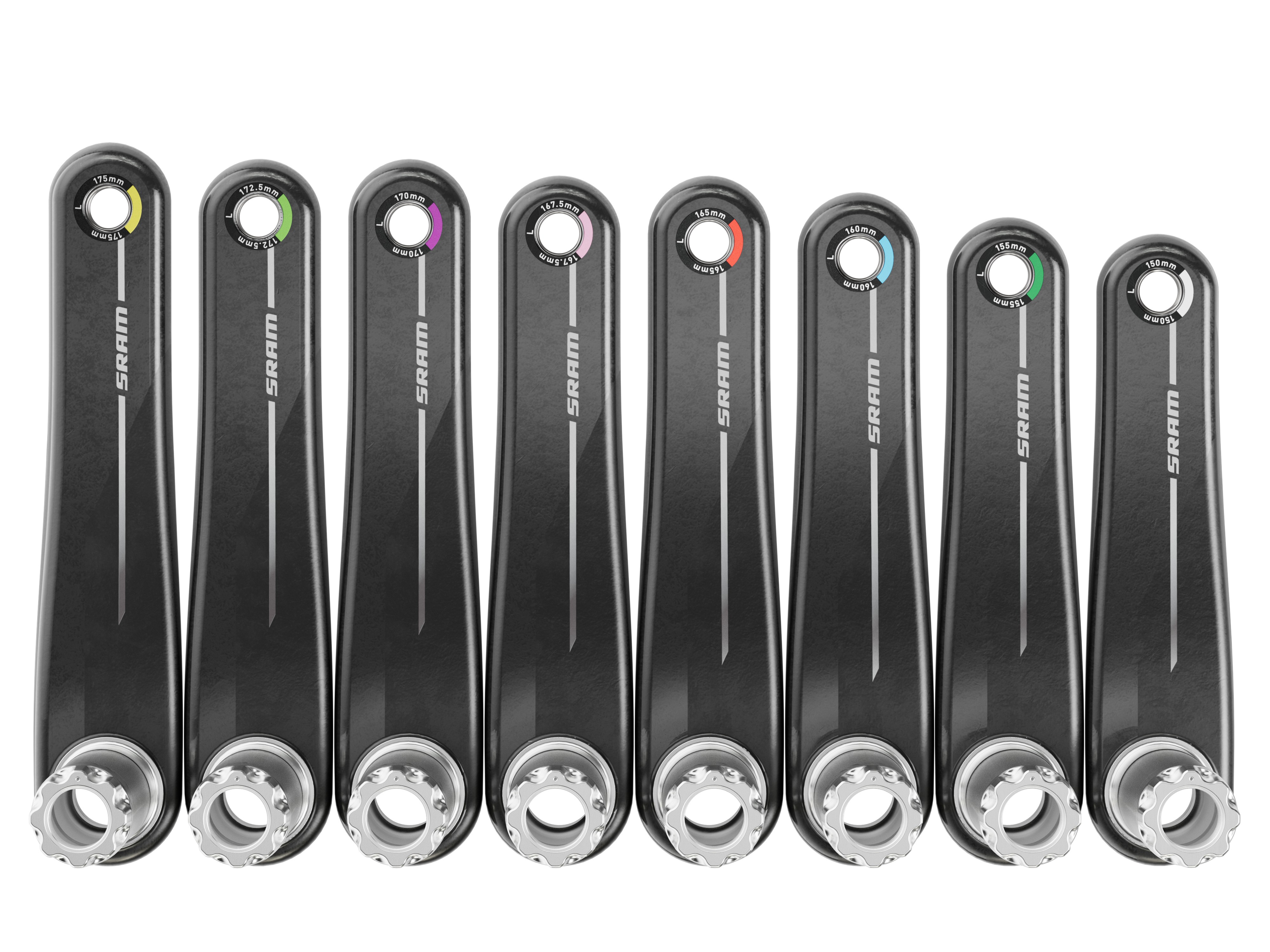
The widespread adoption and popularity of shorter crank arms on the road has been a key tech theme over the last few years. There are a number of strong arguments for the use of shorter crank arms, and the change has been popular with the sport's biggest stars, amateur racers and riders alike.
A new product release from SRAM confirms the brand is fully invested in short road cranks. SRAM has released two new lengths of SRAM Red AXS and gravel-specific XPLR carbon fibre cranks in even shorter 150 and 155mm lengths, as well as an updated range of time trial brake levers and a couple of other accessories.
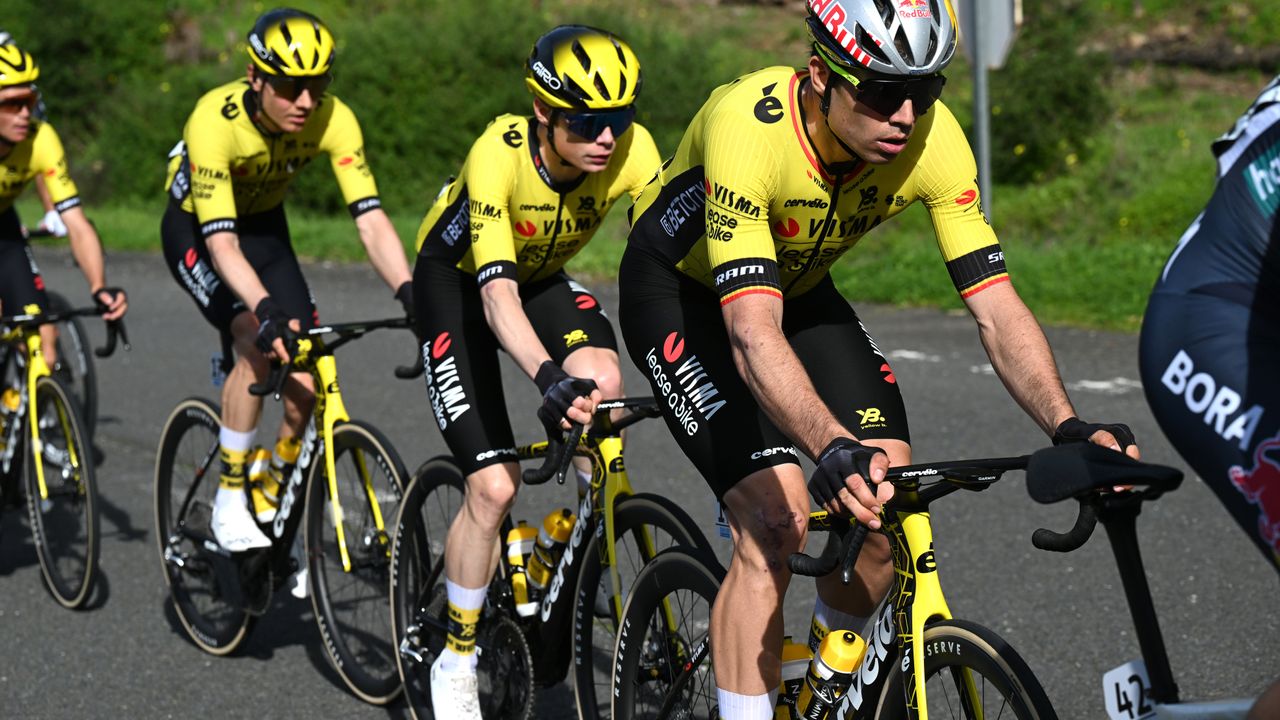
Until now, the shortest officially available Red cranks, SRAM's top-tier road groupset, have been 160mm in length. However, Double Tour de France winner Jonas Vingegaard was spotted riding 150mm cranks back in February last year, and has clearly been experimenting with shorter length crank arms generally. The Dutch star had at least one Cervelo S5 race bike fitted with slightly longer 160mm cranks at the Tour de France last year.
150 and 155mm length crank arms for the road would have been viewed as highly unusual not so long ago. SRAM manufacturing its top tier carbon fibre Red cranks in these sizes only confirms the current direction of travel. This announcement could indicate that more professional riders will be using 150 and 155-mm Red cranks at races this season, and we will be on the lookout at the Tour Down Under and Opening Weekend in particular.
I reached out to SRAM for a little more information on pro rider requests for shorter crank lengths. Jason Fowler, the SRAM road product manager, explained demand had been coming since around 2024.
"The creation of 150 and 155 cranks became a reality because of the requests from professional riders, and we wanted to provide riders with choice.
"Riders like Jonas Vingegaard and others started requesting in 2024, and then started riding and racing prototypes in 2025. Some riders are looking at these lengths for time trial only, while others are looking at these lengths for both road and time trial."
Vingegaard's Visma-Lease a Bike team are clearly fully on board with the short-length crank arm train of thought. Indeed, other stars like Wout van Aert have also transitioned to 165mm cranks, that's to say nothing of World Champion Tadej Pogačar's widely reported use of 165mm Shimano crank arms.
SRAM claims shorter crank arms give riders better efficiency and more comfort. Red crank arms are now available in 150-175mm crank arm lengths to suit power and non-power SRAM Red chainset spiders and chainrings. The new crank arm assembly in the new lengths has an RRP of $440 / £400 / €450.
The concept of short crank arms is nothing new; track riders have used 165mm cranks for decades, and the Great Britain track team, especially the Team Pursuit squads, to cite one example, was wise to the short crank arm argument over a decade ago. However, lengths like 150, 160, and 165mm have never been used as widely on the road as they are now.
Shorter crank arms can improve aerodynamics, but can also aid bike fit and, in turn, performance for a rider by opening up hip angles and, in cases, reducing hamstring tightness, a notorious weak spot for cyclists as one example.
New aero TT brake levers, UDH bolts and a USB-C battery charger update
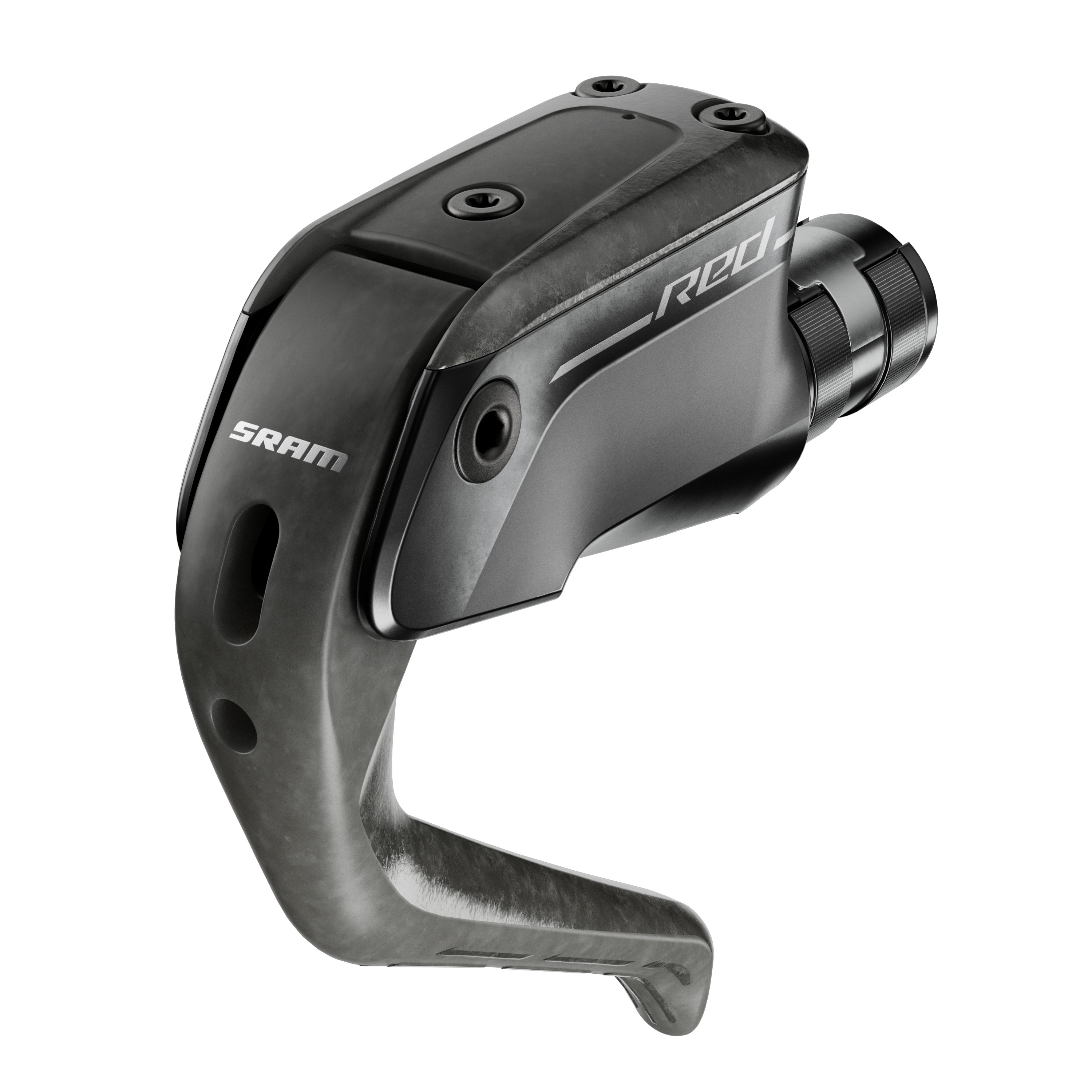
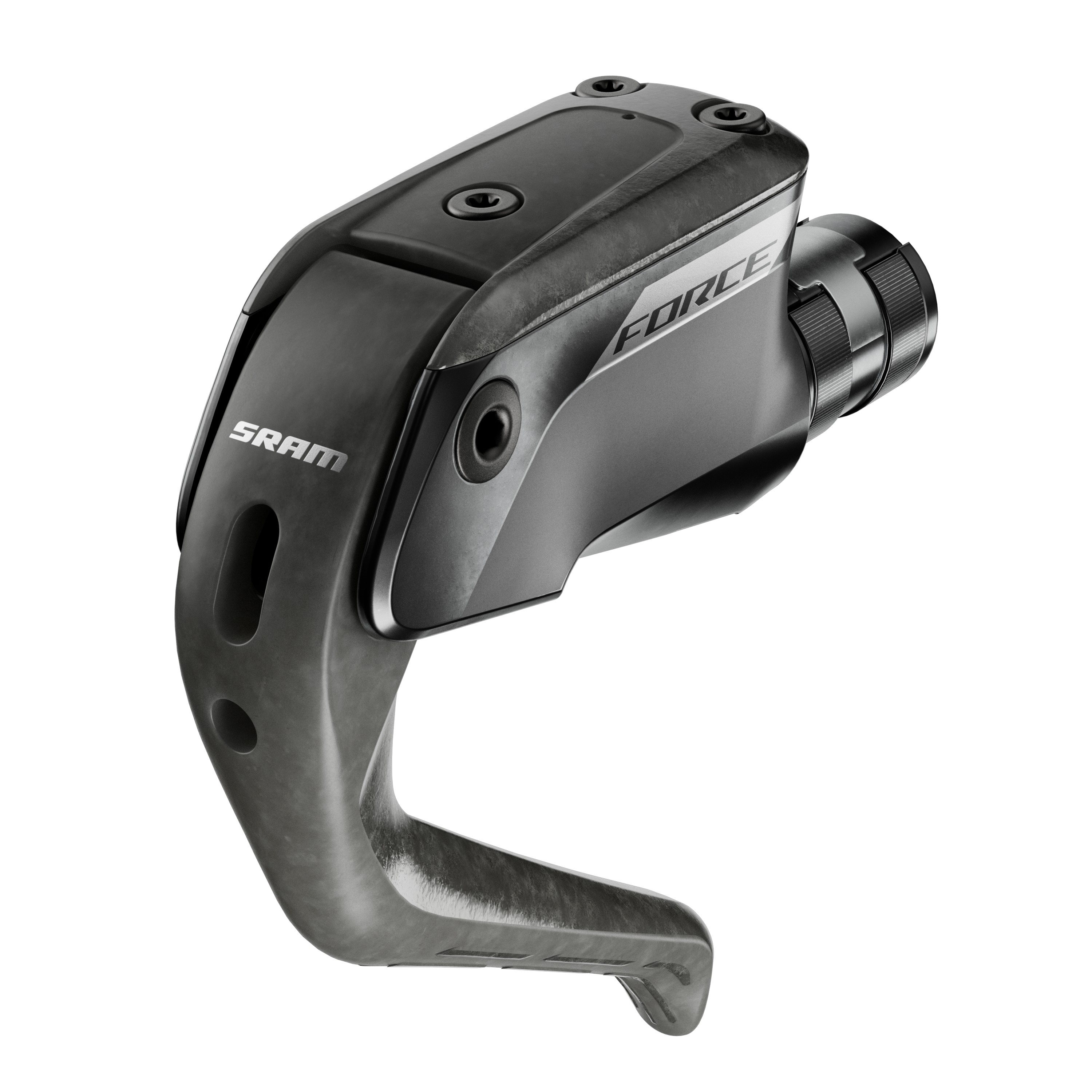
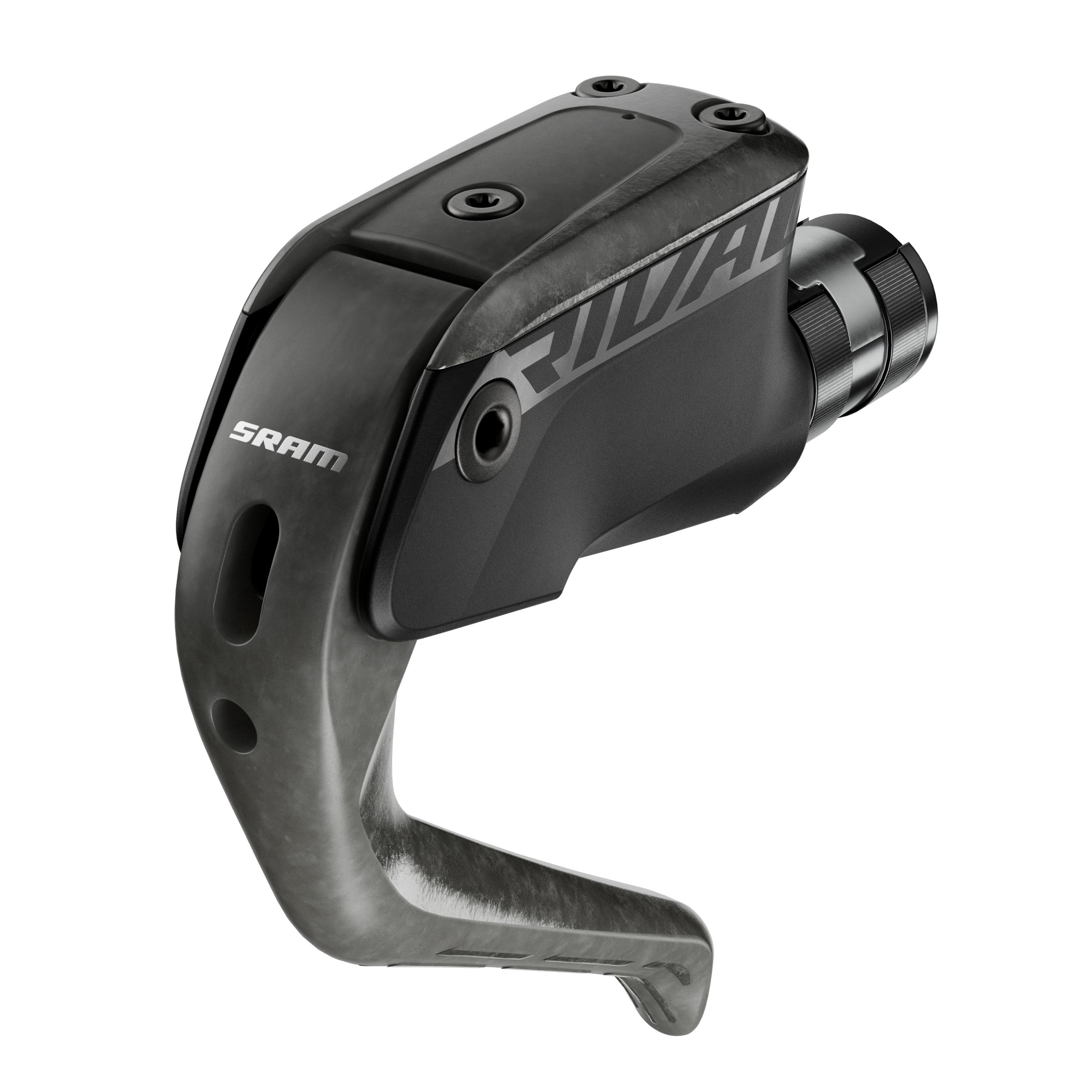
SRAM has also added to its brake range. Releasing new 'Aero disc brake' options, these come in the form of three new hydraulic time trial bar brake lever options.
Until now, when it came to brake levers for time trial bikes, SRAM had only offered one hydraulic option in the form of the S-900 aero lever; it also offers two levers for cable-operated time trial brakes, something that's still common on amateur and lower-level Pro TT machines.
SRAM has produced Red, Force, and Rival spec TT brake lever and caliper kits. It appears this adds a wider range with more affordable options when it comes to hydraulic groupset components for time trial bikes.
The levers are available with a caliper and hose at all three spec points as a kit, and in front and rear brake options. SRAM told me there is no change to the lever assemblies, only the finish and graphics are new, and the existing textured carbon fibre brake lever remains.
The Red kit, per side, costs $310 / £287 / €322. Force comes in at $250 / £245 / €27,5 and Rival carries an RRP of $210 / $205 / 230.
SRAM has produced a UDH (universal derailleur hanger) with the option of a silver bolt and washer as an additional aesthetic option. Silver coloured components are more common across the board right now.
Finally, it seems SRAM has embraced the USB-C standard for its wireless battery charger. Until now, the chargers have used a micro USB cable, but SRAM has now updated the interface to fit a USB-C standard. The brand has also 'eliminated the charge cord from the package to reduce waste.' Which means you will have to buy your own cable separately moving forward when buying a charger, or more likely just use one you already have at home.