
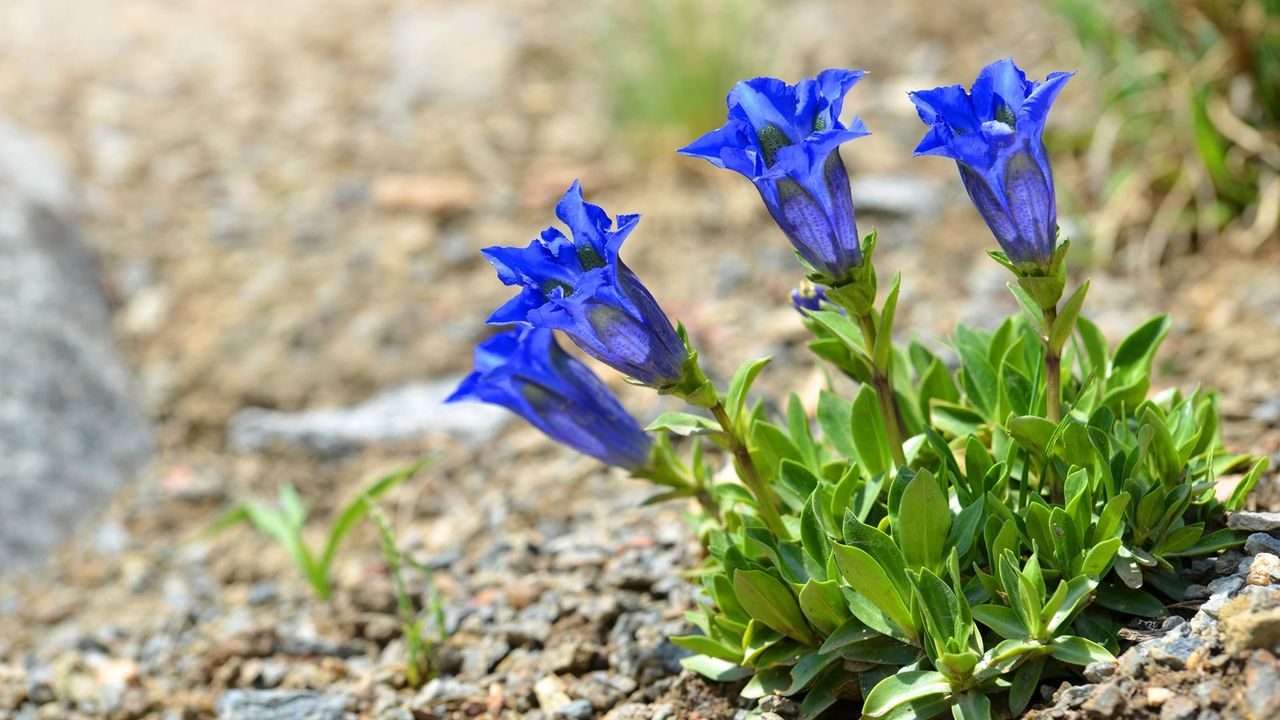
Spring flowering alpines dazzle with their beauty. Not only do their jewel-like flowers shine out against rugged stone when little else in the garden is blooming, but their small stature and intricate detail are deeply enthralling.
A stroll through the rock garden at The New York Botanical Garden early in the year shows the instant appeal of these delicate yet hardy blooms. Too good to miss out on, why not introduce these exquisite plants at home, either as part crevice garden or potted alpine display.

Provided these beautiful plants have adequate drainage and are not swamped by weeds, they will prove undemanding and hugely rewarding for whatever kind and size of rock garden idea you want to create. Here are seven varieties we love.
Mountain Rock Cress

A mass of fragrant snowy white flowers graces this evergreen perennial from March to May. Mat forming plus drought tolerant, arabis caucasica needs little attention and will positively thrive in poor soil.
Attractive to pollinators, this rock garden plant will draw in early appearing butterflies and bees.
Reaching a height and width of 4-20 inches (10-50cm) it loves a sunny spot. Hardy with compact grey-green foliage mountain rock cress will happily spill over rockeries, path and border edges.
Trim back after flowering to keep it looking neat and tidy using sharp hand garden shears, such as these from Amazon.
Rock Soapwort

With it’s soft grey-green leaves and low, clump forming habit, perennial Saponaria ocymoides is a stunning and easy going option for any rock garden. Loved by pollinators, it's a deer resistant ground cover plant too.
‘Rock soapwort’s “masses of rosy blooms” (William Robinson) above its 6” height and 18” spread, bloom in May and again in summer if you cut it back half-way after flowering,’ suggests nursery owner Elizabeth Adelman.
‘Native to mountains in Spain and central Europe, it grows in sun in moist-well drained to dry soil. In the 17th century the leaves were used for soap and today by antique restorers.’
Stemless Gentian

Glamorous with deep blue blooms, this alpine is unmissable. 'Home to mid-way up European mountains, the Stemless gentian or Trumpet gentian, Gentiana acaulis, prefers sunny areas in northern, cool climates and afternoon shade in the south,’ says Elizabeth.
‘Glossy, evergreen foliage carpets a foot-long territory of moist, well-drained, gritty soil. In May and June its 9” tall; rich, royal blue trumpet-shaped flowers flare open to welcome pollinators.’
Best suited to USDA Hardiness zones 3a-7a, this perennial will cope with a wide range of different climates and but will struggle in boggy conditions, so be sure to add grit such as perlite from Walmart when planting.
Moss Phlox

Offering a vibrant splash of color each spring and summer, Phlox subulata should top everyone’s rock garden wish list.
'Creeping phlox, I think, is one of the best ground cover plants,’ says plant expert, Lauren Carvalho. ‘It can help to knit a design together, adding interest to the edges of borders and paths, and adding a pop of color or texture to cracks and crevices where other plants might perish.'
Often known as rock phlox and mountain pink, it’s star-shaped blooms blanket the blue-green needle-like foliage, spilling gently over rocks, boulders and between paving slabs. Reaching heights of only 6 inches (15cm) with a spread of 20 in (50cm) it is well behaved and can be kept in check with a regular trim.
Pyrenean Violet

Also known as Hardy African Violets, spot a cluster of these in full bloom and you will be mesmerized by their cheery five petalled blooms dancing on their wiry stems.
‘These hardy African violets, Ramonda myconi, are at home embedded in cool, shaded cliffsides,’ says plant expert Esther Wrightman. ‘Their clusters of open-faced purple, sometimes pink and white, flowers hang delicately above crinkled rosettes of furry leaves.’
Often called the ‘Resurrection Plant’, this plant has the unnerving ability for shrivelled brown leaves to turn green again within hours of rain falling.
One of the best plants for a crevice garden, each plant will spread between 4 to 20 inches (10-50cm) with flower stems reaching 4 inches (10cm) high, over two to three years. ‘Give them time and they just get better with age,’ Esther adds.
Pasqueflower

No spring garden should be without pulsatilla vulgaris, filling pots, borders and rock gardens with a dash of purple flower power, through April and May.
With their large, silky petals encircling a bright yellow centre, these hairy leaved perennials attract a wide range of pollinators including bumble, solitary and honeybees.
Growing to 8 inches (20cm) high and wide, the dwarf plants are best placed at the front of rock gardens or close to a path where they can be appreciated. Fully hardy, they prefer a sunny spot in USDA Hardiness zones 4-8.
Lewisia

A genus hailing from Northwest America, with 16 species, Lewisia are tough, low growing perennials well adapted to growing in rocky cracks and crevices.
Lewisia redivi is the beautiful state flower of Montana, with solitary soft-pink flowers consisting of up to 19 individual petals but evergreen Lewisia cotyledon is the easiest and most colorful type to grow.
Favoring a sunny spot with well-drained soil, these plants with their delightfully crinkled leaves and branching flower stems, reaching up to 12in (30cm) tall, are captivating to grow.
Choose from delicate apricot, soft pink through to deep scarlet and cerise. We love these lewisia seeds from Walmart.
Tempted to make room for alpines in your yard, but you only have a small smave to work with? Then discover how to start a crevice garden or how to create a rock garden in a container.
Shop Alpine Starter Plants
'Fire Spinner' is a vibrant type of ice plant with daisy-like flowers in orange and pink. It's drought-resistant, has evergreen foliage, and attracts pollinators. It does best in full sun and thrives across US hardiness zones 5-10.