
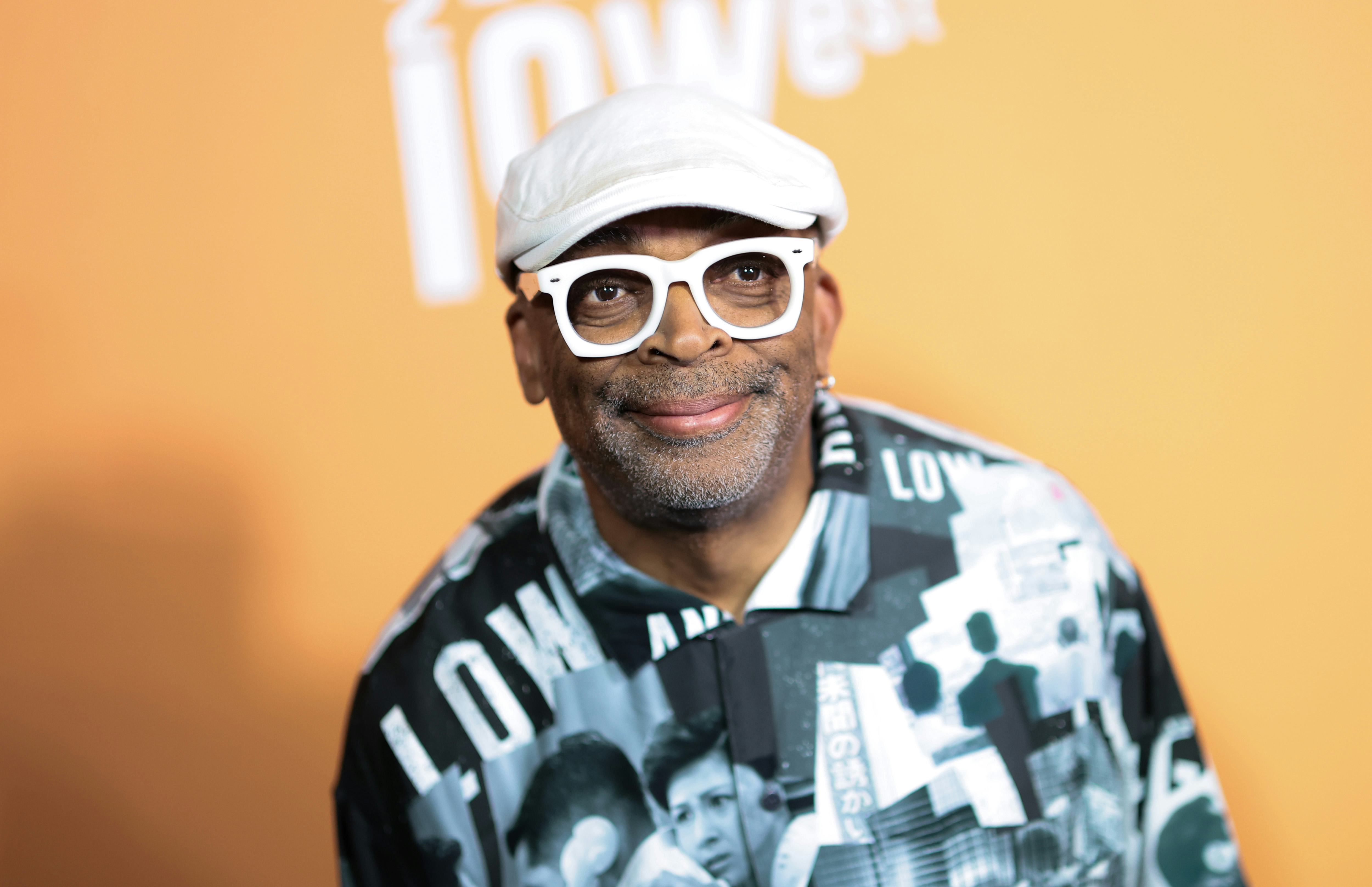
Spike Lee surrounds himself with the greats, even in his day-to-day life. As the legendary filmmaker Zooms in from a cozy office space, I can see that every inch of every wall is covered in black-and-white photos of music legends. Portraits of Frank Sinatra, jazz pianist Hazel Scott, and James Brown stare me down as Lee, back turned, oversees the arrangement of two other pieces: the first, a vintage poster of High and Low, and the second, an image of its director, Akira Kurosawa, signed “To dear Spike” in textured white paint.
It’s not until both are placed just-so, perfectly situated in frame, that Lee turns to make a bit of small talk — but even before he says a word, this scene tells me more than anything immediately on his mind. Like any filmmaker the world recognizes by name, Lee’s reputation precedes him. He’s a writer and director who knows what he likes, and has no problem discussing what he doesn’t. He’s no longer the young upstart challenging the status quo, but he’s still very much a disrupter, if only because he’s holding onto tradition as the industry strives to replace it.