Get all your news in one place.
100's of premium titles.
One app.
Start reading
The Independent UK
The Independent UK
Andrew Griffin

Sperm could struggle to fertilise eggs in space, first study of its kind finds

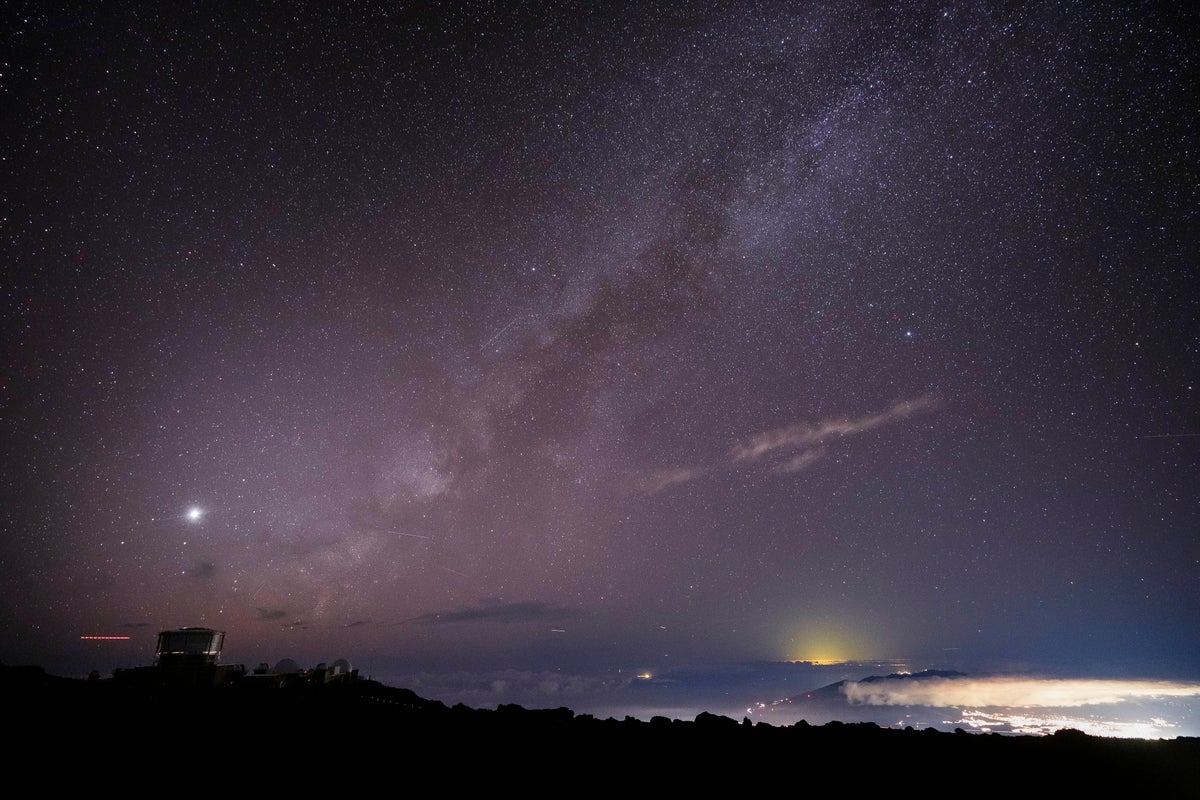
Interstellar Visitor - (Copyright 2024 The Associated Press. All rights reserved.)

It could be more difficult to have a baby in space because sperm could get lost, a new study has warned.

Research suggests that sperm’s navigation may be confused by the lack of gravity and therefore make it harder to fertilise eggs.


That is the conclusion from a new study that took sperm samples from three mammals, including humans, and put them through a machine that simulates zero gravity conditions by flipping cells. The sperm were then put through a maze that mimicked the female reproductive tract.

They appeared to get lost, finding it difficult to make it through the maze.

“This is the first time we have been able to show that gravity is an important factor in sperm’s ability to navigate through a channel like the reproductive tract,” said senior author Nicole McPherson from Adelaide University.

“We observed a significant reduction in the number of sperm that were able to successfully find their way through the chamber maze in microgravity conditions compared to normal gravity.

“This was experienced right across all models, despite no changes to the way sperm physically move. This indicates that their loss of direction was not due to a change in motility but other elements.”

Scientists found that adding the sex hormone progesterone helped the sperm overcome the effects of the reduced gravity, and so made it more likely that the samples would make it through the maze.

“We believe this is because progesterone is also released from the egg and can help guide sperm to the site of fertilisation, but this warrants further exploration as a potential solution,” said Dr McPherson.

Researchers also found that there was a 30 per cent reduction in the number of mouse eggs that were fertilised after they were exposed to zero gravity.

“We observed reduced fertilisation rates during four-to-six hours of exposure to microgravity. Prolonged exposure appeared to be even more detrimental, resulting in development delays and, in some cases, reduced cells that go on to form the fetus in the earliest stages of embryo formation,” said Dr McPherson.

“These insights show how complex reproductive success in space is and the critical need for more research across all early stages of development.”

The scientists behind the study say that the research will be key to understanding how changes in gravity might affect both fertilisation as well as the development of the embryo. That in turn will be central to our plans to live on other worlds, such as the Moon and Mars.

“In our most recent study, many healthy embryos were still able to form even when fertilised under these conditions. This gives us hope that reproducing in space may one day be possible,” said Dr McPherson.

Other research has looked at the ways that sperm is able to move in space. But the study is the first to examine how sperm can navigate through a reproductive channel in such a way.

The work is published in the journal Communications Biology.

Sign up to read this article
Read news from 100's of titles, curated specifically for you.
Already a member? Sign in here
Related Stories
Top stories on inkl right now
One subscription that gives you access to news from hundreds of sites
Already a member? Sign in here
Our Picks
Fourteen days free
Download the app
One app. One membership.
100+ trusted global sources.