
Get all your news in one place.
100's of premium titles.
One app.
Start reading
The Independent UK
The Independent UK
Neil Lancefield

Speeding boat called Peaky Blinder in fatal harbour crash was driven by drunk man, investigation reveals

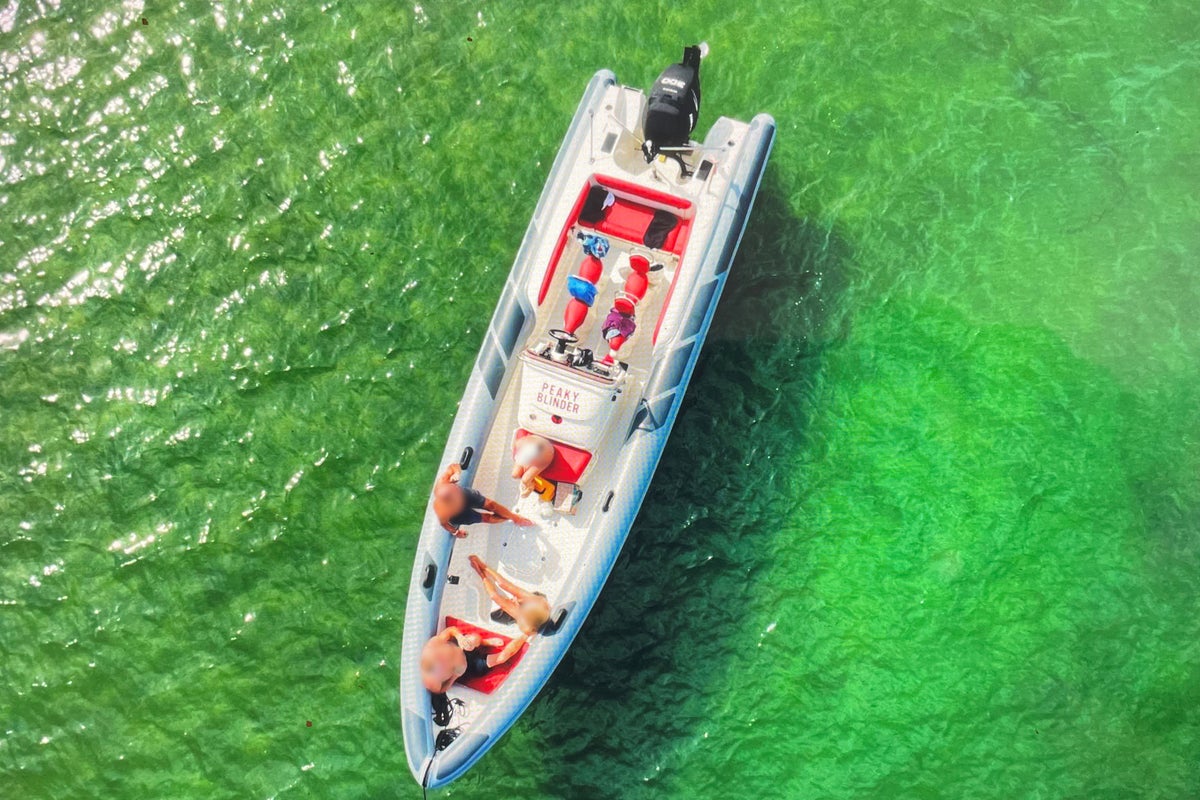
Rigid inflatable boat Peaky Blinder was involved in a fatal crash was being driven by a man who had drunk a significant amount of alcohol, an investigation has found - (PA)

A speeding pleasure boat involved in a fatal crash was being driven by a man who had drunk a significant amount of alcohol, an investigation has found.

William Blake, 61, and his friend, passenger Gary Huntington, 60, died when the former’s rigid inflatable boat Peaky Blinder hit a stationary navigation beacon in Portsmouth Harbour on 14 August last year.

Another friend, aged 56, who was also a passenger, survived.

None of the trio – who were all thrown into the water by the impact – were wearing a life jacket, the Marine Accident Investigation Branch (MAIB) said.

Investigators found the Peaky Blinder was driven at up to 49.7 knots (57.1mph) in the harbour, almost five times the speed limit of 10 knots (11.5mph).

After losing control, the boat struck the beacon at 33.5 knots at 7.25pm.

The friends were returning from a social trip to various locations in the Solent and Isle of Wight area when the accident happened.

The report stated that “alcohol consumption featured centrally throughout the day”, with the friends consuming a glass of sparkling wine each before departure, about 10 cans of beer and cider between them at a hotel, and two rounds of drinks at a restaurant.

William Blake, 61, and his friend, passenger Gary Huntington, 60, died when the former’s rigid inflatable boat Peaky Blinder hit a stationary navigation beacon in Portsmouth Harbour on 14 August last year (Steve Daniels)

Mr Blake had a further one-and-a-half pints of beer and was “noticeably unsteady on his feet”, the MAIB said.

A toxicology report indicated there was “a significant alcohol concentration” in his blood, which had “the potential to substantially impair his judgement, reaction time and decision‑making”, investigators added.

After being ejected overboard, the surviving passenger saw Mr Blake become submerged and dived to try to find him, but was unsuccessful.

On surfacing, they then swam to Mr Huntington – who was floating unconscious – pulled him towards the boat and held him alongside it.

About 20 minutes after the crash, responding emergency services brought Mr Huntington out of the water and provided first aid.

After being taken to shore he was airlifted to hospital, where he was declared dead.

Mr Blake’s body was found five days after the crash.

A post-mortem report gave his cause of death as drowning and a head injury.

The report said there are “no enforceable alcohol limits for non‑professional mariners”, which it described as a “longstanding regulatory gap”.

It made a series of safety recommendations, including that the Secretary of State for Transport introduces such limits.

Rob Loder, chief inspector of marine accidents, said: “It is well understood that consumption of alcohol results in an elevated risk of having an accident.

“The introduction of alcohol limits for recreational boaters has been the subject of previous MAIB recommendations.

“It is to be hoped that action will now be taken, such that fatal accidents in which excessive alcohol consumption is a contributing factor become a thing of the past.”

Richard Ballantyne, chief executive of industry body the British Ports Association, said Parliament provided the powers to address the lack of an alcohol limit in 2003.

He went on: “Twenty-three years later, the relevant provisions have still not been brought into force, despite repeated warnings from ports, harbour masters and safety investigators.

“The Government should accept the MAIB’s recommendations and publish a clear timetable for implementing them.

“The evidence has been under review for long enough. We should not wait for another fatal accident before closing a loophole that should never have remained open.”

The Department for Transport was approached for a comment.

Sign up to read this article
Read news from 100's of titles, curated specifically for you.
Already a member? Sign in here
Related Stories
Top stories on inkl right now
Our Picks
Fourteen days free
Download the app
One app. One membership.
100+ trusted global sources.







