
Get all your news in one place.
100’s of premium titles.
One app.
Start reading
Space
Space
Science
Daisy Dobrijevic

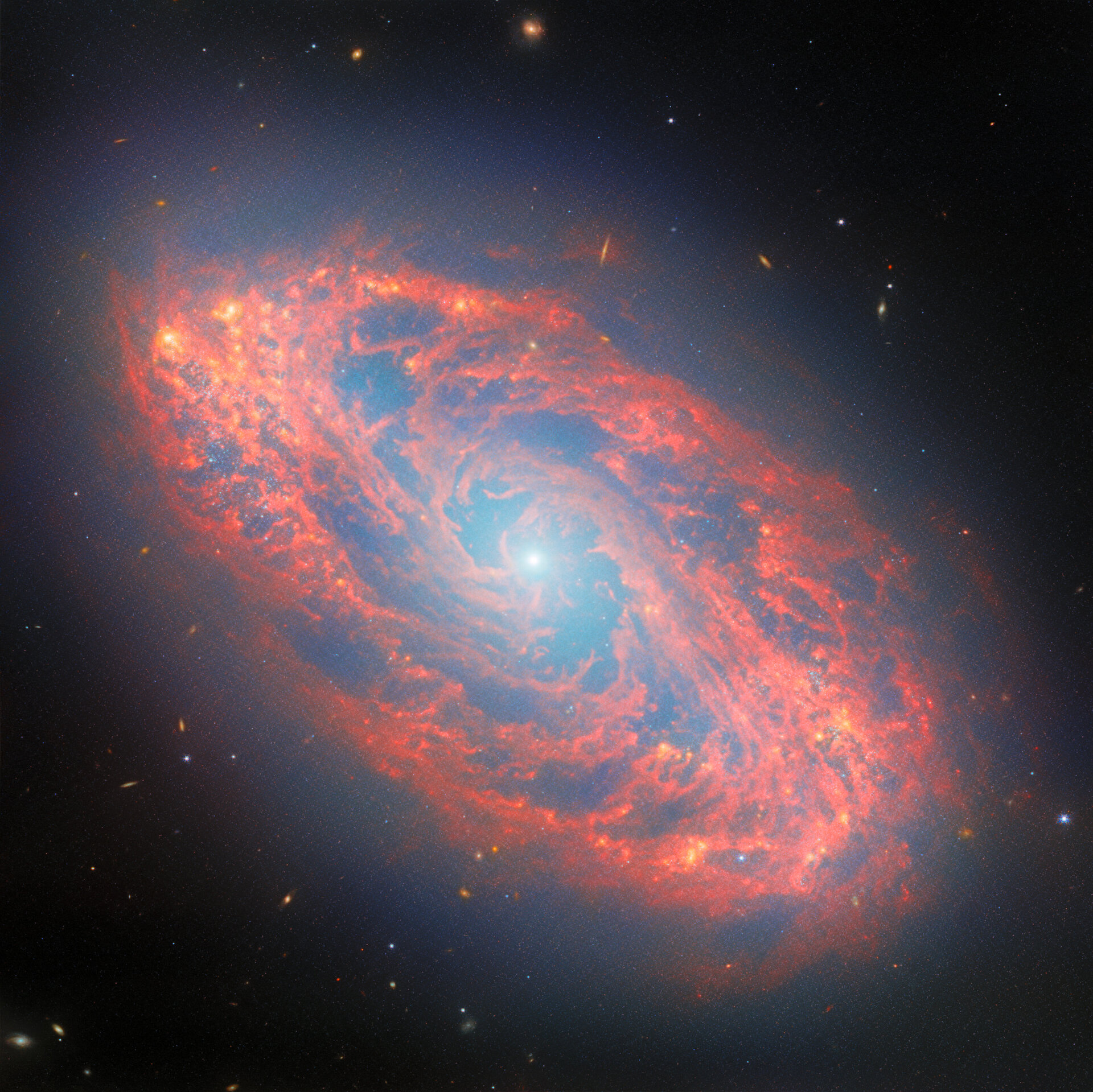
Spectacular spiral galaxy revealed by James Webb Space Telescope | Space photo of the day for March 4, 2026

Spiral galaxy NGC 5134 captured by the James Webb Space Telescope. (Image credit: ESA/Webb, NASA & CSA, A. Leroy)

The James Webb Space Telescope (JWST) has captured a truly spectacular view of the spiral galaxy NGC 5134, revealing glowing dust clouds, newborn stars and the ongoing cycle of stellar life and death.

Located about 65 million light-years away in the constellation Virgo, the galaxy may seem distant, but in cosmic terms, it's relatively close. This proximity allows the James Webb Space Telescope (JWST) to resolve remarkable details in the tightly wound spiral arms of the galaxy.

What is it?

NGC 5134 is a spiral galaxy, a type of galaxy characterized by a bright central core surrounded by sweeping arms filled with stars, gas and dust. These arms act as cosmic nurseries where new stars are constantly forming.

This dramatic image combines observations from two of the JWST's powerful instruments: the mid-infrared instrument (MIRI) and the near-infrared instrument (NIRCam). MIRI detects mid-infrared light emitted by warm dust, revealing strands and clumps of gas scattered throughout the galaxy. NIRCam captures shorter-wavelength infrared light that highlights the stars and star clusters embedded deep within the spiral arms.

Why is it amazing?

The glowing dust clouds visible throughout the galaxy are the raw material for new stars. As gravity pulls this gas together, new stars ignite — gradually using up all the galaxy's star-forming fuel. When stars die, they return some of that material back into space. Massive stars explode into supernovas, scattering elements across hundreds of light-years, while smaller stars like our sun shed their outer layers as they expand into red giants.

By studying galaxies like NGC 5134 in infrared light, astronomers can trace this ongoing cycle of stellar birth, evolution and recycling, helping scientists understand how galaxies grow and change over billions of years.

Sign up to read this article
Read news from 100’s of titles, curated specifically for you.
Already a member? Sign in here
Related Stories
Top stories on inkl right now
One subscription that gives you access to news from hundreds of sites
Already a member? Sign in here
Our Picks
Fourteen days free
Download the app
One app. One membership.
100+ trusted global sources.