Closing summary
… and on that note, it’s a wrap for today!
Nato has moved its personnel from Iraq after a series of attacks from Iran and amid “worsening” security situation in the region, the alliance said (15:28, 16:08, 16:53).
This comes as US president Donald Trump doubled down on its unrelated criticism of the alliance, calling allies “cowards” for not joining his war against Iran (15:20).
Separately,
Spain’s socialist prime minister, Pedro Sánchez, reacted to the crisis provoked by the Iran war by unveiling a €5bn, 80-point package of measures to help Spaniards weather the economic uncertainty (13:24, 13:27).
Speaking after an emergency cabinet meeting, Sánchez also reiterated his outspoken opposition to the “illegal” conflict (13:39).
And earlier,
The French navy has boarded an oil tanker in the western Mediterranean, which was flying a Mozambican flag and had departed from Russia (12:36, 13:03).
France’s president Emmanuel Macron said the vessel belonged to the Russian shadow fleet and stressed that “the war in Iran will not divert France from its support for Ukraine” (12:42).
If you have any tips, comments or suggestions, email me at jakub.krupa@theguardian.com.
I am also on Bluesky at @jakubkrupa.bsky.social and on X at @jakubkrupa.
AP has a bit more useful context on Nato’s Iraq mission (16:08), which was launched in 2018 to advise Iraqi authorities on how to develop and build effective institutions and forces. It works mostly around Baghdad.
It said the push to relocate came after a series of attacks from Iran on other troops at British, French and Italian bases in northern Iraq.
Nato said its mission would continue from a military headquarters in Naples, Italy.
Updated
US vice-president JD Vance expected to visit Hungary in early April
US vice-president JD Vance is expected to visit Hungary in early April to meet the country’s nationalist prime minister Viktor Orbán who battles to avoid losing power in the closely contested parliamentary election on 12 April, the Hungarian foreign minister, Péter Szijjártó, said.
Szijjártó told the Otpont podcast that Vance will come to Budapest in “early April,” Bloomberg reported (£).
There was much speculation about the potential visit with media reports earlier this week suggesting that the visit was being considered (Europe Live Thursday).
Orbán is trailing in the polls behind the main opposition challenger, Péter Magyar, and could be out of power after 16 years in office, so he needs all the help he can get…
Updated
Nato confirms it 'adjusted posture' in Iraq, relocating all personnel there to Europe
So, it’s not just Poland: Nato has just confirmed its decision to move personnel from Iraq more broadly.
In a statement, it said “Nato Mission Iraq has adjusted its posture, safely relocating all its personnel from the Middle East to Europe.”
The last Nato Mission Iraq personnel departed Iraq earlier today, it said.
“I would like to thank the Republic of Iraq and all the allies who assisted in the safe relocation of Nato personnel from Iraq,” said General Alexus Grynkewich, Supreme Allied Commander Europe.
“I would also like to thank the dedicated men and women of Nato Mission Iraq, who continued their mission throughout this period. They are true professionals.”
Updated
Czech authorities probe fire at drone company warehouse as suspected arson, terrorism
Meanwhile, Czech authorities said they were investigating a fire at a warehouse of a company that makes drone technology as a suspected arson linked to terrorism, AP reported.
The fire broke out in an industrial zone in the city of Pardubice, some 100 kilometers (60 miles) east of Prague, causing no injuries, police said.
The company develops and makes products for civilian and military use, such as drone technologies used by Ukraine’s armed forces in the fight against the Russian invasion.
Interior minister Lubomír Metnar said “the incident may be related to a terrorist attack.”
Poland evacuates troops from Iraq amid 'worsening security situation'
Separately, Poland has just announced it evacuated its troops from Iraq amid “worsening security situation in the Middle East region.”
The country’s defence minister, Władysław Kosiniak-Kamysz, said that “most personnel is already in Poland or en route, with some in Jordan.”
“This allows us to maintain the continuity of [the deployment] in the region,” he said.
He said the decision to evacuate from Iraq was made in coordination with Nato allies.
Poland had troops in Iraq between 2003 and 2011, and then again from 2016.
Updated
UK defence secretary confirms UK involvement in seizure of Russian shadow fleet tanker by France
Meanwhile, UK defence secretary John Healey has confirmed the UK’s involvement in the tanker seizure in the western Mediterranean by the French army.
In a post on X, he said:
“Disrupting, deterring and degrading Russia’s shadow fleet – and starving Putin’s war machine of funds – is a priority for this government and we will continue to take action alongside our allies.
As threats increase and demands on defence rise, I am proud of the support our UK Armed Forces provided to this French operation, keeping Britain safe at home as we support Ukraine, deter Russia and deliver defensive operations in the Middle East.”
Trump attacks Nato allies as 'cowards' over refusal to join Iran war
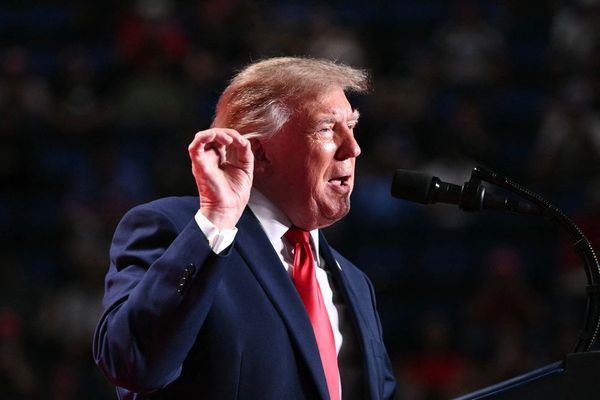
US president Donald Trump has just lashed out on Nato allies on Truth Social, calling them “cowards,” saying the alliance is “a paper tiger,” and stressing the US will “remember” the decision to not join the war.
He said:
“Without the U.S.A.
They didn’t want to join the fight to stop a Nuclear Powered Iran. Now that fight is Militarily WON, with very little danger for them, they complain about the high oil prices they are forced to pay, but don’t want to help open the Strait of Hormuz, a simple military maneuver that is the single reason for the high oil prices. So easy for them to do, with so little risk.
So easy for them to do, with so little risk. COWARDS, and we will REMEMBER!”
I will look out for any immediate European reactions as his comments are likely to meet with strong condemnation, just like when he questioned Nato’s contribution in Iraq and Afghanistan in January.
But if you want more updates on the Middle East specifically, you can follow our live blog here, with Yohannes Lowe:
Updated
Ukrainian president Volodymyr Zelenskyy said on Friday that Kyiv’s negotiators will seek clarity from US officials on the next round of three-way talks with Russia, postponed due to the Iran war.
A third round of talks between Moscow and Kyiv, brokered by the United States and aimed at ending Russia’s four-year invasion of Ukraine, has been derailed by the fighting in the Middle East.
Zelenskyy earlier announced that Ukrainian and US negotiators will meet in the United States on Saturday in a bid to revive the stalled negotiations.
“We want clear dates – at least approximate ones. Everyone understands that the situation in the Middle East, the war, is affecting the postponement of this date,” Zelenskyy told reporters, including from AFP.
A damaged Russian LNG tanker that has been drifting unmanned in the Mediterranean for more than two weeks, risking a major ecological disaster, is four to six days from Libya’s shores, an Italian official said on Friday.
The Arctic Metagaz, carrying LNG from the Arctic port of Murmansk, has been unmanned since early March, when it was hit by Ukrainian naval drones, according to Russia’s transport ministry.
Kyiv has not claimed responsibility for any such attack, Reuters reported.
Ukrainian officials are helping five countries in the Middle East and Gulf region counter attacks on their territory by Iranian drones, while the United States and European countries are among others who have requested support, Ukrainian president Volodymyr Zelenskyy said.
Ukraine is also looking into whether it can have a role in restoring security in the strait of Hormuz amid the Iran war, he said.
Ukraine has become one of the world’s leading producers of cutting-edge, battle-tested drone interceptors that are cheap and effective, AP reported. They play a key part in its defence against Russia’s more than four-year-old full-scale invasion .
“Our teams are already working with five countries on countering [Iran’s] ‘Shahed’ drones - we have provided expert assessments and are helping build a defense system,” Zelenskyy said on X.
That’s all from Spain’s Pedro Sánchez, talking about his government’s sweeping €5bn package to help with the economic impact of the Middle East war – the first package of this type in the EU, if I’m not mistaken.
From being the first leader who stood up to Trump and opposed the war, he is now the first to put forward significant proposals on how to deal with the expected economic fallout.
'No plan will stop miseries brought by this illegal war,' but 'we will come through it all,' Spanish PM warns
in Madrid
Sánchez also repeatedly makes it very clear what he thinks of the war and its expected impact on Spain and Europe.
“Let’s be clear and honest, no plan will be able to stop the miseries brought by this illegal war. That’s why we must all demand an immediate ceasefire and respect for international law.”
Referencing the last night’s European Council summit, he says:
“Yesterday, Europe said that this wasn’t our war – just as Spain has said, ‘No to war'.”
He ends his statement declaring:
“No one expected a war at the gates of Europe after the pandemic; no one expected this illegal war in the Middle East, and no one expected the climate emergency to hit as hard as it has – particularly in Valencia [the 2024 floods] – but we’ll come through it all.
We don’t support this war but we’ll do all we can to get people through it.”
Updated
Spain to propose temporary rent price freezes, seek support in parliament
in Madrid
Sánchez is now talking about the second decree, which was the subject of political negotiations this morning.
It will bring in temporary rent prices freezes such as those we saw when Putin’s war in Ukraine started, he says.
He says the government will negotiate with other parties to try to get housing decree approved in Congress in the coming weeks.
“We don’t support this war, but we will be the EU country with the best social and economic protections as we face it,” he says.
in Madrid
Sánchez also makes similar points to what he said last night in Brussels (13:07), as he says that “from structural point of view, pushing on with decarbonisation and electrification of the economy has been good for the country, good for people’s pockets and makes us more resilient in face of external threats and emergencies.”
Spain outlines €5bn package of measures responding to Middle East crisis
in Madrid
Sánchez says the government’s plan includes 80 measures worth €5bn, which will come into effect as early as tomorrow.
Key parts of the plan include a drastic reduction in energy taxes, with VAT on electricity down from 21% to 10%.
But doubling down on his criticism of the war, he says that this money could have gone to grants or improve health expenditure, but adds: “this is what wars do: they divert money away from other important causes and from vulnerable people.”
“We’re moved by suffering in Middle East, but we all end up paying when people beyond out borders start wars. … The sooner the war ends, then more lives will be saved and the lower the economic cost we’ll have to pay,” he says.
Sánchez warns against 'earthquake' effects on economy as he pledges government help
in Madrid
Sánchez begins by saying that “three weeks ago US and Isreal embarked on a war that has killed thousands and set off an economic earthquake around the world.”
He warns that “no one knows how this crisis will develop or whether it will last months of years.”
He goes on to say:
“I want to tell our citizens that this war wasn’t started by us. But I can reassure them that the country is economically strong and that our renewable, clean energy strategy means we’re better prepared than practically any other country in the face of this energy shock.
We will of course be affected by all this uncertainty, but we will resist.”
Sánchez says that Spain does not support the war, but “will do everything in our power to protect our people and our businesses, as we did during the pandemic.”
“Spaniards can be sure that although we’re facing an earthquake whose magnitude we can’t yet determine, we will come out stronger.”
Spain's Sánchez outlines government's emergency measures responding to Iran war
Spain’s Pedro Sánchez is speaking now after today’s special cabinet meeting on emergency measures related to the Middle East crisis.
Let’s listen in. We will bring you the key lines here.
in Madrid
Meanwhile, as we continue to wait for Sánchez to speak in Spain, it’s worth noting that he was keen to stress the wisdom of his country’s renewable energy strategy at yesterday’s EU summit in Brussels.
He said:
“Eight years of betting on renewables have today put us at the forefront of energy in Europe. This isn’t about ideology: it’s about strategic autonomy; it’s about protecting homes and industries. And it’s the path we will continue defending.”
We are expecting him to speak after today’s cabinet meeting soon.
Updated
French army confirms seizure, acknowledges help from allies, including UK
The French army has just offered a bit more detail about the seizure of the tanker.
In a post on X, it said the navy intervened to “inspect the flag” of a tanker coming from Murmansk in Russia amid suspicions it could be using a false flag, which was later confirmed.
It said that the vessel is being escorted for further inspections.
Crucially, it also noted the involvement of allies, including specifically the UK, acknowledging its role in monitoring ships in the area.
This appears to confirm the UK’s involvement in the operation.
Updated
Macron confirms French navy's seizures of Russian shadow fleet tanker
Meanwhile, French president Emmanuel Macron has confirmed the seizure of the tanker, which he said belonged to the Russian shadow fleet.
In a strongly worded post on X, he said:
“The French navy boarded this morning in the Mediterranean a new vessel from the shadow fleet, the Deyna.
The war in Iran will not divert France from its support for Ukraine, where Russia’s war of aggression continues.
These boats that circumvent international sanctions and violate the law of the sea are war profiteers.
They seek to rake in profits and fund the Russian war effort. We will not let that happen.”
Updated
Spanish cabinet meeting on emergency measures ends, with details expected shortly
in Madrid
Looks like the cabinet meeting has just finished.
Reports from El País suggests that the deal between PSOE and Sumar will result in two decrees: one focused on lowering fuel and energy prices, and another focused on freezing rent prices.
Let’s see.
French navy boards Mozambique-flagged oil tanker from Russia
Meanwhile, we are getting a very interesting line from Reuters saying that the French vavy has boarded an oil tanker in the western Mediterranean, which was flying a Mozambican flag and had departed from Russia.
The operation was reportedly carried out with allies, including the UK, a local French official told Reuters.
“After boarding vessel, officials confirmed suspicions regarding the validity of the flag,” the official said.
The vessel is being escorted for further inspection.
More on this when we have it.
Updated
Ukraine deploys units to intercept targets in Middle East
As we await more updates from Spain…
Ukraine has deployed interceptor units to protect critical and civil infrastructure in five Middle Eastern countries, Ukraine’s security council secretary Rustem Umerov said after a visit to the region.
“Work is also underway to expand coverage areas,” Umerov wrote on X.
“Ukraine stands in defence of life and sovereignty alongside those who support us in preserving our independence. We seek to further strengthen security partnerships with our allies,” he added.
Hungary officials ‘gave Ukrainian forced injection’ after raid on bank vehicles
Shaun Walker and Flora Garamvolgyi in Budapest
Hungarian security operatives administered a “forced injection” to one of the Ukrainians detained earlier this month during a dramatic raid on bank vehicles carrying gold bars and tens of millions of dollars and euros in cash, sources have told the Guardian.
Hungary’s TEK anti-terrorism police detained seven Ukrainians from the state savings bank, Oschadbank, on 5 March. They were accompanying a convoy of two armoured cars from Vienna to Ukraine, as it transited Hungary in what Kyiv claims was a regular transfer of state funds. Hungarian officials have claimed it was money for the “Ukrainian war mafia”, without giving details.
The men were held for more than 24 hours, much of which they spent blindfolded and in handcuffs, before they were deported to Ukraine. During that time, one of the men – a former employee of Ukraine’s SBU security service – was given the forced injection, security sources in Kyiv said.
The sources added that they believed the injection contained a relaxant that was meant to predispose subjects towards becoming talkative during interrogations. However, the drug reportedly led the man, who is diabetic, to have a hypertensive crisis and lose consciousness. He was eventually taken to hospital.
One of the Ukrainian sources described the forced injection as a “Russian-style method” that harked back to so-called truth serums used in KGB interrogations in previous decades. Traces of a drug of this class were discovered during blood tests carried out after the men returned to Ukraine, said another source.
The Guardian has not seen the test results and could not verify the claims. However, Lóránt Horváth, the Hungarian lawyer for the individuals, confirmed that “one individual received an injection of unknown contents despite his objections”.
A Hungarian police source told the Guardian they had heard from colleagues that an injection had been administered, but did not know what it contained.
The raid came as a crucial parliamentary election approaches in Hungary. Polls suggest that nationalist leader Viktor Orbán is in danger of losing his grip on power after 16 years. Orbán, whose government has regular contact with Moscow, has been the EU’s most pro-Russian leader, and before the election has sought to paint Ukraine and its president, Volodymyr Zelenskyy, as the biggest threat to Hungary.
Numerous reports have alleged that Russia is actively working to support Orbán’s campaign.
Meanwhile, we have an incredible story on Hungary from Shaun Walker and Flora Garamvolgyi in Budapest, relating to a recent dramatic raid by Hungarian authorities on Ukrainian bank vehicles carrying gold bars and tens of millions of dollars and euros in cash.
So, over to Shaun and Flora -
Spanish emergency proposals in response to Middle East crisis facing delays
I am keeping an eye on Spain as we were expecting to hear the government’s proposals by now, but a last-minute political standoff over what will be included in the plan – and in particular whether it will cover housing – means the presentations is getting delayed.
I will bring you more if and when we get to see Pedro Sánchez with the details of the plan.
Updated
Belgium's De Wever defends comments on 'normalising' relations with Russia after Ukraine war ends, but insists he is fiercely pro-Ukrainian
Separately, Belgium’s prime minister, Bart De Wever, has defended his comments calling for the normalisation of relations with Russia to re-establish cheap energy supplies.
Earlier this week, he told the Belgian newspaper L’Echo that “we are losing on all fronts, we must end the conflict in Europe’s interest.”
De Wever said Europe had to rearm “and at the same time we must normalise relations with Russia and regain access to cheap energy. It is common sense. In private European leaders tell me I am right, but no one dares say it out loud.”
But during his post-summit presser last night, he defended his position, saying he is used to the fact that “the first one who speaks [out], gets all the bad media.”
“It [caused] a commotion in Belgium, it always [causes] a commotion in Belgium, because it was the an ideal moment to play political games, but I noticed none of that in the room here, none, nothing. People know very well what I think in this room, I’m very outspoken, and they have no doubts of about my loyalty to Ukraine.”
De Wever said that his comments only related to a post-peace scenario, when Ukraine gets an acceptable peace deal with Russia.
“Once you have an acceptable peace for Ukraine and Europe, the next question is, what is your long term relationship [with] Russia?
Should it be hostility, a new cold war for decades, no relations, no economic [exchange], none whatsoever, or should your goal … be to go to normalisation. In that option, my idea as an historian is it would be better to go to normalisation; otherwise you have very little to offer.”
He said it was not up to him or other European leaders to “offer concessions” before a peace agreement with Ukraine is struck, but that the promise “of going back to normal relations is something that could be convincing for the other side” to engage in talks more seriously.
But De Wever insisted he was “very pro-Ukrainian,” particularly given his family background.
“I come from a family that has a history with Ukraine [going back] decades. I could tell you stories about my family in Ukraine that are very colourful.
My brother even smuggled money into Ukraine during the Soviet times to finance dissidents. And … my father was the first to cross the border into Ukraine to set up a aid organisation. My entire childhood, I remember Ukrainian presence in my house where Ukrainian families came to work and to earn some [money].
So the idea that I am not pro-Ukrainian is to me, quite insulting, even at the emotional level.”
But he said it was in Europe’s interest to resolve existing tensions as the geopolitical situation becomes too complicated to navigate.
“Having a war in the Middle East, having a war in Ukraine, having protectionism and tariffs from the United States, having fierce competition from China, with massive dumping of industrial products – it’s a lot for Europe. A lot. If I look around me in the world, I think this is a little bit too much. …
I think we should actively think about our situation and try to get to a better situation, that’s all I wanted to say.”
There are no prizes for guessing that his view is still unlikely to be particularly popular with several other EU leaders, not just in central and eastern Europe, who keep warning about Russia’s aggressive and expansionist policy…
Updated
'I stand for their interests,' Orbán defends his opposition to EU's Ukraine loan and calls for return to Russian oil
A large part of last night’s European Council summit was about Viktor Orbán and his refusal to drop his opposition to a vital €90bn (£78bn) loan for Ukraine, with other leaders accusing him of betrayal and acting in bad faith.
But the embattled Hungarian prime minister, who faces a tough election next month which could see him ousted after 16 years in power, ignored the criticisms when briefing the media at the end of the talks.
When asked what Hungarian voters will make of his position, he said:
“I stand for their interest. What I have done here is [tried] to crush the oil blockade imposed on us by Zelenskyy, so I defended the interests of the country.”
Curiously, Orbán also went further, insisting that the EU will need to reset its relations with Russia and import Russian energy to deal with expected shortages caused by the Middle East crisis.
“At this moment, [we are] just knocking on the door of a shortage of oil globally. So the behaviour, the strategy, that Europeans have here is just crazy.
We definitely need the Russian oil, so we cannot survive this situation … without involving Russian fuel energy again. Europe cannot survive without that. Probably now they deny that fact, but it [will] take not more than one or two weeks [and] this will be obvious for everybody.”
Separately, asked if he can still win the upcoming election, he smiled: “Certainly.”
Updated
Morning opening: Spain moves first to help with energy prices
Spain is set to put forward a number of emergency tax cuts this morning to counter the economic impact of the Iran war.
The measures – set to be presented at a press conference 11am local time – are expected to include lowering VAT tax on fuels to 10% from 21%, according to early media reports, alongside other changes, including to the hydrocarbon and electricity duties, intended to help with growing energy prices.
Reuters says that change to the hydrocarbon levy itself alone is likely to lead to an immediate reduction in the price of diesel and petrol between 0.30 and 0.40 euros.
Spain’s prime minister, Pedro Sánchez, has been a leading European voice critical of US and Israeli strike in Iran, repeatedly sounding alarm about its likely economic impact on Europe.
Ministers said earlier this week the measures would include aid for economic sectors most exposed to the crisis, but added that the country’s high generation of renewable energy meant its economy was less exposed to the impact of oil price spikes caused by the war, Reuters noted.
But other countries may now follow as the European Commission president, Ursula von der Leyen, signalled last night that there was some intent to move in this area.
Speaking after a meeting of the European Council, she said that electricity is often taxed higher than gas and that needs to change, while proposing to reduce grid charges. She also suggested some flexibility on the use of state aid to help with growing energy costs.
Separately, we will keep an eye on the final moments of the parliamentary campaign in Slovenia, local races in France and Germany, and the Italian judiciary referendum – all taking place this weekend.
It’s Friday, 20 March 2026, it’s Jakub Krupa here, and this is Europe Live.
Good morning.