Get all your news in one place.
100's of premium titles.
One app.
Start reading
The Economic Times
The Economic Times

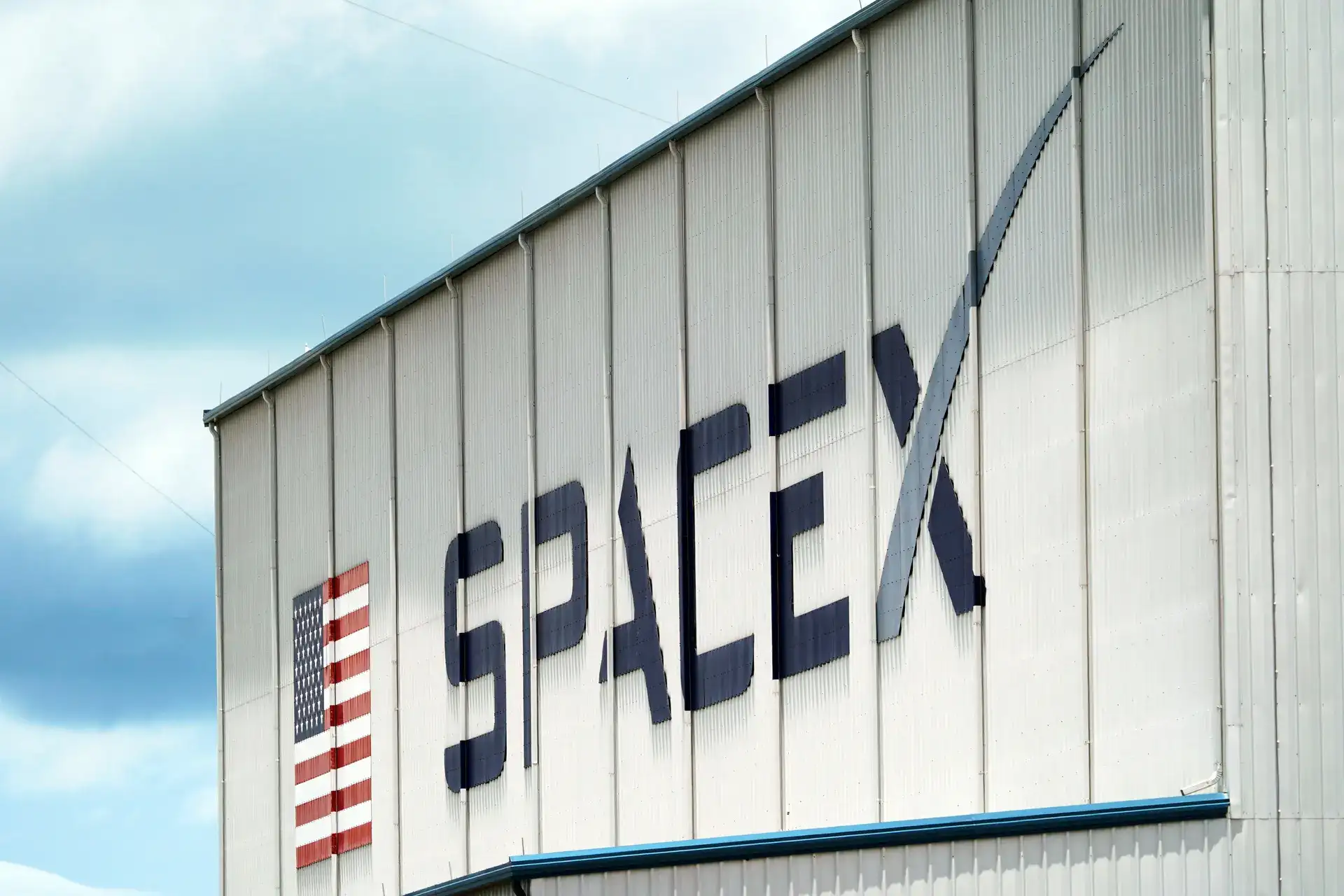
SpaceX needs to get to $5 quadrillion to rival mag seven magic

It’s not often that investors encounter something truly new in markets. But they will soon when Space Exploration Technologies Corp., OpenAI and Anthropic PBC go public with trillion-dollar valuations, or close to it. No company listed in the US has ever come to market so extravagantly priced — by a long shot.

All three are undeniably groundbreaking businesses with mindboggling potential in transformative fields. Companies with that profile typically demand a big down payment from investors for future growth. But these initial public offerings put that proposition on steroids — never have investors been asked to wager so much on an uncertain future. From these valuations, it’s hard to imagine the three debutantes delivering a post-IPO payoff anywhere near what publicly traded technology giants have produced in recent decades.

The math is laughable, in fact. Median market capitalization at IPO for the Magnificent Seven was $1.2 billion. Their median market cap is now $3.1 trillion, more than a 2,500-fold increase. For SpaceX to achieve comparable growth from a $1.8 trillion starting valuation, it would have to approach a value of $5 quadrillion.

Companies are not supposed to show up on exchanges already the world’s most valuable businesses. New ventures raise money privately when they’re small and speculative, but established businesses have almost always turned to public markets when they needed sizable capital for growth. Everyone wins: Venture investors offload their shares to cash in on their early support, and new investors participate in potentially even bigger gains ahead. That’s the story of practically every public company trading today, including tech behemoths Microsoft Corp., Amazon.com Inc. and Nvidia Corp.

That model has been upended by private markets awash with capital and capable of feeding practically unlimited cash to the most sought-after businesses. The result is companies staying private longer and coming to market with ever higher valuations. Nvidia was valued at roughly $600 million when it went public in 1999. Five years later, Alphabet Inc. raised the stakes with a $23 billion valuation at IPO. Meta Platforms Inc. raised the bar again to $104 billion in 2012, which seemed like a fortune at the time. That’s loose change compared with this year’s blockbuster IPOs.

I don’t blame companies for sidestepping the rigors of public markets when private money is readily available, but it’s a disservice to public market investors. By debuting at valuations comparable to Big Tech, much of the value of SpaceX, OpenAI and Anthropic’s future growth will be captured by private investors at IPO, at the expense of public shareholders. And that’s best case. If expected growth doesn’t materialize, these IPOs will be a massive wealth transfer from ordinary investors to private equity — and a major blow to the appeal of public markets.

Here’s another way to see these IPOs’ huge markup: The Magnificent Seven’s median price-to-sales ratio was 15 times at IPO, which is plenty expensive. SpaceX, by comparison, will go public at nearly 100 times sales. For that multiple to shrink closer to the Magnificent Seven’s current median P/S ratio of 10 times, SpaceX will have to grow revenue 10-fold to about $200 billion while its market value hangs around waiting for sales to catch up.

For perspective, SpaceX is expected to generate about $50 billion in revenue by 2031, based on consensus estimates compiled by Bloomberg, so investors could be waiting a while. OpenAI and Anthropic’s registration statements are not yet publicly available, but I expect similarly daunting numbers from them.

And that assumes all goes well. It’s too soon to know who the AI winners will be. I’m reminded of the early days of the internet, when pioneers such as Netscape and AltaVista were quickly eclipsed and eventually displaced by later entrants. OpenAI and Anthropic dominate AI now, but that can change fast. AI may also be more regulated than the internet given the potential policy implications for jobs, safety and defense, which could slow growth. Governments might impede future advances in AI on grounds that they are too dangerous for public consumption.

Regulators can rebalance the IPO playing field and give investors better access to emerging technologies by encouraging companies to go public earlier in their lifecycle. The Securities and Exchange Commission should relax some of the burdens piled on public companies over successive crises, most recently with the Sarbanes-Oxley Act that followed the dot-com bust and the Dodd-Frank Wall Street Reform and Consumer Protection Act in response to the 2008 financial crisis. A good start would be to expand exemptions that already apply to smaller companies and simplify expensive governance certifications. The SEC’s move to permit semiannual rather than quarterly reporting by public companies should help.

Private companies worth billions of dollars or more should also be subject to the same disclosure requirements as public companies. It would remove much of the incentive to stay private and further the mission of US securities laws. Those rules were first enacted in the 1930s in the wake of the devastating 1929 stock market crash to give investors visibility into the financials of companies raising big money. These investor protections are significantly eroded a century on if trillion-dollar companies can choose to ignore them.

For better or worse, millions of people will soon have a stake in SpaceX, OpenAI and Anthropic. All three companies will instantly be among the most valuable US public companies, which means they will be prominent holdings in index funds popular with investors. That’s no reason to dump index funds, but there are plenty of reasons to pass on what will certainly be the US’s three most hyped IPOs ever.

Sign up to read this article
Read news from 100's of titles, curated specifically for you.
Already a member? Sign in here
Related Stories
Top stories on inkl right now
One subscription that gives you access to news from hundreds of sites
Already a member? Sign in here
Our Picks
Fourteen days free
Download the app
One app. One membership.
100+ trusted global sources.