Get all your news in one place.
100’s of premium titles.
One app.
Start reading
Tom’s Hardware
Tom’s Hardware
Technology
Jowi Morales

SpaceX formalizes plan to build 1 million satellite Orbital Data Center System — FCC filing sketches out plans, but over-packed orbits could be limiting factor

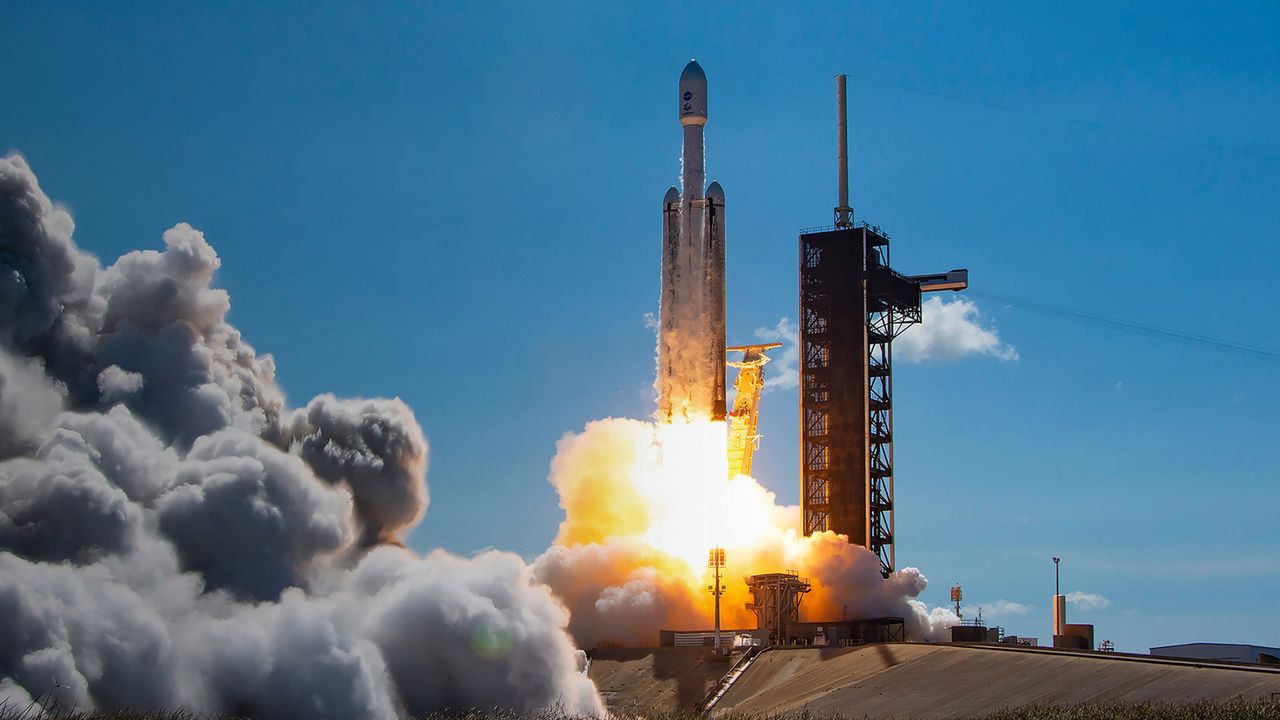
SpaceX Starlink satellites launching.

A SpaceX FCC filing said that it plans to put a million satellites in orbit to build an Orbital Data Center system. The company said in the document that these will support AI, machine learning, and edge computing applications, taking advantage of the sun's energy without interference from the Earth’s atmosphere.

“Launching a constellation of a million satellites that operate as orbital data centers is a first step towards becoming a Kardashev II-level civilization — one that can harness the Sun’s full power — while supporting AI-driven application for billions of people today and ensuring humanity’s multi-planetary future amongst the stars,” the company wrote in its filing.

The filing went on to explain, “To deliver the compute capacity required for large-scale AI inference and data center applications serving billions of users globally, SpaceX aims to deploy a system of up to one million satellites to operate within narrow orbiting shells spanning up to 50 km (over 31 miles) each (leaving sufficient room to deconflict against other systems with comparable ambitions). This system will operate between 500 km and 2,000 km (310 miles and nearly 1,250 miles) altitude and 30 degrees and sun-synchronous orbit inclinations.”

SpaceX claimed that a million tonnes of satellites generating 100kW of compute per tonne would deliver 100 gigawatts of AI compute capacity without all the limitations of ground-based deployments, making orbiting data centers far more cost-efficient than their terrestrial counterparts.

The Kardashev scale measures the advancement of a particular civilization based on how it harvests energy. A Type I civilization uses all available energy on its own planet, which barely puts humanity and its current technology just below this level. On the other hand, a Type II civilization directly harvests energy from its nearby star, while Type III captures all the energy produced inside its galaxy.

The risk of Kessler Syndrome

While Elon Musk's plans to launch a million satellites into orbit come into view, a former Russian geostationary satellite has reportedly broken up in space. According to Space.com, the Luch/Olympic satellite, which the Russians use to observe other satellites in orbit, has recently been decommissioned and brought up to a graveyard orbit above its former geostationary altitude of more than 35,000 km or nearly 22,000 miles.

However, ground observers noticed the unit has fragmented, likely due to an external impact (see time-lapse video, embedded above). This incident produced more debris that is now orbiting the earth, which could collide with other satellites, further exacerbating the space junk problem.

Many experts are concerned about an event wherein multiple space collisions would produce so much debris that it would make it impossible to launch satellites or even keep them operating in orbit. SpaceX’s current fleet of 9,000 satellites already has experts concerned, especially as its competitors are also considering launching their own constellations.

Musk’s plan to launch a million satellites is likely a nightmare scenario for many scientists, as this would put the risk of a Kessler Syndrome event several magnitudes more plausible. Moreover, under such a cascade of space debris, humanity could effectively become trapped on Earth for generations, dashing the billionaire’s dream of landing astronauts on Mars.

Follow Tom's Hardware on Google News, or add us as a preferred source, to get our latest news, analysis, & reviews in your feeds.

Sign up to read this article
Read news from 100’s of titles, curated specifically for you.
Already a member? Sign in here
Related Stories
Top stories on inkl right now
One subscription that gives you access to news from hundreds of sites
Already a member? Sign in here
Our Picks
Fourteen days free
Download the app
One app. One membership.
100+ trusted global sources.