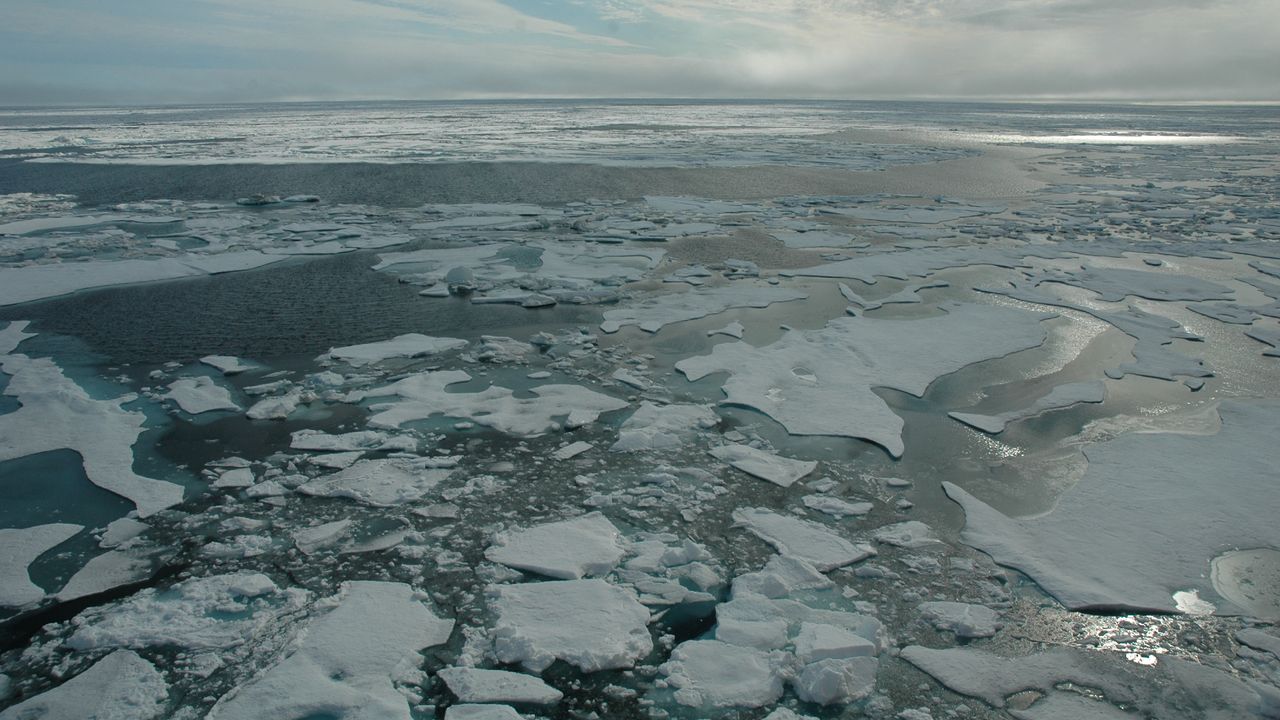
Interplanetary dust laced with helium-3 that has settled on the sea floor has provided climate scientists with an urgently needed historical record of sea ice. That urgency stems from climatologists battling with understanding how the Arctic will respond to the worsening climate crisis.
The amount of ice on the Arctic Ocean has depleted by more than 42% in response to rising temperatures since regular satellite monitoring began in 1979 — and the Arctic continues to warm faster than anywhere else on Earth, particularly due to human-driven global warming caused by things like burning coal for cheap power. In a few decades time we could see the Arctic Ocean free of ice all summer long. Besides the resultant rising sea levels as the ice melts, scientists want to learn more about how this change in sea ice affects the habitability of the Arctic and the wider world.