Get all your news in one place.
100's of premium titles.
One app.
Start reading
The Times of India
The Times of India
World
TOI World Desk

Soviet scientists released red king crabs into the Barents Sea in the 1960s to build a new fishing industry, but decades later, the giant crabs have spread across Russian and Norwegian waters, altering seafloor communities as they feed on native marine life

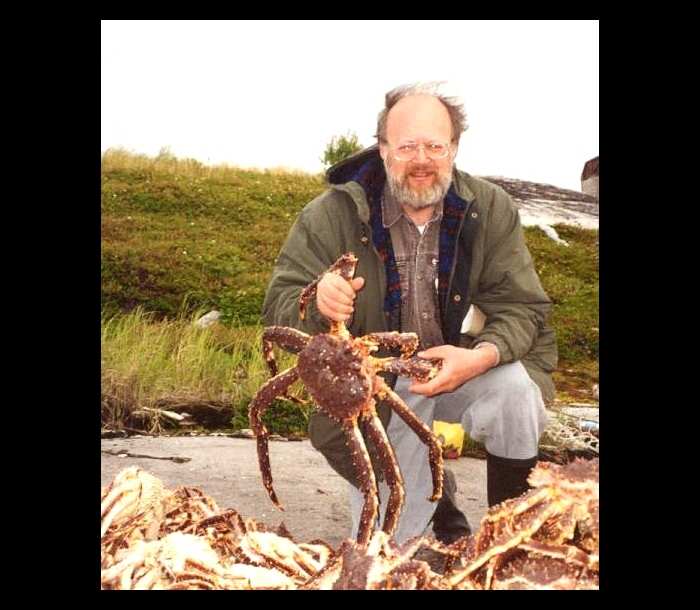
The red king crab can grow to more than one metre across and has a heavy, spiked shell. Seafood markets value the crab as a high-priced delicacy. But in the ecosystem, the crabs play a different role, feeding on seabed organisms and affecting local habitats, significantly altering the marine ecosystem.

Get breaking news anytime, anywhere. Download the TOI app now!

The story of this underwater shake-up began decades ago with an ambitious plan that seemed perfect on paper. Back in the 1960s, Soviet scientists intentionally transported these giant creatures from their native home in the North Pacific Ocean and released them directly into the Barents Sea. The goal was simple and forward-thinking: to establish a brand-new, highly lucrative commercial fishing industry that could provide a steady supply of valuable seafood and boost the coastal economy. For a time, the plan appeared successful, as the crabs adapted to their new home and supported a growing commercial fishery. However, nobody quite anticipated just how successfully these heavy-armoured newcomers would take over the neighbourhood.

To get a clear picture of exactly how these creatures are altering the northern waters, a scientific review was published in the ICES Journal of Marine Science. Led by prominent researchers Jan H. Falk-Petersen, Paul E. Renaud, and Nina Anisimova, the study carefully gathered decades of data to understand the broader ecological footprint of this intentional introduction. The researchers highlighted that while the crabs have undeniable economic benefits as a prized catch, their massive physical size, high mobility, and general lack of local predators have allowed them to spread aggressively from their original release site into both Russian and Norwegian coastal waters, leaving a heavily altered marine landscape in their wake.

The paper notes that the crab’s success is tied to several reinforcing traits: suitable habitat for larval settlement, a broad life-stage habitat range, high mobility, a generalist diet, low fishing pressure during the early invasion, and an apparent lack of parasites. It also reports that invaded areas have shown reduced benthic diversity and biomass, while effects on commercial fish are harder to detect and predict.

How the crabs affect the ocean floor

The main reason these heavy crustaceans have managed to settle into the Barents Sea so successfully comes down to their incredibly relaxed attitude toward food. The scientific review published in the ICES Journal of Marine Science pointed out that these crabs are highly mobile, opportunistic bottom-feeding omnivores. In simple terms, they are not picky eaters at all, and they will happily devour whatever happens to be right in front of them on the seabed. When thousands of these voracious crabs march across a specific area of the ocean floor, they essentially clear the table, targeting large bottom-dwelling organisms like mussels, sea stars, and various native shellfish.

This feeding habit is associated with a decline in the variety and biomass of bottom-dwelling marine life in heavily invaded zones. The researchers explained that many of the slower, native species being targeted by the crabs actually serve as the structural backbone of the local habitat. When these native organisms are eaten away in large numbers, the entire architectural layout of the seafloor changes, leaving a much emptier, less diverse environment that struggles to support the complex web of life that used to thrive there.

Balancing economic value and ecological impact

Dealing with the legacy of this mid-century experiment has created a frustrating dilemma for modern coastal communities. On one hand, the crabs have become an irreplaceable economic lifeline for local fishermen in both Norway and Russia, supporting entire coastal towns with well-paying jobs and a world-renowned product. On the other hand, their presence can create operational challenges for traditional fisheries. The giant crabs frequently get entangled in delicate fishing nets meant for local fish species, causing expensive damage to equipment and eating the targeted catch before the nets can even be hauled back to the surface.

Because eradicating an invasive marine species from the open ocean is virtually impossible once they have fully settled in, management institutions are focusing heavily on containment and structured harvesting. As the crabs continue to spread into new areas, the long-term insights from the scientific review show that human interventions in nature, even those born from the best economic intentions, can leave a permanent footprint that requires careful monitoring for generations to come.

Sign up to read this article
Read news from 100's of titles, curated specifically for you.
Already a member? Sign in here
Related Stories
Top stories on inkl right now
One subscription that gives you access to news from hundreds of sites
Already a member? Sign in here
Our Picks
Fourteen days free
Download the app
One app. One membership.
100+ trusted global sources.