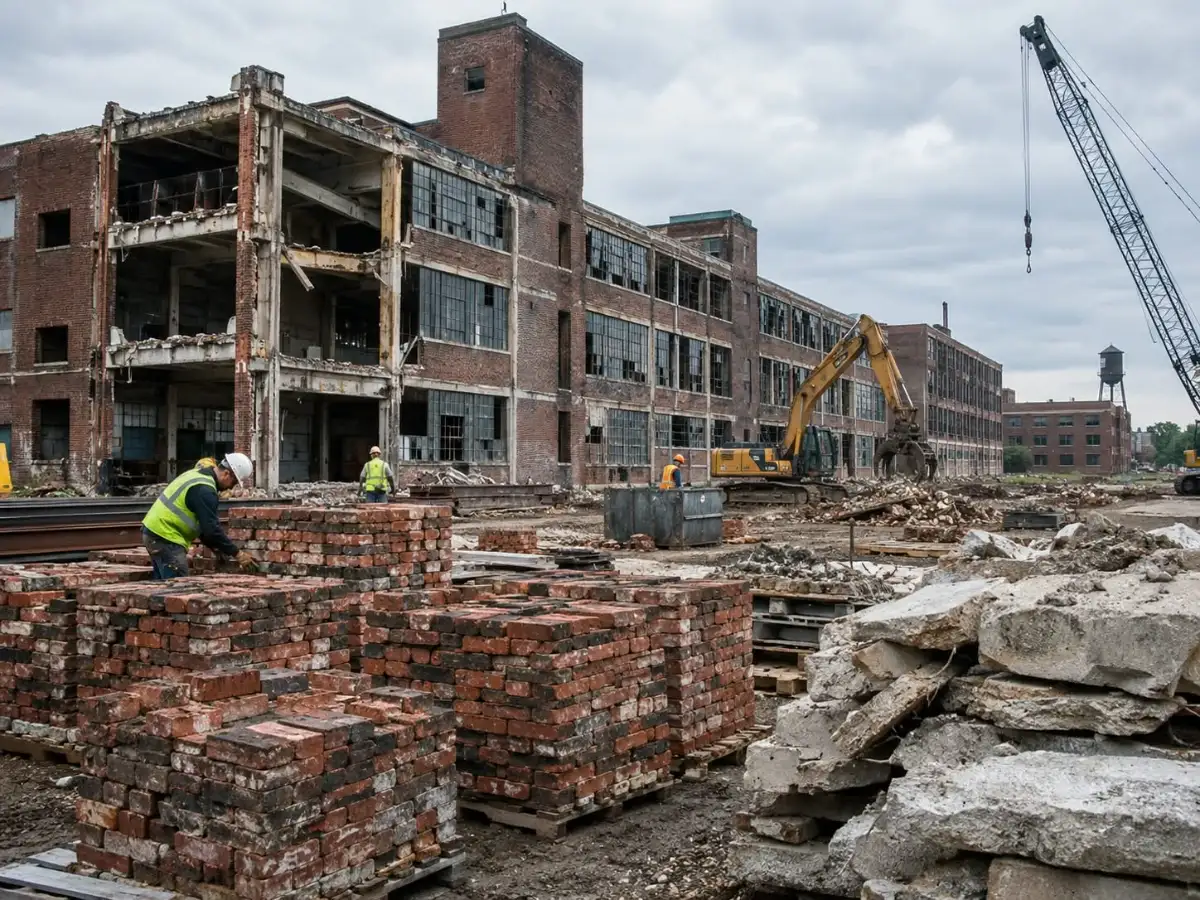
For more than a decade, no one came up with a plan for a factory floor in South Bend, Indiana, that was once the site where Studebakers rolled off the assembly line. It might otherwise have been quickly bulldozed and buried in a landfill, as many old industrial buildings are. Rather, the old Studebaker Plant 8 was disassembled by a firm named Mother Earth, LLC, and nearly every piece of its scrap was sold.
As per an EPA fact sheet on Brownfields, the recovery of the building material accounted for an estimated 99 percent of the building's value and made what appeared to be industrial junk $1.4 million in revenue. After a generation that has seen the demolition of traditional architecture in cities without bother, this one deserves to be examined and even given a slight side-eye for its continued rarity rather than the norm.