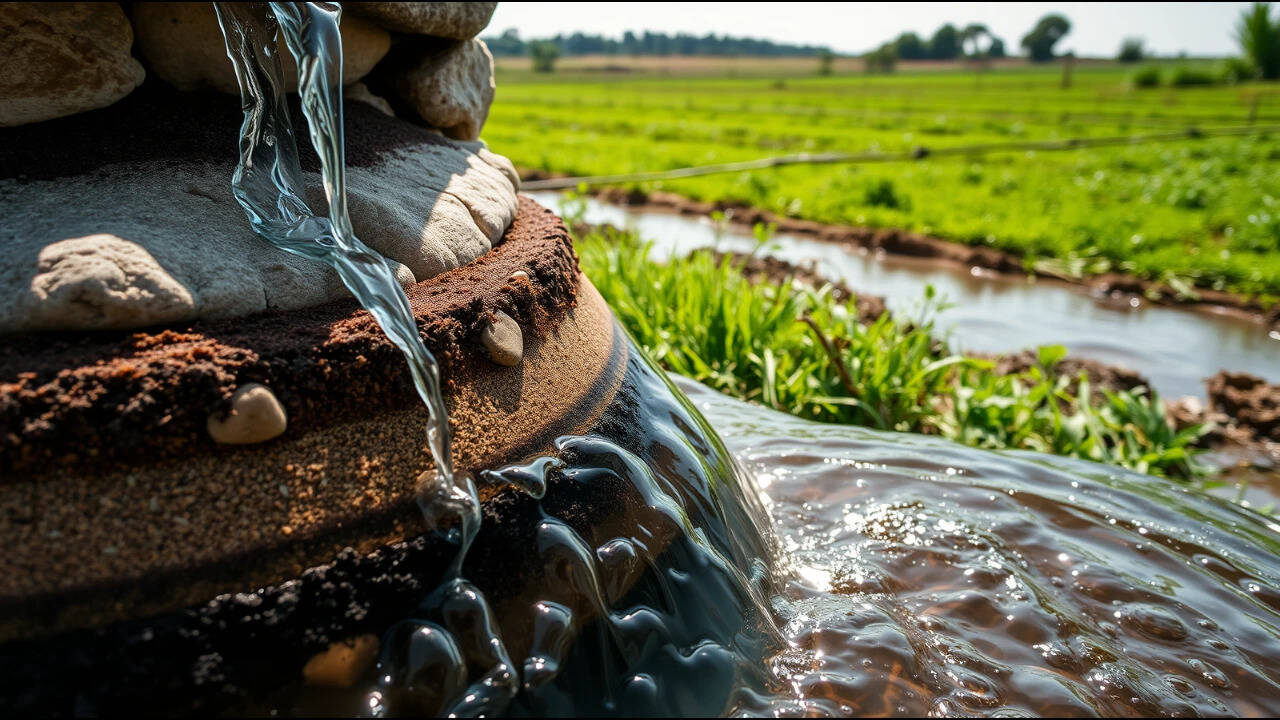
The Stiebeuel River in Franschhoek, South Africa, about 75 kilometres east of Cape Town, has become heavily polluted by sewage and contaminated runoff from the nearby informal settlement of Langrug, where inadequate sanitation has allowed waste to enter the river. E. coli concentrations have been measured at more than 400,000 colony-forming units per 100 millilitres, far above South Africa's guideline for recreational freshwater. The pollution has transformed a waterway once used by local residents into a serious public health and environmental concern for the surrounding community. Researchers at the University of Cape Town's Future Water Institute have been testing whether natural filtration can help treat some of that contaminated water. At the Water Hub, a former wastewater treatment site, they repurposed old sludge-drying beds as biological filters filled with layers of stone, sand and biochar. The system now treats approximately 50,000 litres of river water each day, producing water that can be reused for purposes including irrigation.
Get breaking news anytime, anywhere. Download the TOI app now!