
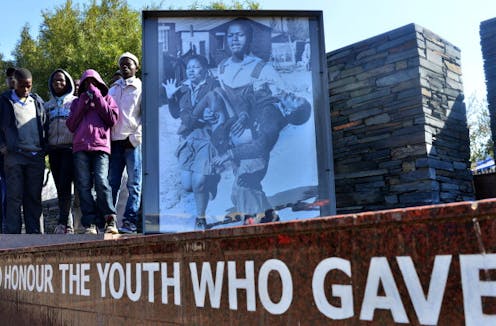
On the morning of Wednesday, 16 June 1976, young students from schools across Soweto set out on a march through the sprawling black township outside Johannesburg. The march was to amplify their opposition to the apartheid government’s new school-language policy that would see Afrikaans replace English as their main medium of instruction in several key subjects.
Before the march began, they were confident. They knew the risks that they faced – “we decided that there should be no placard inciting the police as such, one activist put it afterwards, because "we wanted a peaceful demonstration – it had to be disciplined”. Even so, they were excited, believing that the march would be a carnivalesque event, “a Guy Fawkes thing,” as one put it – an event in which the world would be turned upside down.














