
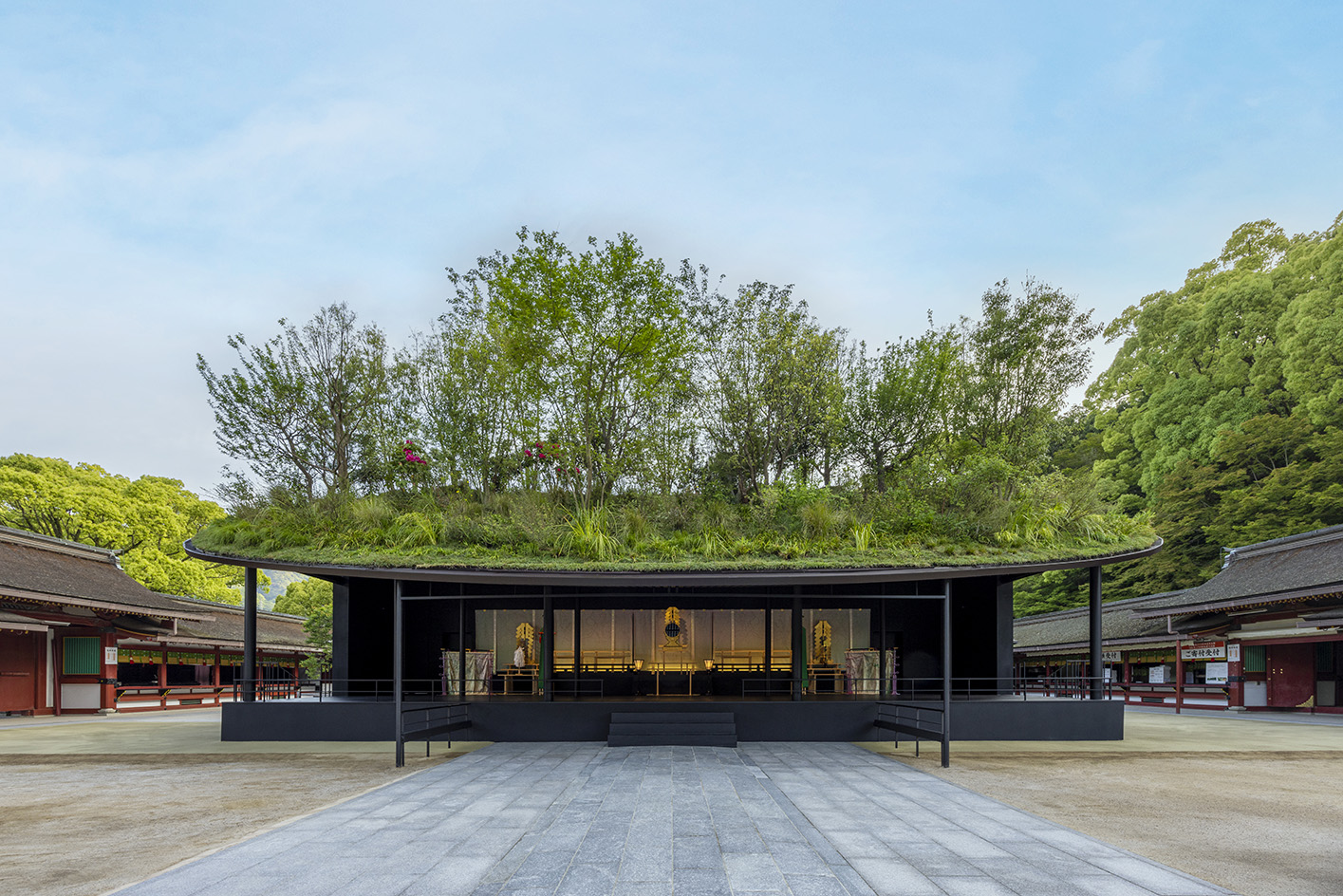
This Sou Fujimoto temporary hall has all the ingredients of a Japanese fairy-tale: a floating forest on an oval roof, a flying plum tree and sacred textiles seen only by a deity. And after three years? It will disappear. This weekend, Dazaifu Tenmangu Shrine, a historic site in lush green Fukuoka in southern Japan, starts a new chapter in its 1,100-year history, with the opening of its project by architect Fujimoto.
The new hall is a minimalist black structure with hints of a modern take on traditional shrine architecture, capped with an elliptical 'floating forest' roof. It features camphor, cherry and maple trees, plus flowering rhododendrons. Inside, sacred textiles are centre stage, designed by Japanese fashion brand Mame Kurogouchi and crafted by generations-old Kyoto artisans – the inner sides not viewable by human eyes, only the shrine’s deity.














