
Get all your news in one place.
100’s of premium titles.
One app.
Start reading
Digital Camera World
Hillary K. Grigonis

Sony’s new supply chain will allow high-end cameras to use biomass-based renewable plastics, fundamentally changing the way they are made

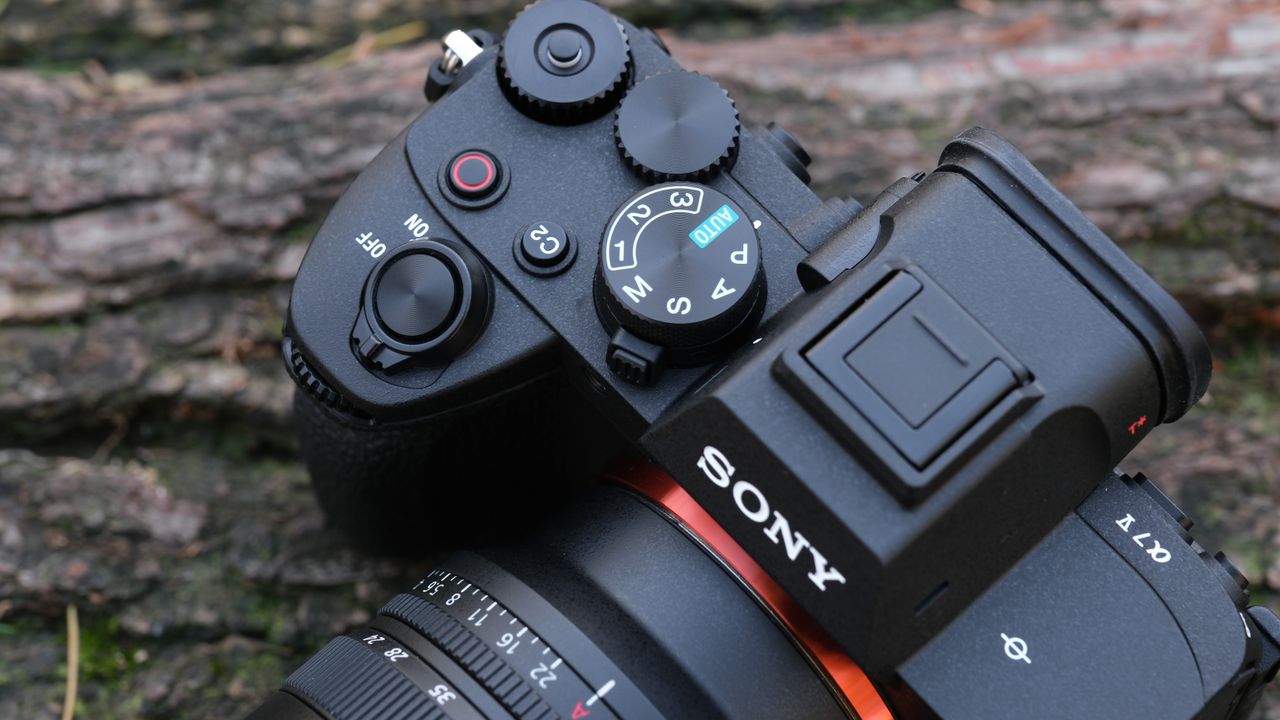
Close up of the control dials on a Sony A7 V camera.

Sony has just revamped its supply chain to shift towards more renewable plastics for its high-end audio-visual products, including cameras.

Sony has teamed up with 13 other companies to create a global supply chain across 14 companies and five countries to produce renewable plastics. The joint venture is the first time that an entire supply chain for raw materials to finished products has been visualized in such a way, Sony says.

Sony explained that the plastic components for high-end products can’t be fully replaced with recycled plastics, because those reused materials don’t always meet the standards for flame resistance and optical properties.

Sony has shared its supply chain for materials as follows: ① Production of renewable naphtha — Neste Corporation / ② Production of renewable styrene monomer — Idemitsu Kosan Co., Ltd. / ③ Production of renewable polystyrene resin — Formosa Chemicals & Fibre Corporation / ④ Production of renewable para-xylene — SK Geo Centric Co., Ltd. / ⑤ Production of renewable para-xylene — ENEOS Corporation / ⑥ Production of renewable terephthalic acid — Hanwha Impact Corporation / ⑦ Production of renewable PET resin — Toray Advanced Materials Korea Inc. / ⑧ Production of renewable bisphenol-A — Mitsui Chemicals, Inc. / ⑨ Production of renewable polycarbonate (PC) resin — CHIMEI Corporation / ⑩ Production of renewable flame retardants — ADEKA CORPORATION / ⑪ Production of renewable PC/ABS resin — Qingdao Haier New Material Development Co., Ltd./ ⑫ Molding manufacturers / ⑬ Design and manufacturing of finished products — Sony Corporation (Image credit: Sony)

Revamping the supply chain will allow Sony to use more renewable plastics that are created with biomass resources or energy created from organic materials. The change will help Sony source more materials that have similar properties to plastics made with fossil-based processes.

The move is also a step towards transparency, publishing where different materials come from, while also expanding the ability to track more greenhouse gas emissions. The change is part of Sony’s goal for “zero environmental impact” by 2050.

“We chose this method because it does not change the quality of the product,” said Sony’s Hisaoki Ohba. “What changes is the feedstock of the materials we use. This fundamentally changes how products are made, which is why the entire supply chain must work together.”

Manufacturing, even when working with recycled materials, has an impact on the environment. But Sony sharing its full supply chain is an unusual move, and hopefully one that could help reduce the tech maker's impact on the environment.

You may also like

Browse the best Sony cameras or the best Sony E-Mount lenses.

Sign up to read this article
Read news from 100’s of titles, curated specifically for you.
Already a member? Sign in here
Related Stories
Top stories on inkl right now
One subscription that gives you access to news from hundreds of sites
Already a member? Sign in here
Our Picks
Fourteen days free
Download the app
One app. One membership.
100+ trusted global sources.