
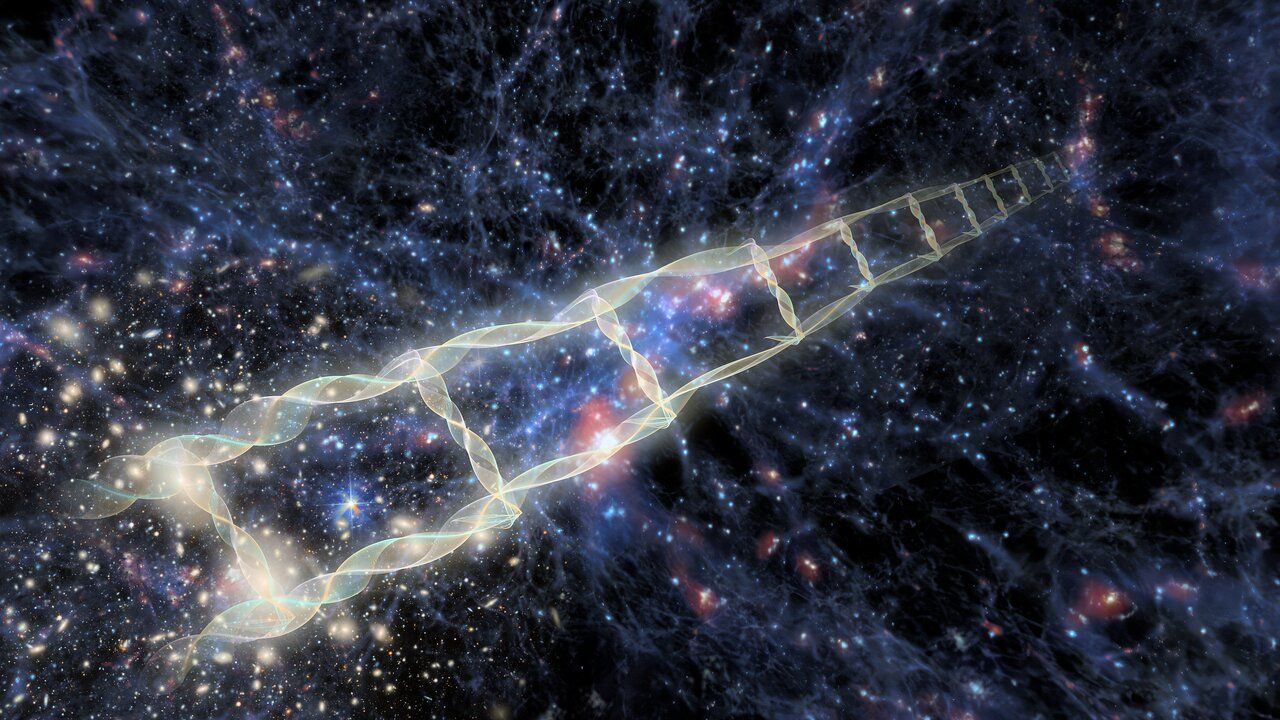
There's a central crisis in cosmology: Different measurements yield different values for the expansion rate of the universe. Now, a comprehensive analysis combining decades of independent measurements suggests that this discrepancy is not due to error or uncertainty; instead, it's a potential pathway to new physics beyond the standard cosmological model.
Astronomers calculate the universe's expansion rate, or Hubble constant, in two ways. One method is to use measurements of the distance to the cosmic microwave background (CMB), the earliest light that spread out just 380,000 years after the Big Bang. The second method is to study the expansion of the local universe, using observations of "standard candles," nearby stars of a known brightness whose light gets stretched — or redshifted — as it reaches us.











