Get all your news in one place.
100's of premium titles.
One app.
Start reading
TechRadar
TechRadar
Matt Bolton

Someone finally did it: a high-end TV with a DisplayPort connection actually is coming this year, including 4K 180Hz support

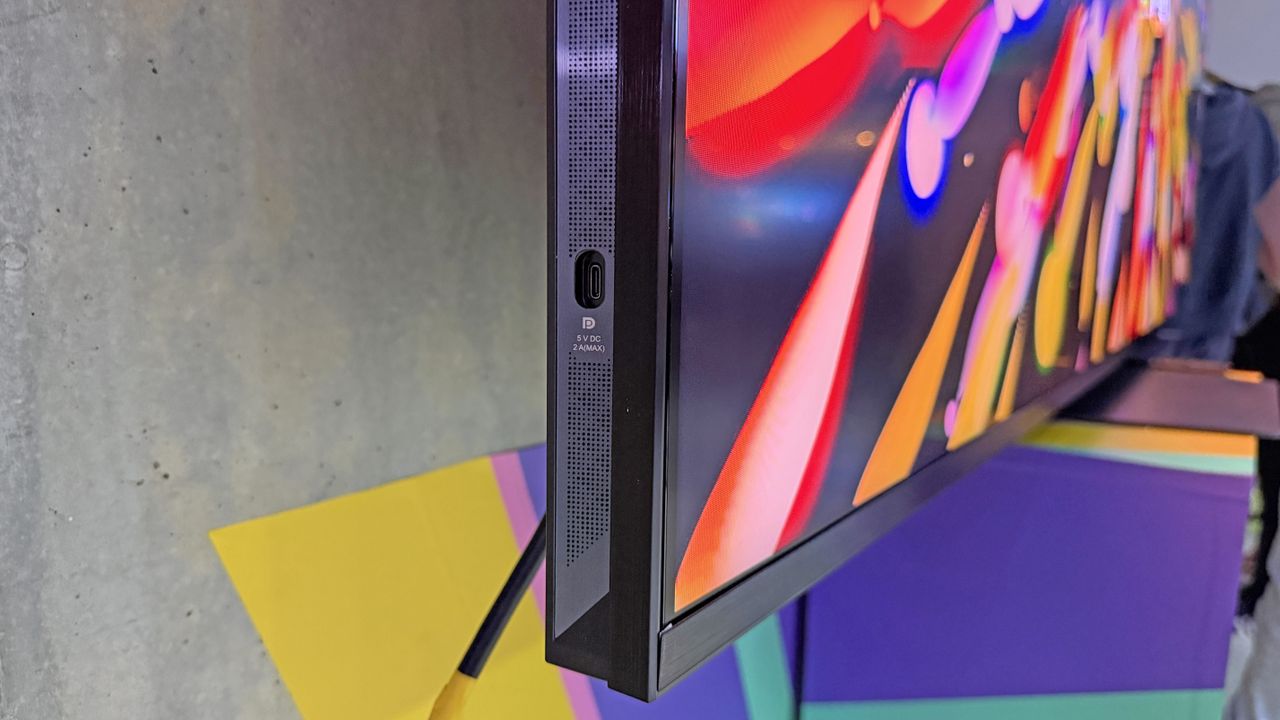
The DisplayPort USB-C connection on the Hisense UR9 TV, showing how the connection is conveniently on the side of the TV's frame, and not on the back with its other ports.

I just attended a demo of Hisense's new 2026 TVs, and while discussing the new UR9 RGB TV, one unusual feature jumped out at me: it has a DisplayPort connection. It's not a full-size DisplayPort port, but it's a USB-C port with full DisplayPort support and branding.

HDMI has obviously dominated the world of TV inputs, but DisplayPort is still the most common output on GPUs — and preferred by the PC hardcore in many cases. In general, it seems more hassle to include DisplayPort than it's worth on most TVs, so it's just never on there — which is why this one obviously caught my eye.

Hisense didn't explain exactly why it went for it on this particular model, but there are two things going on with this TV that might explain it.

First, the set has 3x HDMI 2.1 ports, not 4 like most high-end TVs. This was also true of the Hisense U8QG last year — it appears to be a result of the particular connection control chip that Hisense is using.

When Hisense revealed this to me, it explained that the TV has three HDMI ports, then made a point of saying it also has DisplayPort, which will support 4K at 170Hz/180Hz (depending on size). So it's possible that adding a DisplayPort was simply a way of offering a fourth 4K 170Hz/180Hz input, overcoming whatever HDMI limitation there is.

But the second element is that this is an RGB-backlit mini-LED TV, and Hisense claims that it should be able to hit over 100% of the BT.2020 pro color space, and is also Pantone validated (though the latter doesn't mean too much — Hisense's more affordable TVs have this rating too).

RGB TVs such as the UR9 here promise super-rich colors and potentially less blooming from their LED backlights (Image credit: Future)

So there could be an element of Hisense aiming to include DisplayPort for maximum color depth for creatives who want to use the wide color support of the screens. Whether the TV will hit the claimed color figure is something we'll have to wait to see — there are multiple ways to measure the color space, and the Hisense UX116 released last year with RGB tech hit 92.6% of the BT.2020 space in our tests. This is way better than regular mini-LED TVs, which have tended to max out at around 75-78%, but obviously isn't quite 100%.

The only potential issue for both gaming and creative use is the size of the TVs — the UR9 series will come in 65-inch, 75-inch, and 85-inch sizes, with 100 inches also available in the US. That means it's not desk-friendly but might still have potential for both.

Hisense UR9 key specs

Screen sizes

65, 75, 85 inches (100 inches in US)

Screen type

RGB mini-LED

Refresh rate

170Hz (65, 75 inches), 180Hz (85, 100 inches)

HDR

Dolby Vision (DV2 coming later in an update), HDR10+, HDR10, HLG

Smart TV

Google TV (US), Vidaa (UK)

HDMI ports

3x HDMI 2.1

I think it's PC gamers looking for a sofa setup who will find this the most interesting. You'll have the flexibility to use the HDMI ports for whatever AV connectivity you need that really requires HDMI, and you can make the most of the high refresh rates over DisplayPort.

The TV supports AMD FreeSync, and while Hisense hasn't confirmed it for this model, most of its mini-LED sets are G-Sync compatible, though not G-Sync certified.

Its TVs usually have fairly low latency when we've measured them, and they have easy-to-use gaming menus for adjusting settings.

But the other tempting factor is that RGB mini-LED technology isn't coming out in monitors at the moment, and it's a really interesting new technology. It uses an LCD panel with a mini-LED backlight, but the backlight isn't one color: each light element has red, green, and blue LEDs, so effectively a low-res version of the image is created by the backlight, and then the LCD layer adds the final color-filtering and detail.

It's theoretically more efficient than regular mini-LED, while having a wider color gamut and potentially less noticeable blooming from light areas to dark ones.

The room I took this picture in wasn't dark at all — the set is just so bright that exposing for the screen makes everything else look pitch black. The UR9 can hit 3,500 nits of peak brightness at 65 inches, 4,000 nits at 75 inches, and 5,000 nits at 85 inches (Image credit: Future)

And it's much brighter than OLED, and this TV has a lightly matte anti-reflective coating to help make it work well for brighter rooms, if you're playing during the day.

Having a DisplayPort option won't be a major game-changer for most people, but it's so rare that I had to call it out — and it's especially interesting that it's on a TV technology you can't get in a smaller version, so the UR9 offers something unique.

It's not going to be cheap, though — in the US, the 65-inch model is officially priced at $3,499. We don't have UK or Australian prices yet, but that's around £2,650 / AU$5,080.


Thinking of buying a new TV?

Try our TV size and model finder! You tell it how far you sit from your TV, we'll tell you what size to buy based on viewing angle advice from image quality experts, and we'll recommend our three top TVs at that size for different prices.


Sign up to read this article
Read news from 100's of titles, curated specifically for you.
Already a member? Sign in here
Related Stories
Top stories on inkl right now
One subscription that gives you access to news from hundreds of sites
Already a member? Sign in here
Our Picks
Fourteen days free
Download the app
One app. One membership.
100+ trusted global sources.